
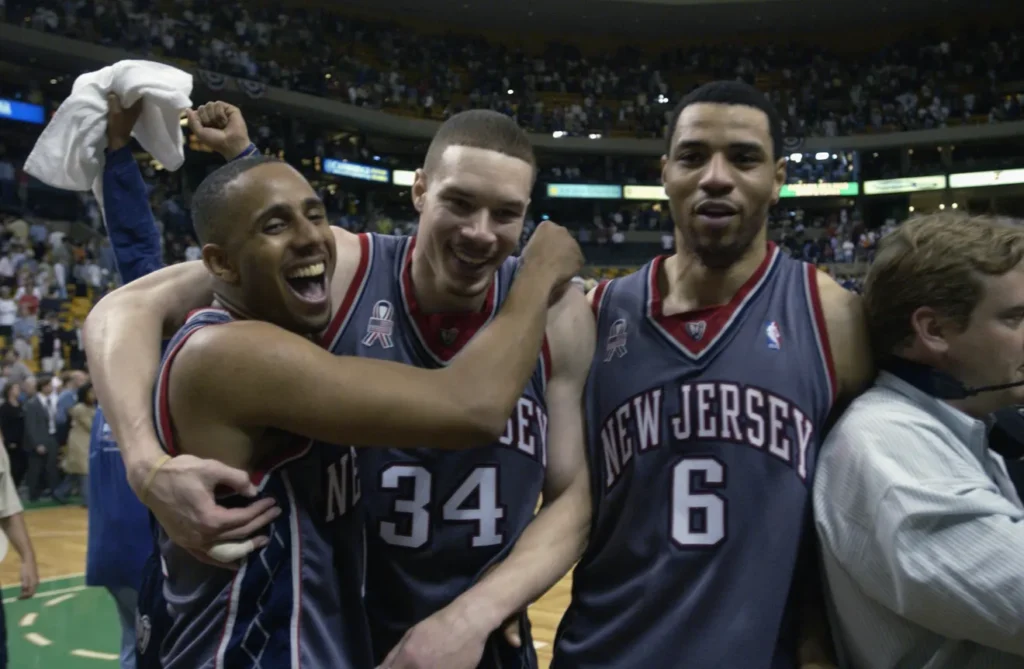
In the early 2000s, the New Jersey Nets were a fast-break phenomenon that captivated the basketball world. At the heart of those gritty squads was Aaron Williams. Known affectionately as “The A-Train,” Williams was the quintessential blue-collar big man—strong, reliable, and entirely undeterred by the giants standing in his way.
From going undrafted in 1993 to becoming a foundational piece of two consecutive NBA Finals teams, Williams’ journey is a testament to a “stay ready” mentality. He lived through the transition from the Stephon Marbury era to the transformative arrival of Jason Kidd, providing the muscle required to compete against the most dominant dynasties in league history.
I sat down with Williams to discuss the “water” in Peoria, the sheer impossibility of guarding Shaquille O’Neal, and why those Finals runs remain etched in NBA lore.
The Q&A
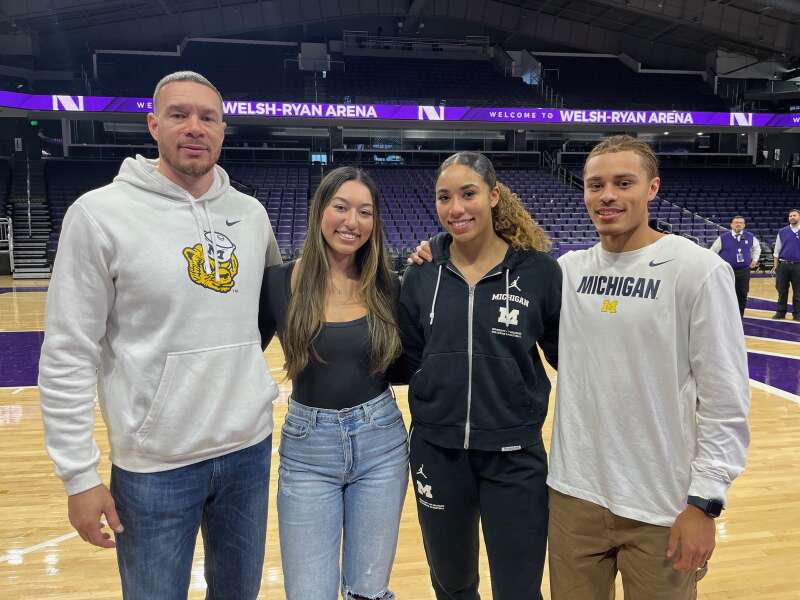
Brandon “Scoop B” Robinson: There is an incredible lineage of ball handlers coming out of Peoria, Illinois—yourself, Shaun Livingston, and several others. What is it about the culture there that produces such elite guards and versatile players?
Aaron Williams: I don’t know, man. I think basketball is just a way of life out here. Growing up, it’s the primary path for kids. I know it’s like that around the country—New York is likely the same—but we just take the game incredibly seriously in Illinois.
Brandon “Scoop B” Robinson: You played for a staggering number of franchises, but you’re most synonymous with that New Jersey Nets era. What were those days like just before Jason Kidd arrived, playing alongside Stephon Marbury, Kendall Gill, and a young Stephen Jackson?
Aaron Williams: I thought we were pretty good. We had a good young nucleus mixed with some solid veterans. Management already had their own idea of where they wanted to take the team, and while I understand you can’t pass up a player like Jason Kidd, I personally had a lot of fun playing with Steph, Kendall, and Kerry Kittles. We didn’t win a whole lot, but we believed if we had been kept together, we would’ve been alright.
Brandon “Scoop B” Robinson: When J-Kidd finally arrived, what was that very first practice like? Was the impact immediate?
Aaron Williams: You see the highlights and the fancy passes on TV, but we learned within the first couple of days that he was a leader on defense. Defensive intensity starts with the point guard, and Jason brought that every single day. That’s something I wasn’t fully aware of just watching from afar. You don’t see the “grind” on a highlight reel—picking guys up full court, playing passing lanes, and being that vocal defensive anchor.
Brandon “Scoop B” Robinson: Those Nets teams went toe-to-toe with the Lakers and the Spurs in back-to-back Finals.Shaq has famously said those series were “boring” for him because he didn’t feel much resistance. From your perspective in the trenches, how difficult was it to actually contain him?
Aaron Williams: I’ll tell you what—it wasn’t boring for us! [laughs] The number one question I get asked is who the toughest person I ever had to guard was, and it’s not even close. It’s Shaq. For someone to be that large, that skilled, and to understand leverage and body positioning like he did… the only thing he couldn’t do was shoot free throws. But he was so dominant that it didn’t even matter. I understand why he felt that way; we didn’t have much resistance for him down low, and then you throw in Kobe? It didn’t get any easier.
Brandon “Scoop B” Robinson: For the fans at home, can you explain the difference between watching Shaq on film versus trying to move him on the block?
Aaron Williams: On tape, you don’t realize how large he truly is. Unless you’ve met him in person, you can’t grasp the scale—how wide and strong he was. And back then, he could run the court incredibly well for his size. You try to come up with a game plan, but Phil Jackson knew exactly how to get him the ball. It’s much easier said than done to defend someone of his stature when you have Kobe scoring from everywhere and shooters like Derek Fisher and Rick Fox spaced out so you can’t help off them. They were one of the greatest teams in history.
Brandon “Scoop B” Robinson: You mentioned Kobe, who was virtually unstoppable in that 2002 series. Having played against both in high-stakes moments, where do you draw the line in the comparison between Kobe and Michael Jordan?
Aaron Williams: Kobe is the closest thing you can get to being Michael Jordan without actually being Michael Jordan. The attitude, the aggressiveness, the work ethic—it’s the total package. You can’t just be a great scorer; Kobe was an elite defender, too. People compare MJ to LeBron, but when you look at the defensive stats and that First Team All-Defense mentality, Kobe is the one who truly mirrors Jordan.
Brandon “Scoop B” Robinson: In the 2003 Finals against the Spurs, it felt like the matchups were much more favorable for New Jersey. Did that series feel more winnable than the previous year?
Aaron Williams: Anytime Shaq is not on the floor, it’s a better matchup! [laughs] Tim Duncan is no slouch—he’s the greatest power forward of all time—but he isn’t as physically overwhelming. I actually thought we were going to win that series. We had Kenyon Martin competing every night and Dikembe Mutombo helping us defensively. We had a good game plan, but Popovich is a great coach and Tim Duncan just did whatever was necessary to get the win. We just came up a little short.
Brandon “Scoop B” Robinson: There were legendary rumors that the Nets almost traded J-Kidd to San Antonio for Tony Parker. If that had happened, how much would it have changed the identity of that team?
Aaron Williams: I didn’t hear the talk at the time, but J-Kidd was the perfect fit for us. The way Kerry, Kenyon, and Richard Jefferson got out on the break? That was Jason’s game. Tony Parker is a great point guard—leading the league in paint scoring as a guard is amazing—but J-Kidd was the more well-rounded leader who set our defensive tone.
Brandon “Scoop B” Robinson: You were an undrafted success story, much like Ben Wallace. You both played much larger than your listed height. What was the secret to holding your own against those 7-footers?
Aaron Williams: It came down to the weight room. My coaches at Xavier used to tell me to be more “selfish” because they saw a potential I didn’t see yet. But in the NBA, I realized that if I wasn’t strong, playing power forward and center at my size wasn’t going to happen. If an opponent didn’t weigh at least 270 lbs, I wasn’t worried, because I knew I was stronger than them. I think Ben Wallace had that same “undersized but overpowered” mentality.
Brandon “Scoop B” Robinson: I’ll never forget that pass where J-Kidd rolled the basketball like a bowling ball and passed the ball to Lucious Harris. What were some of your favorite passes that J-Kidd pulled off during your time at the Meadowlands or even on the road?
AW: Aww man, it’s just so many passes. Sometimes he wasn’t even looking when he’s throwing alley-oops to Kenyon Martin – I didn’t even know…he just throws it up there and Kenyon goes and gets it or for Richard Jafferson. I know he threw me a pass that I see quite often when they talk about J-Kidd – against Orlando when he jumped in the air and threw the behind-the-back pass to me and – that’s what makes playing with him so fun. But you always have to expect the ball even when it looks like he’s, you’re not going to get the ball, just always, ALWAYS expect the pass to come to you. That’s what I learned right away playing with him. And there’s NO selfishness to him. If you’re open, he’ll give you the ball. He doesn’t care who it is, who it’s against. It was REALLY fun playing with him.
Brandon “Scoop B” Robinson: You were part of the blockbuster trade in 2004 that brought Vince Carter to the Nets. How did you react to the news that you were heading to Toronto?
Aaron Williams: I got a call from Rod Thorn and it caught me completely off guard. I thought we were making another championship run. It was the first time I had ever been traded, so I was in shock. But I realized it’s a business. You give up role players to get a superstar like Vince Carter—I understand that. No love lost; I still have a lot of respect for Rod Thorn and that Nets organization.
Conclusion
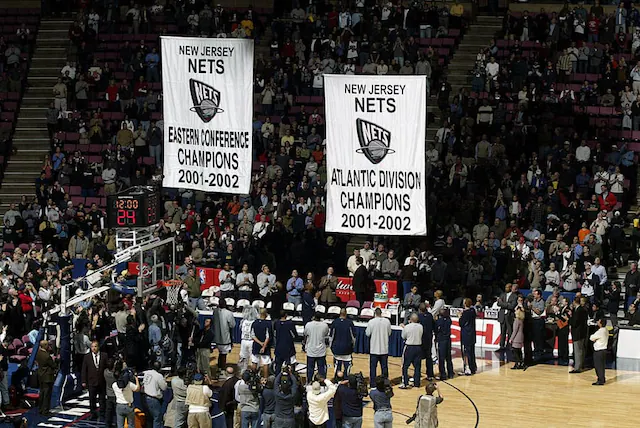
Aaron Williams remains a beloved figure in Nets history because he embodied the grit of a team that refused to be intimidated by the giants of the West. Whether he was battling Shaq in the paint or sprinting the floor to finish a signature Jason Kidd pass, “The A-Train” provided the blue-collar engine that powered New Jersey to the highest stage in basketball.
His journey from an undrafted free agent to a fixture in the NBA Finals serves as a reminder that in the NBA, strength isn’t just about height—it’s about the work put in when the cameras aren’t watching.