
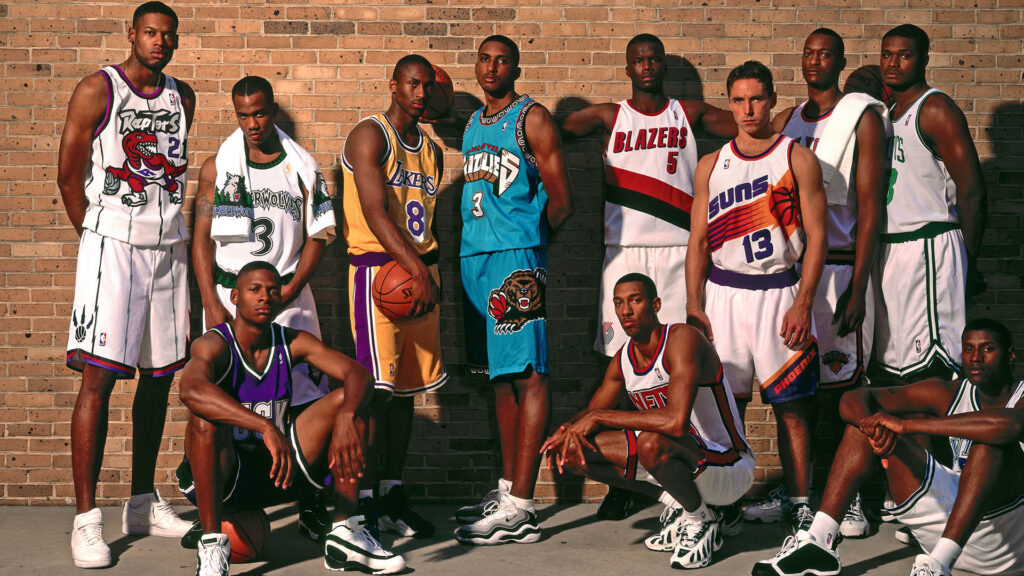
In the endless barber-shop debates that fuel NBA culture, the conversation eventually turns to a single, impossible question: Which draft class reigns supreme? For decades, the purists have pointed to the 1984 class that gave us Michael Jordan and Hakeem Olajuwon. The younger generation leans toward the 2003 class, the “LeBron James era” that brought us a decade of South Beach dominance. But if you ask Shareef Abdur-Rahim—the man who entered the league as the third overall pick in 1996—the debate is already over.
Back in late 2017, Abdur-Rahim sat down to discuss the legacy of his peers, and he didn’t mince words. While acknowledging the greatness of those who came before and after him, he laid out a definitive case for why the 1996 NBA Draft remains the gold standard of professional basketball. Today, looking back through a lens that spans nearly three decades of basketball evolution, his argument isn’t just nostalgic; it’s analytically sound.
The Depth of a Revolution

Shareef’s central argument wasn’t predicated on just the top-tier “Hall of Fame” names, though those are plentiful. Instead, he focused on the sheer density of talent—the “depth” of a class that essentially provided the NBA with its primary rotation players for fifteen years.
“I rank the 1996 draft over any other draft class,” Abdur-Rahim stated with the confidence of someone who lived through the grind. “If you just look at the depth of our class, the amount of All-Stars, the amount of MVPs, and even the guys who didn’t make All-Star teams but were high-level starters for a decade—it’s unmatched.”
When we look at the 1984 class, we see a “Mount Rushmore” effect. It was top-heavy with icons like Jordan, Barkley, Stockton, and Hakeem. However, once you move past the lottery, the talent pool thins out significantly. In 2003, the “Big Three” of LeBron, Wade, and Bosh (plus Carmelo Anthony) dominated the headlines, but the middle-to-late first round didn’t produce the same consistent impact as ’96.
The 1996 class, by contrast, was a relentless wave of talent. The sheer talent density of the ’96 class is staggering when you break it down by role and impact. It was anchored by a trio of legendary MVPs in Kobe Bryant, Allen Iverson, and Steve Nash, but the depth extended far beyond the hardware. The class featured elite snipers who helped redefine modern shooting, like Ray Allen and Peja Stojaković, alongside a massive wave of perennial All-Stars including Stephon Marbury, Antoine Walker, Jermaine O’Neal, Zydrunas Ilgauskas, and Abdur-Rahim himself. Even the defensive end of the floor was dominated by this group, led by Marcus Camby and the legendary Ben Wallace—who, despite going undrafted that year, is culturally and chronologically inseparable from this iconic draft crop.
Blueprinting the Modern Game
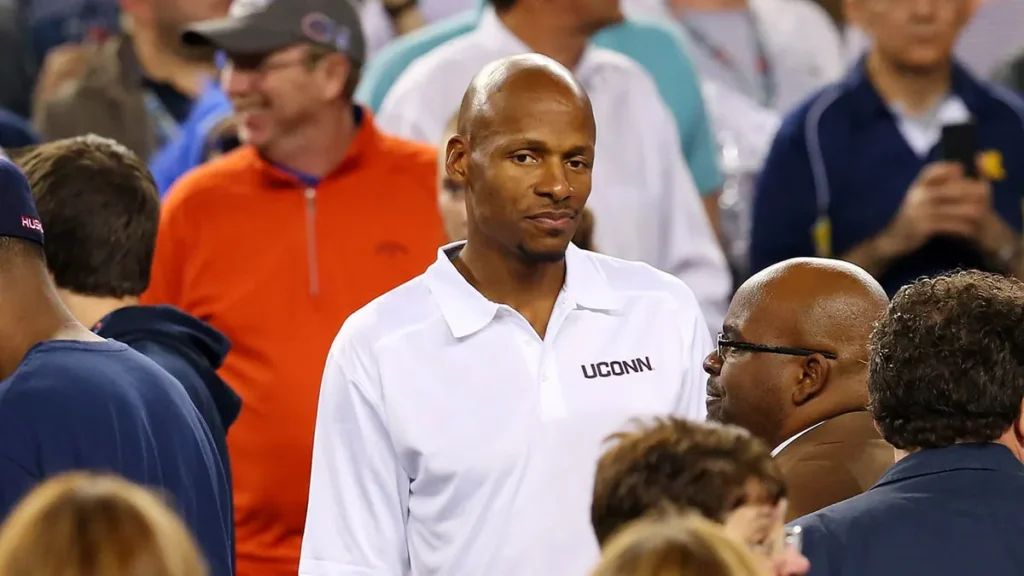
One of the most compelling aspects of Abdur-Rahim’s argument is how the 1996 class essentially blueprinted the basketball we see in 2025. Today’s NBA is defined by three-point volume, floor spacing, and positionless “point-forwards.” Look closely at the ’96 roster, and you see the prototypes.
Ray Allen and Peja Stojaković weren’t just “good shooters”; they were the ideological forefathers of the Steph Curry era. They moved without the ball and stretched defenses in ways that were revolutionary for the mid-90s. Steve Nash, a two-time MVP from that class, pioneered the high-octane, “seven seconds or less” offense in Phoenix, which serves as the tactical foundation for almost every modern NBA offensive scheme.
Then there was the cultural shift. Allen Iverson and Kobe Bryant didn’t just play basketball; they changed how the world perceived basketball players. Iverson brought the hip-hop aesthetic and the “unguardable” crossover to the forefront, while Kobe’s “Mamba Mentality” became the psychological framework for an entire generation of athletes across all sports. Abdur-Rahim notes that while ’84 was a “traditional” class, ’96 was a revolution. “We had guys that changed how the game was played,” he noted. “We had bigs who could shoot, point guards who could score at will, and a level of competition where every night you were facing someone from your own draft class who was a problem.”
Longevity and Legacy: The 20-Year Window
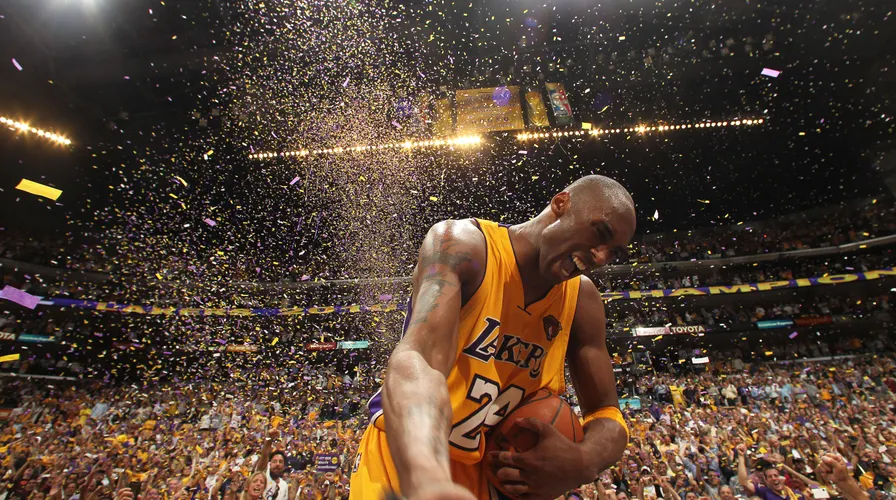
For a draft class to truly be the “Greatest of All Time,” it must possess the staying power to define multiple eras. The 1996 class didn’t just dominate the late 90s; they were still winning championships and MVP votes well into the 2010s.
Abdur-Rahim himself was a model of that consistency. A versatile forward who could score from the post or the perimeter, he averaged 20 points per game for five consecutive seasons early in his career. He was the epitome of the “high-level starter” he praised in his defense of the class. When you combine his production with the longevity of Ray Allen (who was hitting corner threes for the Heat championship in 2013) and Kobe Bryant (who was an All-Star until 2016), you see a two-decade reign of terror.
By the numbers, the 1996 class produced more than 60 All-Star appearances. They collected double-digit championship rings across different franchises and roles. While LeBron James has single-handedly kept the 2003 class in the GOAT conversation by playing at an elite level for 22 seasons, Abdur-Rahim’s point remains that one man does not make a “class.” If you were to take the top 12 players from 1996 and play them against the top 12 from 2003, the depth of ’96 would likely overwhelm the star power of ’03.