
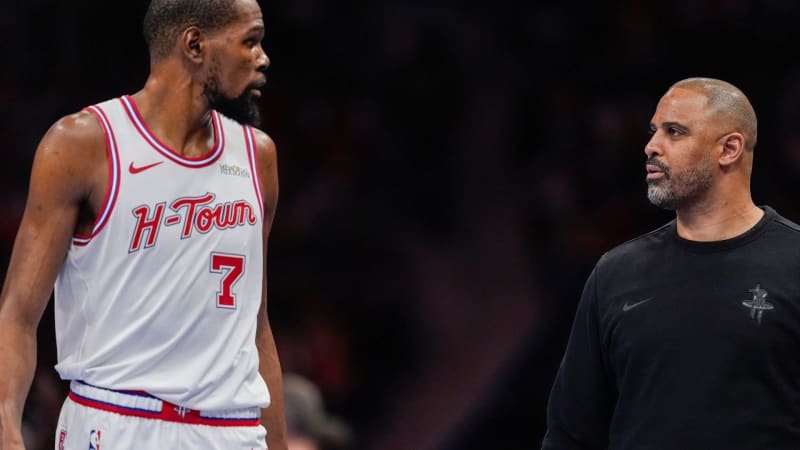
The “transition” from Phoenix is over, and the “renaissance” is facing its harshest critic: a win-or-go-home reality. For the Houston Rockets to avoid a 0-3 death sentence, Kevin Durant cannot just be a “positionless masterpiece”—he has to be a savior.
In the summer of 2025, when the Rockets sent shockwaves through the league by acquiring Durant in a blockbuster trade, the NBA world wondered how the legendary scorer would fit into Ime Udoka’s rigid, defensive-minded ecosystem. Some skeptics questioned how he would transition from his role with the Phoenix Suns back to a more “natural” role reminiscent of his MVP days with the Oklahoma City Thunder. Fast forward to the 2026 postseason, and the answer has arrived: Durant has mastered both forward positions to become the ultimate tactical skeleton key.
The Rockets now sit in a precarious 0-2 hole against a battle-hardened Los Angeles Lakers squad. After missing Game 1 due to a right knee contusion sustained in practice, Durant returned for Game 2, but his 23 points in 41 minutes weren’t enough to prevent a 101-94 loss. The “Screener Effect” and “Gravity” that Udoka touted all winter are currently being smothered by a Lakers defense that is playing with the clinical precision of a team that knows exactly how to kill a giant. As the series shifts to the Toyota Center this Friday, the Rockets aren’t just fighting for a win; they are fighting for the validity of their entire championship project.
The Burden of the Skeleton Key
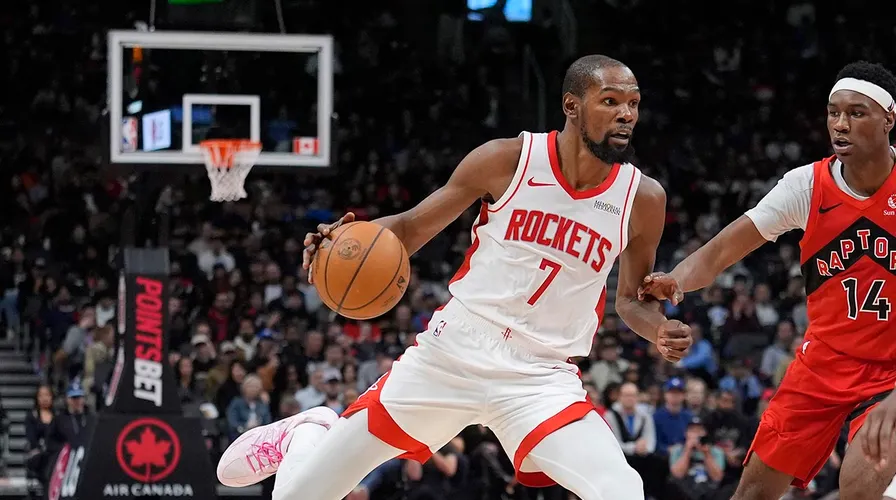
The injury to veteran floor general Fred VanVleet fundamentally changed what Udoka had to ask of Kevin Durant before the season even tipped off. VanVleet suffered a torn ACL in his right knee during an unofficial team workout in late September 2025, a devastating blow that stripped Houston of its primary playmaker and veteran stabilizer. In a perfect world, the 37-year-old Durant is the “finisher,” the elite assassin waiting at the end of a sequence to deliver the dagger. In the 2026 reality, he has been forced to become the primary sun around which a young, hungry roster orbits.
Udoka’s offensive philosophy, built on constant movement and the exploitation of mismatches, now relies entirely on Durant’s ability to be a “Point Forward” and a primary playmaker.
“I would say that he’s played every position, and he’s comfortable at all of them,” Udoka told me when reflecting on how Durant has adapted to the 3-spot while maintaining his versatility. “I think for us, knowing that Fred [VanVleet] is out, our young guys are learning on the fly—he’s had to handle it at times more than he’s used to.”
In Los Angeles, that “handling it” looked like an uphill climb against a Lakers’ scheme designed to turn Durant’s versatility against him. By blitzing the ball out of Durant’s hands and forcing young stars like Amen Thompson and Reed Sheppard to make high-leverage decisions, the Lakers have successfully disrupted Houston’s rhythm. Durant’s turnover numbers have crept up—a byproduct of the sheer volume of defensive attention he commands from a swarming purple-and-gold frontcourt.
“Turnover numbers are too high at times, but they’re swarming him and blitzing him quite a bit,” Udoka admitted, acknowledging the pressure cooker Durant is operating in.
Cultural Gravity and the Screener Dilemma
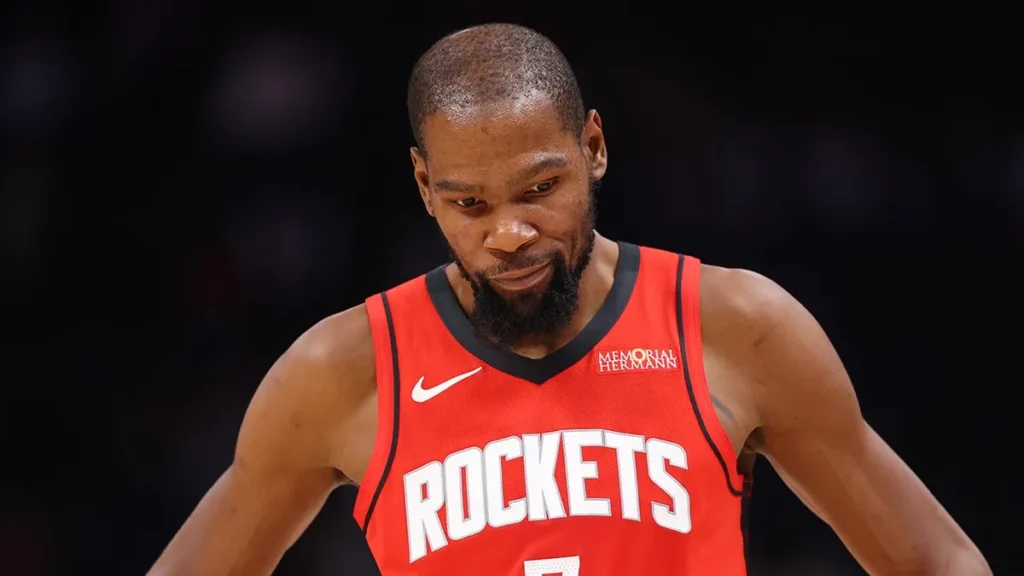
The hallmark of the Rockets’ 52-win regular-season success was Udoka’s innovative use of Durant as a hybrid threat. Durant’s influence in the Rockets’ locker room is rooted in a lifetime of cultural dominance. For many of the young Rockets, playing alongside Durant is a surreal experience. As Tari Eason put it: “KD? I knew about him especially when all the kids in the ‘hood had his shoes — his Nike Elite socks went triple, triple TRIPLE platinum with the youth.”
That cultural weight is exactly why Udoka relies on Durant’s “Gravity” to unlock the offense. Regardless of the lineup, Udoka views Durant as a Swiss Army knife that can be deployed anywhere on the floor to create an advantage.
“Whatever you want to call him—a two, three, four—he’s comfortable at all those and we can use him basically the same at all those positions,” Udoka explained. “The fact that he can screen and people won’t leave his body allows guys to free up to get downhill or him handling or post up iso and he can do all the above.”
That theory has met a harsh playoff reality in the first two games of this series. While Durant’s gravity is still creating open looks for his teammates, the Rockets’ supporting cast hasn’t been able to consistently punish the Lakers for the attention they afford KD. In Game 2, the Rockets’ shooting went cold at the worst possible moments, failing to capitalize on the space Durant’s presence provided. For Friday’s Game 3, the adjustment isn’t just about his superstar scoring more points—it’s about the collective group proving they can thrive in the chaos Durant creates.
Year 19 and the Physical Toll of Longevity
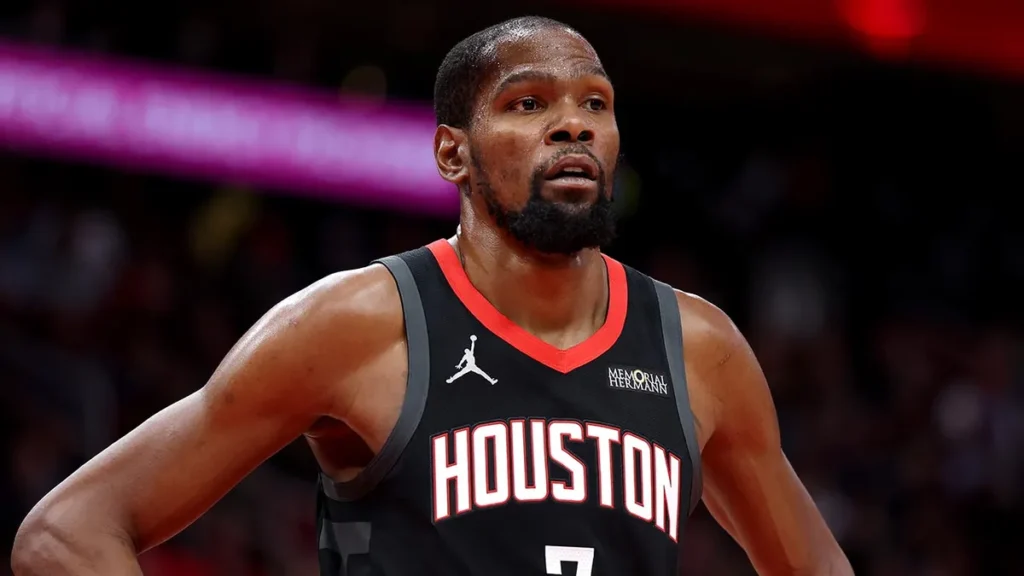
Perhaps the most concerning aspect of the Rockets’ current predicament is the physical toll on Durant. At nearly 38 years old and in his 19th NBA season, he is being asked to play playoff minutes that would challenge a man a decade younger. With the absence of Steven Adams’ interior presence and VanVleet’s backcourt leadership, the Rockets have no choice but to push their superstar to the limit.
The knee contusion that kept him out of the series opener was a flashing yellow light for a team with title aspirations. Although he pushed through for 41 grueling minutes in Game 2, the recovery process remains a critical storyline. If Durant’s movement remains even slightly hampered, the “positionless” aspect of his game—his ability to slide from the small forward spot to a small-ball center in a single possession—becomes much harder to execute.
“To be able to do this with longevity, and at this high level, it’s incredible,” Udoka reiterated. “He can handle it, or he can post up ISO, and he can do all the above.”
But “incredible” is a regular-season adjective; “victorious” is the only one that matters in April. The Rockets’ tandem of Durant and All-Star center Alperen Şengün was supposed to be the bedrock of a championship identity. While Şengün provides the interior playmaking and rebounding, Durant provides the spacing and late-clock bail-out scoring. Now, down 0-2, they must rediscover that chemistry before the Lakers’ length and experience close the door on the 2026 season.
The Mission: Friday Night at Toyota Center
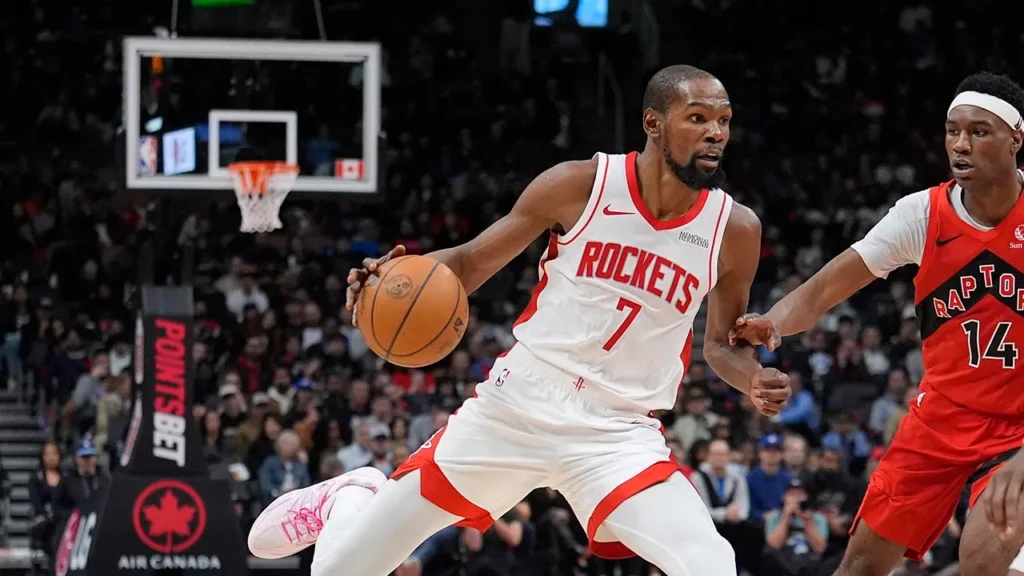
The outlook for Game 3 is centered entirely on the high-stakes atmosphere at the Toyota Center in Houston this Friday night. As the series shifts to the Rockets’ home floor, the team faces a singular, season-defining mission: they must protect their home court and finally find a tactical solution to the aggressive blitzing defense that the Lakers have used to stifle their offense throughout the first two games.
The “Udoka Effect” was designed exactly for this moment. It was designed to give the Rockets a “skeleton key” when the offense stalls and the pressure rises to an unbearable level. Udoka has praised Durant’s ability to stay poised in late-game situations, noting that his veteran experience is the anchor for a young locker room.
“He’s done it his whole career… you’re going to get a quality shot or he’s going to get a quality shot for somebody else,” Udoka noted.
The Rockets are a team built on the idea that talent, when deployed with tactical flexibility, can overcome the “championship DNA” of veteran franchises. They have the talent in Durant, and they have the aggressive coaching of Udoka. What they lack is momentum. The discipline to stick to the game plan under the crushing weight of a 0-2 deficit will determine if this “Renaissance” is the start of a dynasty or just a footnote in LeBron James’ late-career dominance.
“Whether you make or miss a shot, you can live with that, but doing the right thing… that was different from the first half,” Udoka said.
That commitment to “doing the right thing” must be present for all 48 minutes on Friday. If the Rockets are to prove that their ceiling is still “virtually non-existent,” it starts with a win in Game 3. Otherwise, the 2026 title charge might end before the first round does. The city of Houston is ready, the “Slim Reaper” is back on the hardwood, and the “positionless masterpiece” has one game to turn back into the savior the Rockets traded for.