
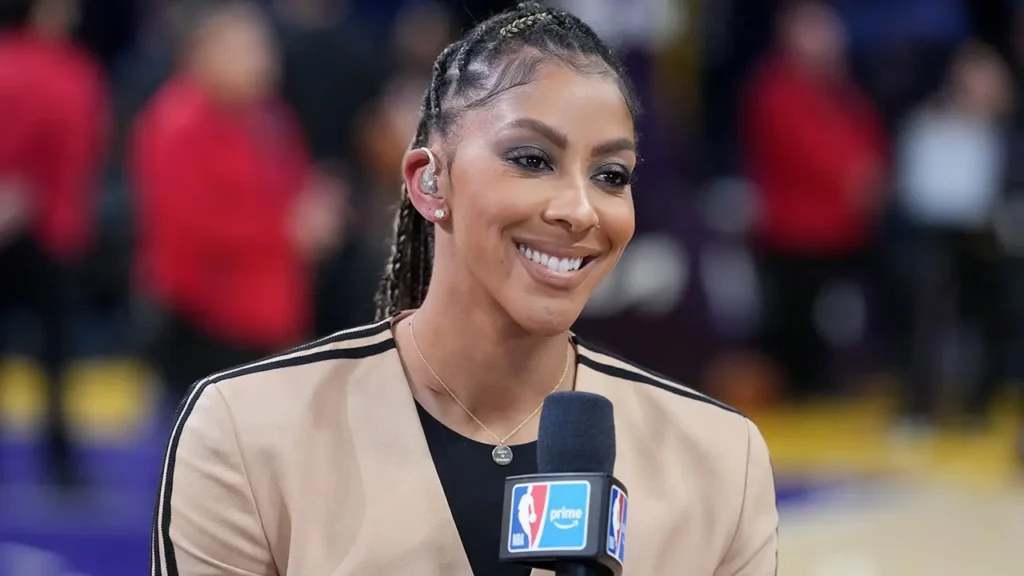
In the grand tapestry of professional basketball history, few athletes have managed to fundamentally redefine a position quite like Candace Parker. A trailblazer in every sense of the word, Parker officially cemented her legacy last week as she took her place in basketball immortality. She was inducted into the Naismith Memorial Basketball Hall of Fame as part of the prestigious Class of 2026, an honor that serves as the definitive crowning achievement of a career that transformed the WNBA and the broader sports landscape.
Joining a class that features heavyweights like Amar’e Stoudemire, Mike D’Antoni, and Doc Rivers, Parker’s induction was a moment of reflection for many across the league. Among those offering high praise was Atlanta Hawks guard and NBA Players Association President CJ McCollum. Speaking with Landon Buford, McCollum didn’t hold back his admiration for the player he considers one of the most influential to ever step onto the hardwood.
The Gold Standard: A Career Defined by Firsts
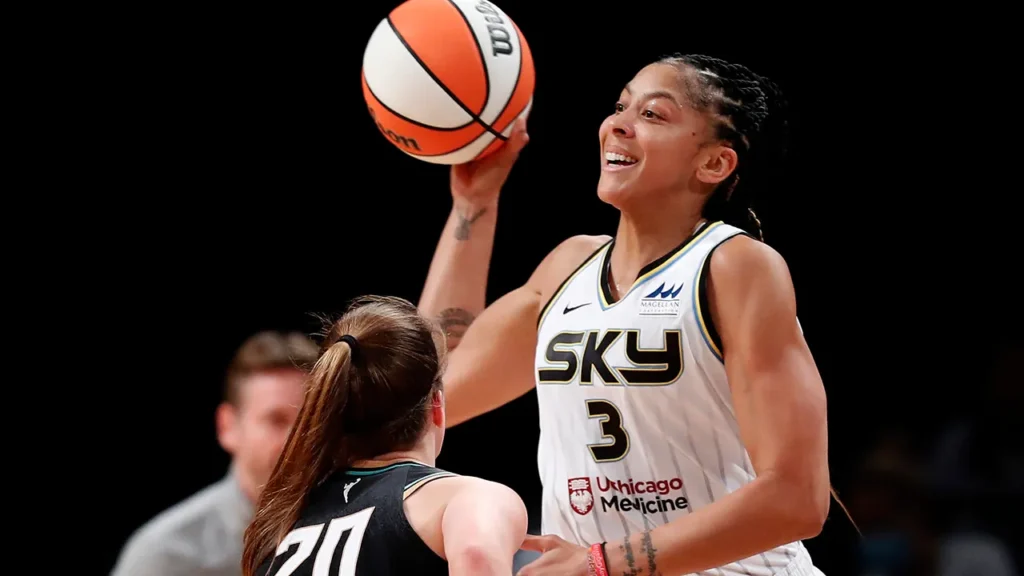
Candace Parker’s resume reads like a checklist of impossible feats. Entering the league as a phenom out of the University of Tennessee under the legendary Pat Summitt, Parker made an immediate, seismic impact. She remains the only player in WNBA history to win the league MVP and Rookie of the Year awards in the same season—a feat of dominance that has never been replicated.
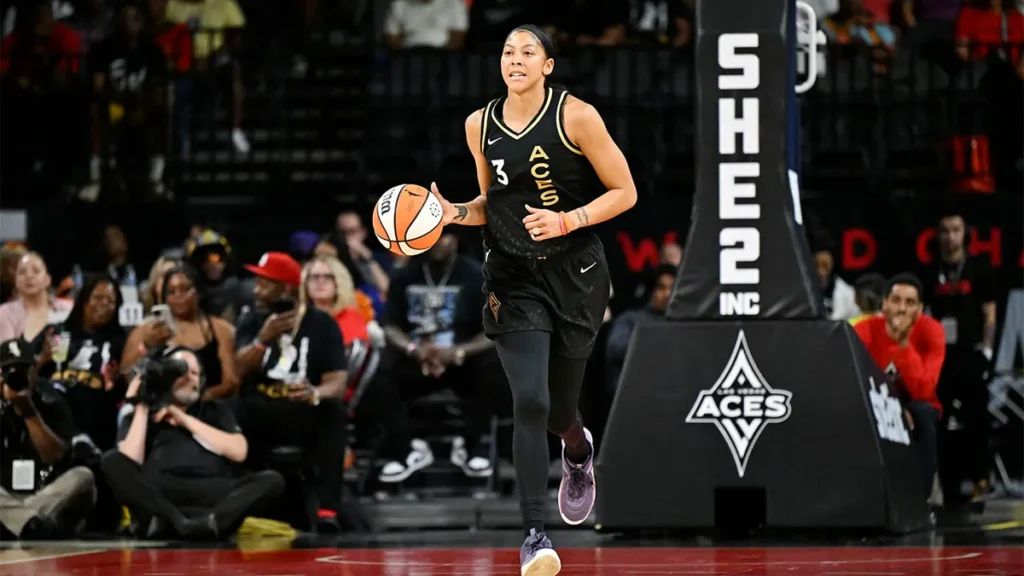
Furthermore, she stands alone as the only player to lead three different franchises to a WNBA championship: the Los Angeles Sparks (2016), the Chicago Sky (2021), and the Las Vegas Aces (2023). This unique achievement underscores her ability to adapt to different systems, elevate varying rosters, and lead through diverse stages of her career.
For McCollum, Parker’s journey was a masterclass in excellence. “Happy to see Candace, one of my favorite basketball players of all time. Seeing her become a Hall of Famer is well deserved,” McCollum told Buford. “From her days in Tennessee on to the league, she’s been great, impactful, and obviously transitioning well off the court as well.”
Redefining the “Point-Forward” Archetype
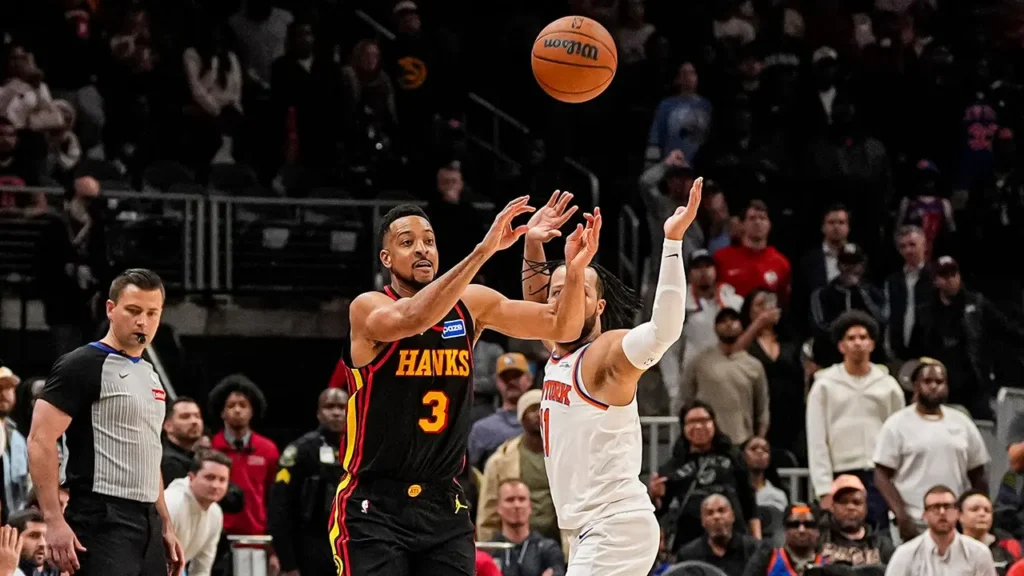
McCollum’s appreciation for Parker isn’t a recent development. In the reporting by Buford, it is noted that as far back as 2018, McCollum was citing Parker as a primary influence on his own perspective of the game. When discussing the best athletes to wear the number three, McCollum notably placed Parker in the same breath as icons like Allen Iverson and Dwyane Wade.
McCollum highlighted Parker’s unique physical tools and high basketball IQ, describing her as a “very talented athlete” who mastered the “point-forward” role long before it became a standard requirement for elite forwards. “She can get to the cup, has post moves, [and is a] point-forward,” McCollum previously noted.
This versatility allowed her to finish a 15-year career with staggering averages of 16.0 points, 8.5 rebounds, and 4.0 assists per game. She wasn’t just a scorer or a rebounder; she was a primary playmaker who could initiate the offense from the top of the key or dominate in the paint—a duality that forced the WNBA to evolve its defensive strategies.
Impact Beyond the Box Score: Inspiration and Mentorship
While the statistics are staggering, the 2026 Hall of Fame ceremony emphasized the emotional and cultural weight of Parker’s career. Parker herself described the honor as “super special,” particularly as she entered the Hall alongside peers like Elena Delle Donne and idols from the 1996 U.S. Olympic team, such as Lisa Leslie, Dawn Staley, and Teresa Edwards.
As reported by Landon Buford, Parker’s induction is also a nod to her influence as a pioneer for the next generation. Just as she looked up to icons like Chamique Holdsclaw, today’s rising stars look to Parker as the blueprint for the multi-hyphenate athlete.
“I am so happy for Chamique, and I am so happy that she is getting her flowers,” Parker told the press, illustrating the deep respect she holds for those who paved the way. Her own transition into broadcasting and executive roles has set a new standard for what “life after the league” looks like. Parker has become a staple of NBA and WNBA coverage, providing a bridge between the two leagues and proving that her basketball mind is just as sharp in the studio as it was on the court.
The Peer Perspective: Respect Across Leagues

McCollum’s comments carry significant weight given his dual role as an active NBA star and the President of the NBPA. His recognition of Parker’s impact underscores the deep mutual respect between the NBA and WNBA communities—a bond that Parker helped strengthen through her professional relationships and media presence.
McCollum remains a vocal advocate for the legends who paved the way across both leagues. By acknowledging her as one of his “favorite players of all time,” he reinforces the idea that greatness is not gendered—it is recognized by those who truly know the game.
Parker’s 15-year career also included a Defensive Player of the Year Award in 2020, further proving that her impact was felt on both ends of the floor. She wasn’t just a generational talent; she was a generational worker.
A Final Immortality
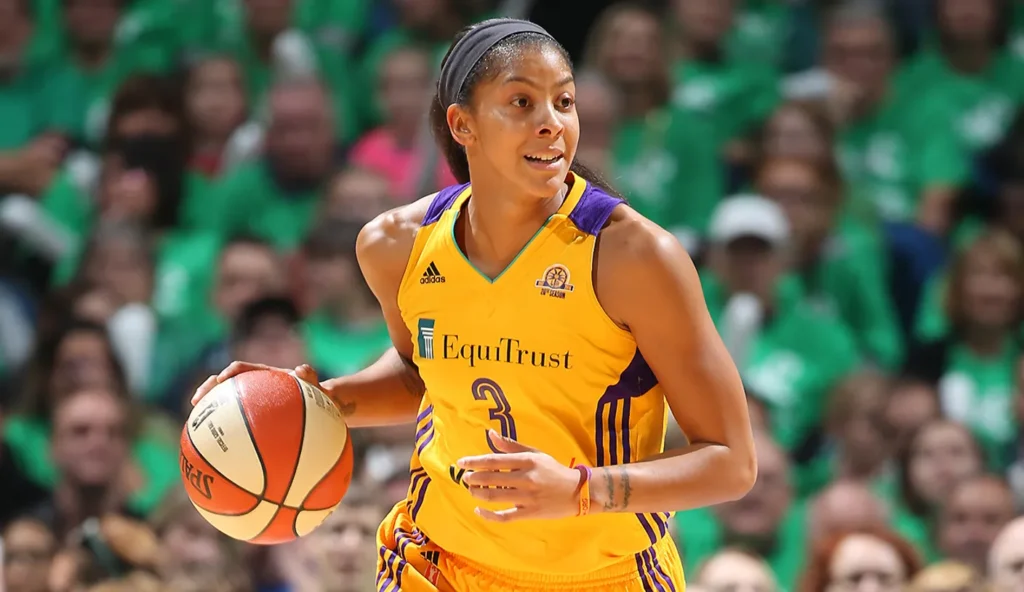
The induction of Candace Parker into the Hall of Fame isn’t just a celebration of a retired jersey or a trophy case; it is a celebration of a player who refused to accept limitations. From being the “Queen of Knoxville” to becoming a three-time world champion and a powerhouse in the media world, Parker’s legacy is a testament to the power of versatility.
As McCollum’s comments and Buford’s reporting illustrate, Parker’s “immortality” in the Hall is a fitting tribute. She proved that a 6’4″ forward could handle the ball like a guard, defend like a center, and lead like a champion. She didn’t just play the game—she changed how the game is played.
Final Thoughts
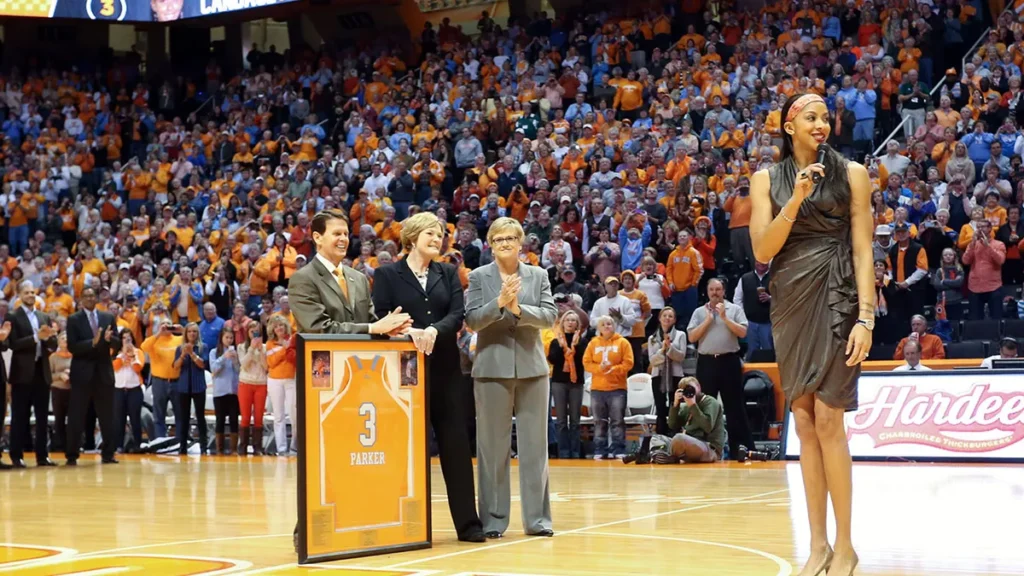
Candace Parker’s career has been a journey of breaking barriers. Whether she was dunking in college or leading a franchise to its first title in her hometown of Chicago, she has always carried the weight of the game with grace. As CJ McCollum succinctly put it, her place in the Hall of Fame is not just earned—it is “well deserved.”