

When Ronald Reagan took office in 1981, he ushered in a conservative realignment built on tax cuts, deregulation, a smaller federal safety net, and a strict “colorblind” interpretation of civil rights. Across his two terms from 1981 to 1989,Reagan maintained strong overall political popularity, yet his presidency remains one of the most fiercely criticized eras in modern history among Black civil rights leaders, historians, and economists.
Supporters argue that Reagan’s pro-growth economic policies eventually created millions of jobs for Black workers and that he signed significant symbolic and legislative measures, including the Martin Luther King Jr. federal holiday. Critics, however, contend that his domestic policies, judicial appointments, anti-drug laws, and civil rights rollbacks systematically undermined economic progress and legal protections for African Americans.
Economic Policies, Employment Trends and Social Safety Net Cuts
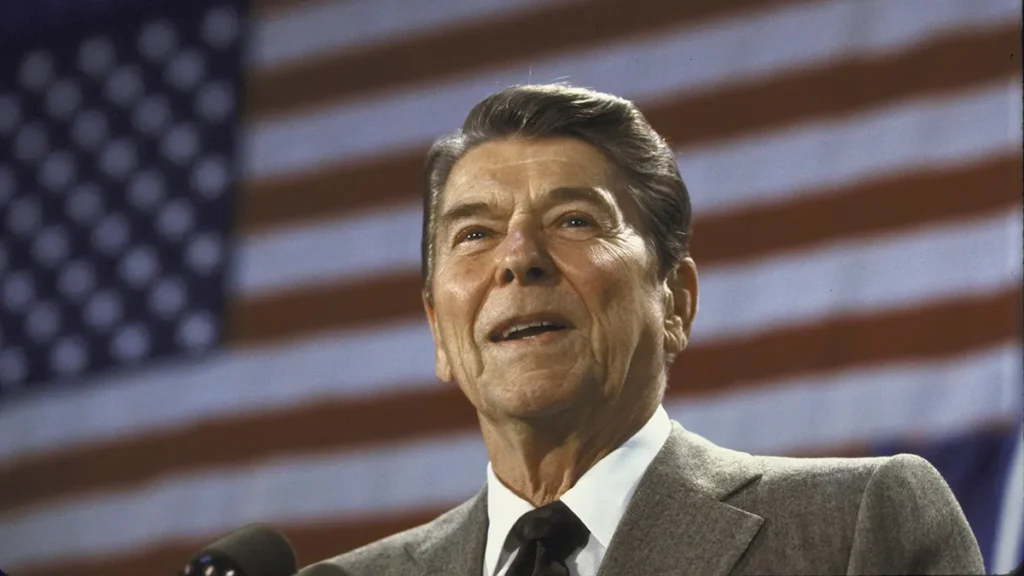
A central pillar of Reagan’s domestic agenda—known as “Reaganomics”—involved sweeping income tax reductions, deregulation, and sharp cuts to federal domestic spending. During the severe economic recession of 1981–1982, the Black unemployment rate surged to a post-World War II high of 21.2% in early 1983, more than double the white unemployment rate. As the broader economy recovered over the remainder of the decade, Black employment expanded significantly, with the Black unemployment rate falling to roughly 11.4% by the time Reagan left office in January 1989.
Despite later job growth, economists and anti-poverty researchers noted that Reagan’s deep reductions in federal funding for programs such as Aid to Families with Dependent Children (AFDC), food stamps, Medicaid, subsidized public housing, and Comprehensive Employment and Training Act (CETA) job programs disproportionately harmed low-income Black households. Meanwhile, the decline of unionized manufacturing jobs in industrial cities during the 1980s eroded a primary pathway to the Black middle class, causing the median racial wealth and income gap to widen over the course of his presidency.
Civil Rights Enforcement and Rhetoric
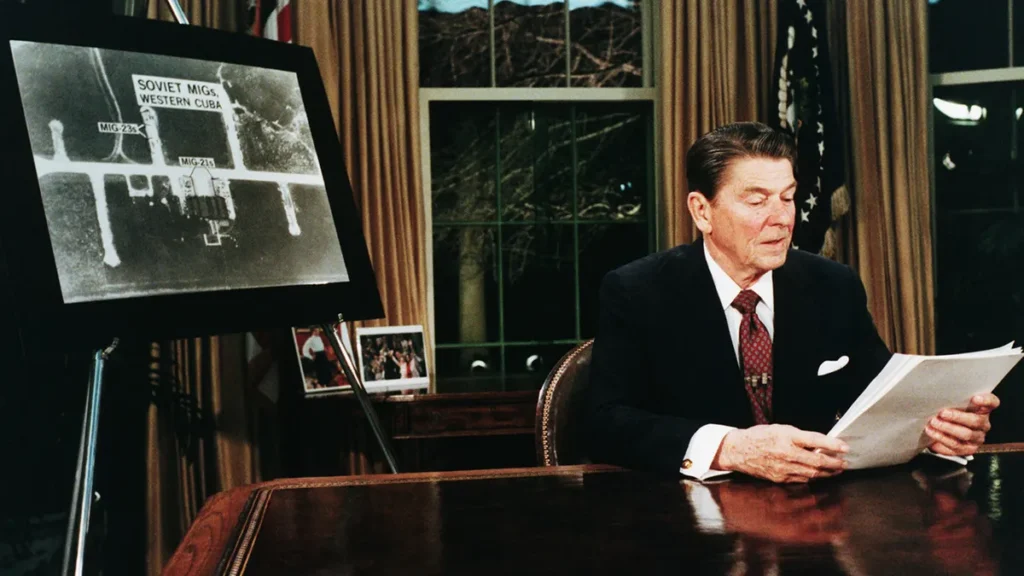
Reagan’s administration fundamentally shifted how the federal government enforced civil rights laws. Opposing race-conscious remedies such as busing for school desegregation and affirmative action hiring goals, Reagan appointed conservative officials to the Justice Department’s Civil Rights Division and restructured the U.S. Commission on Civil Rights, significantly reducing federal lawsuits and consent decrees aimed at combating systemic discrimination.
His rhetoric also drew sustained criticism from Black leaders. During his 1980 presidential campaign, Reagan delivered a speech on “states’ rights” at the Neshoba County Fair near Philadelphia, Mississippi—the site where three civil rights workers were murdered in 1964—and frequently invoked the racialized trope of the “welfare queen” to argue against public assistance programs. In 1982, his administration initially supported restoring tax-exempt status to Bob Jones University, a private Christian college that banned interracial dating, before the U.S. Supreme Court ruled against the school. Furthermore, in 1988, Reagan vetoed the Civil Rights Restoration Act—which restored broad anti-discrimination protections for institutions receiving federal funds—though Congress overrode his veto.
Symbolic Milestones and Legislative Signings
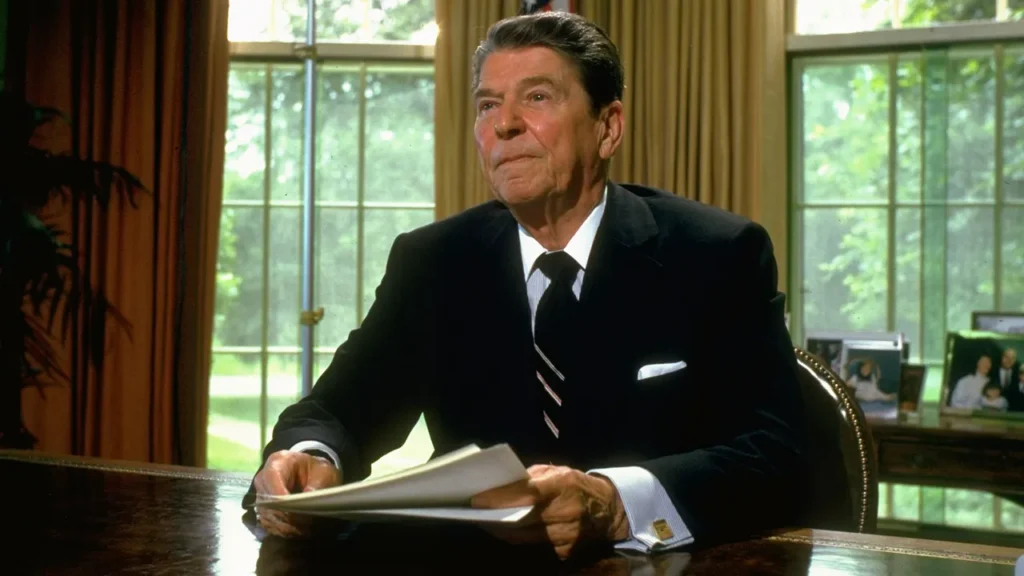
Despite frequent clashes with civil rights organizations, Reagan signed several notable legislative measures supported by Black leaders during his two terms. In 1982, he signed a 25-year extension of the Voting Rights Act of 1965, strengthening Section 2 of the law to allow plaintiffs to challenge discriminatory voting practices based on their discriminatory results rather than having to prove intentional bias. The following year, after initially expressing reservations about the cost of a new federal holiday and questioning Dr. Martin Luther King Jr.’s legacy, Reagan signed legislation in November 1983 establishing the third Monday in January as a federal holiday honoring the civil rights leader.
Beyond statutory measures, Reagan enacted executive initiatives aimed at institutional and economic support. He issued an executive order creating the White House Initiative on Historically Black Colleges and Universities to increase HBCU participation in federal programs, while also directing federal agencies to expand procurement contracts with minority-owned businesses.
In terms of senior executive leadership, Reagan appointed Samuel Pierce as Secretary of Housing and Urban Development in 1981. Pierce served throughout Reagan’s entire eight years in office, remaining the sole African American member of his cabinet.
The War on Drugs and Mandatory Minimum Sentencing

Perhaps the longest-lasting domestic impact of the Reagan presidency on Black communities was the escalation of the War on Drugs. Following the emergence of crack cocaine in urban neighborhoods in the mid-1980s, Reagan signed the Anti-Drug Abuse Act of 1986 and the Anti-Drug Abuse Act of 1988.
The 1986 law established strict mandatory minimum prison sentences for drug offenses and introduced the notorious 100-to-1 sentencing disparity between crack cocaine and powder cocaine—treating five grams of crack (more prevalent in low-income Black neighborhoods) the same as 500 grams of powder cocaine (more prevalent in affluent white communities) for a mandatory five-year prison sentence. Combined with increased federal funding for aggressive street-level policing and prison construction, these policies triggered a dramatic surge in the incarceration of Black men and women over the following decades.
Foreign Policy and Apartheid in South Africa
Reagan’s foreign policy toward South Africa also sparked intense opposition from Black Americans and anti-apartheid activists. Favoring a policy of “constructive engagement” with South Africa’s white minority government rather than economic sanctions, Reagan argued that isolating the regime would hurt Black South African workers and push the region toward Soviet influence.
In 1986, Reagan vetoed the Comprehensive Anti-Apartheid Act, which imposed strict economic sanctions on South Africa and demanded the release of Nelson Mandela. A bipartisan majority in Congress, backed by sustained pressure from the Congressional Black Caucus and the Free South Africa Movement, overrode Reagan’s veto in a major foreign policy rebuke.
A Defining Ideological Turning Point
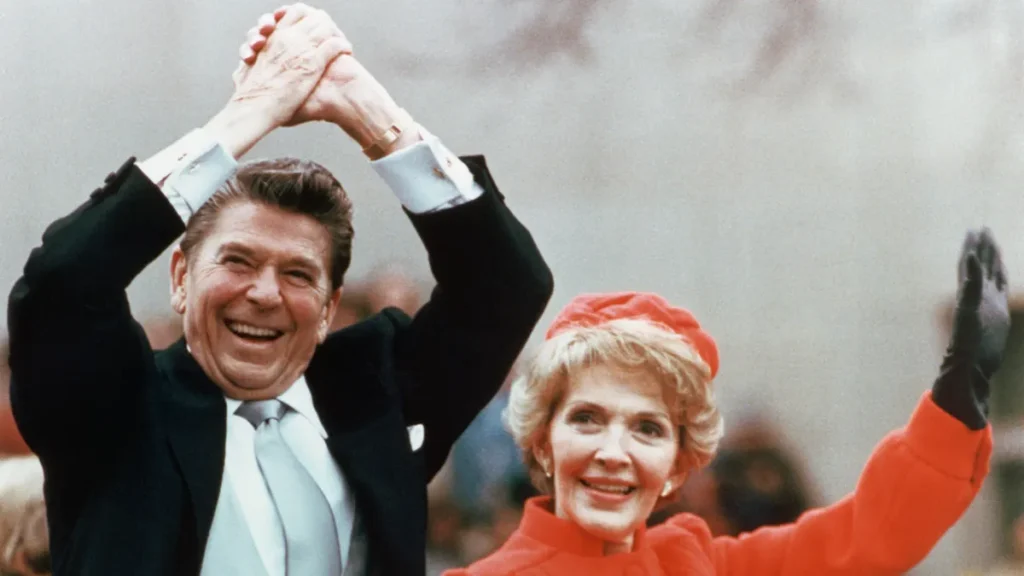
Ronald Reagan’s presidency marked a decisive break from the post-1960s consensus on federal civil rights enforcement and anti-poverty policy. While supporters highlight the signing of the Martin Luther King Jr. holiday, the extension of the Voting Rights Act, and late-1980s job creation as positive outcomes, critics view his eight years in office as a period of deliberate retreat from racial justice—one whose economic cuts, judicial appointments, and punitive drug laws reshaped Black America for generations.