
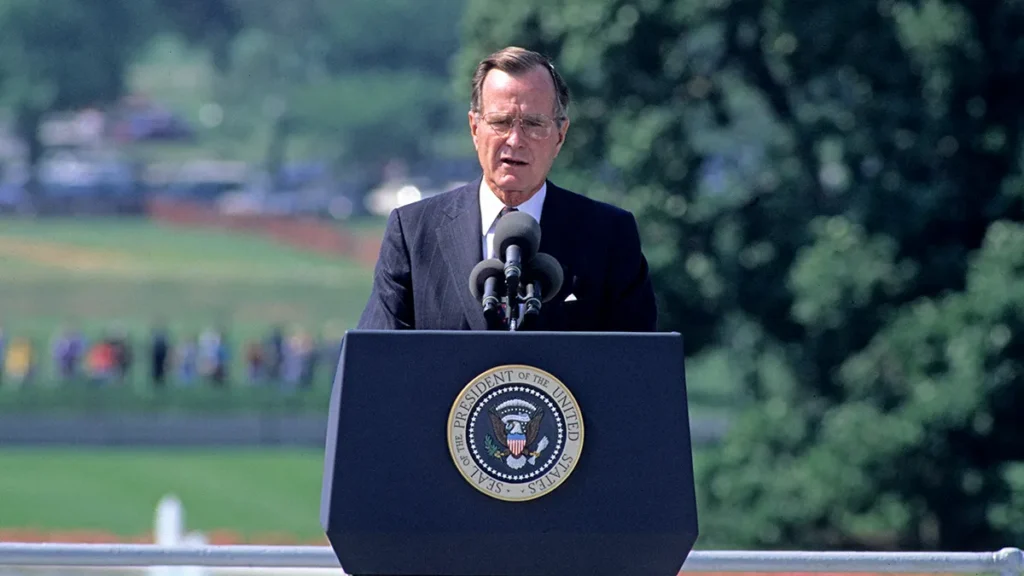
When George H.W. Bush entered the White House in 1989 after serving eight years as Ronald Reagan’s vice president, he pledged to lead a “kinder, gentler nation” and sought to soften the sharp racial tensions that had characterized the 1980s.Across his single term from 1989 to 1993, Bush pursued a moderate conservative approach that combined landmark civil rights legislation, high-profile federal appointments, and support for Historically Black Colleges and Universities (HBCUs) with contentious Supreme Court nominations, anti-drug enforcement policies, and a recession that disproportionately affected Black workers.
Evaluating his record requires examining both the institutional milestones achieved during his presidency and the political controversies that shaped his standing in Black communities.
The Civil Rights Act of 1991 and Federal Appointments
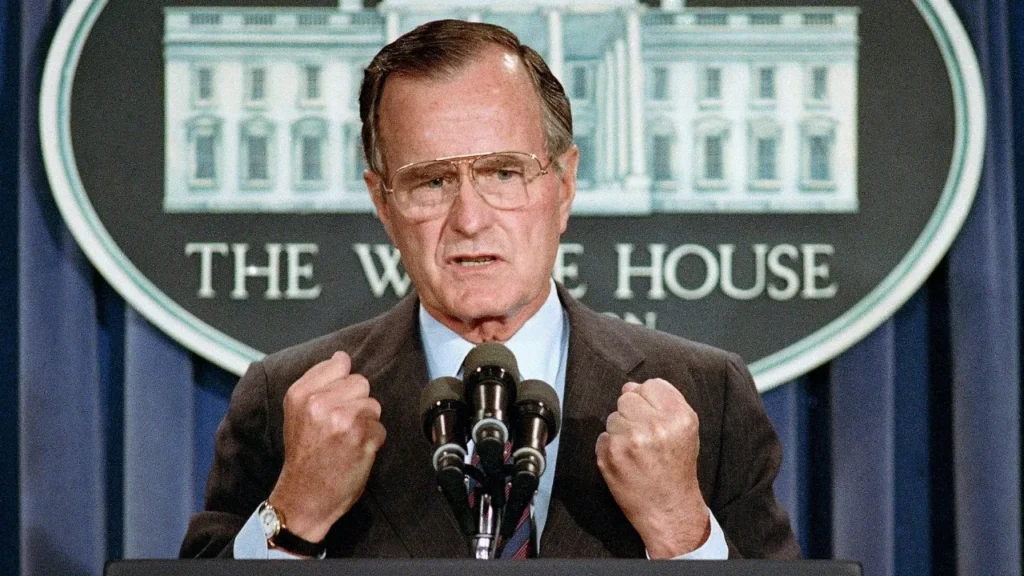
One of Bush’s most significant legislative achievements affecting Black Americans was signing the Civil Rights Act of 1991. Following a series of 1989 Supreme Court decisions that narrowed the scope of federal anti-discrimination statutes and made it harder for workers to sue over workplace bias, civil rights groups pushed Congress to restore those legal protections. After initially vetoing a 1990 version of the bill over concerns that it would encourage hiring quotas, Bush negotiated a compromise and signed the revised measure in November 1991. The law strengthened remedies for intentional employment discrimination, established the right to jury trials and monetary damages in Title VII cases, and reaffirmed disparate-impact protections.
Bush also elevated African Americans to prominent roles across his administration and the military. In 1989, he nominated Colin Powell to serve as Chairman of the Joint Chiefs of Staff, making him the first African American—and youngest officer—to hold the nation’s highest military post. Bush also appointed Louis Sullivan as Secretary of Health and Human Services, named several African Americans to senior diplomatic and judicial positions, and established the White House Initiative on Historically Black Colleges and Universities by executive order in 1989 to strengthen federal agency support for HBCUs.
Supreme Court Nominations and Civil Rights Tensions
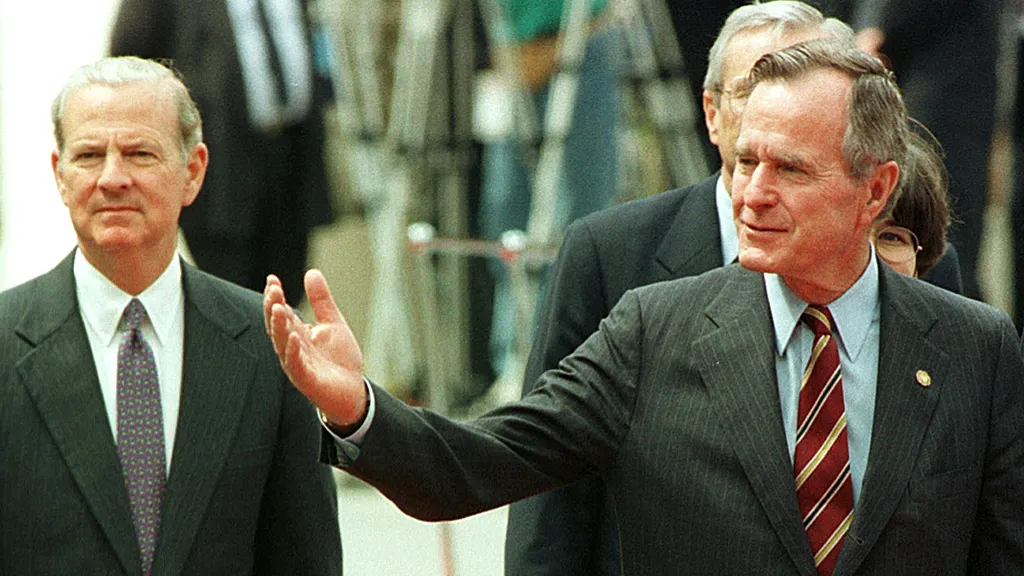
Despite signing the 1991 Civil Rights Act, Bush’s judicial nominations generated deep division among Black leaders and civil rights organizations. In 1991, following the retirement of Thurgood Marshall—the first African American Supreme Court justice and a towering figure of the civil rights movement—Bush nominated Clarence Thomas, a conservative Black federal appellate judge and former head of the Equal Employment Opportunity Commission.
While supporters praised the nomination as a historic milestone for ideological diversity, major civil rights groups,including the NAACP and the Congressional Black Caucus, opposed Thomas, arguing that his conservative judicial philosophy and opposition to affirmative action threatened decades of civil rights progress. The confirmation hearings became a national flashpoint after law professor Anita Hill testified that Thomas had sexually harassed her while she worked for him, dividing public opinion across racial and gender lines before the Senate narrowly confirmed him.
The War on Drugs, Crime Policy, and the 1988 Campaign Legacy
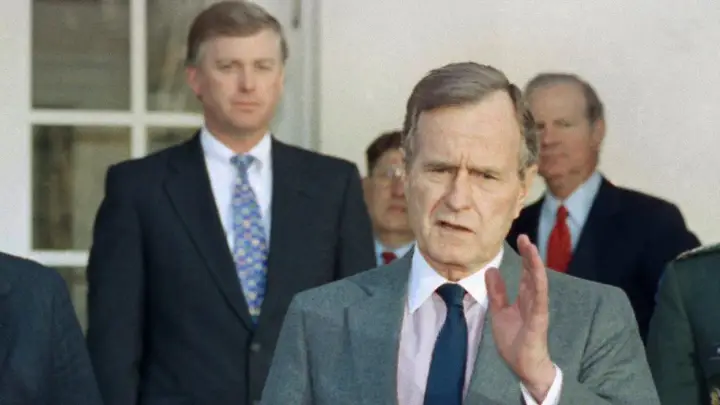
Bush’s relationship with Black voters was also shaped by the lingering fallout from his 1988 presidential campaign, which featured the controversial Willie Horton television advertisements—widely criticized by civil rights leaders for exploiting racial fears around violent crime.
Once in office, Bush escalated the federal War on Drugs, creating the Office of National Drug Control Policy and dramatically increasing funding for drug interdiction, law enforcement, and prison expansion. Under enforcement of the Anti-Drug Abuse Acts of 1986 and 1988, federal prosecutors aggressively pursued mandatory minimum sentences,including the 100-to-1 sentencing disparity between crack and powder cocaine. Criminologists and civil rights advocates later noted that these enforcement priorities fueled a steep rise in the incarceration of Black men during the early 1990s while directing comparatively limited federal resources toward addiction treatment and urban economic development.
Economic Recession and the 1992 Los Angeles Unrest
Economic conditions during Bush’s single term further strained his standing in Black communities. Following the 1990–1991 economic recession, the Black unemployment rate climbed from roughly 11.4% in 1989 to over 14% by 1992,erasing many of the employment gains of the late 1980s and widening poverty rates in urban centers.
In April 1992, racial and economic tensions boiled over following the acquittal of four white Los Angeles police officers in the videotaped beating of Rodney King, an unarmed Black motorist. The resulting six days of civil unrest in Los Angeles caused more than 60 deaths and over $1 billion in property damage. Bush deployed federal troops to restore order and ordered a federal civil rights investigation that later led to the conviction of two officers, while proposing urban enterprise zones and job-training initiatives—though critics argued his administration had neglected deteriorating conditions in American cities prior to the crisis.
A Transitional and Contested Presidency
George H.W. Bush’s four years in office reflected a transitional moment in American racial politics. Supporters point to his signing of the Civil Rights Act of 1991, his executive support for HBCUs, and his historic elevation of Colin Powell as meaningful steps toward inclusion. Critics, however, contend that his escalation of punitive drug enforcement,conservative judicial appointments, and economic stewardship during the early 1990s downturn left persistent structural challenges unaddressed in Black America.