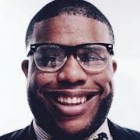
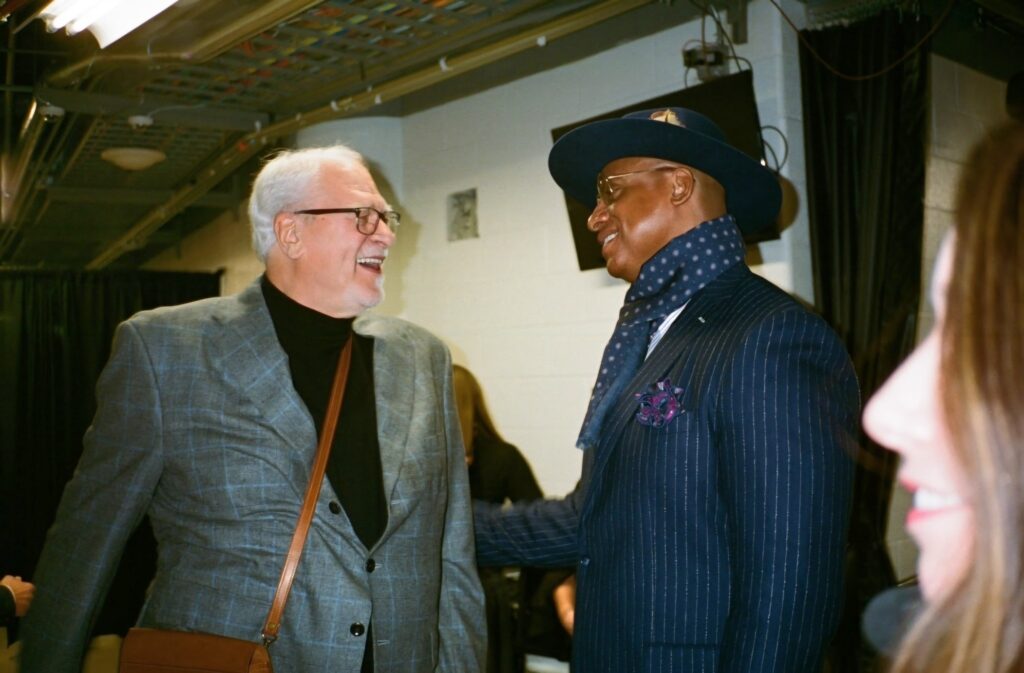
In the mid-1990s, Jason Caffey was a vital cog in the greatest machine the NBA had ever seen. As a power forward for the Chicago Bulls during their historic “Repeat Three-Peat,” Caffey learned the art of professional basketball at the feet of icons like Michael Jordan, Scottie Pippen, and Dennis Rodman. While his physical toughness and rebounding prowess made him a favorite of his superstar teammates, the internal battle was far more complex. Behind the championship rings and the grit of the SEC-style play he brought from the University of Alabama, Caffey was navigating a league—and a culture—that had not yet learned how to address the mental health struggles of its gladiators.
Today, the 52-year-old Caffey is defined by a different kind of stat sheet: academic honors and community impact. After a chance encounter at an Alabama State basketball game led to his re-enrollment, he graduated Magna Cum Laude and is currently pursuing a Master’s Degree in Applied Science.
The Interview
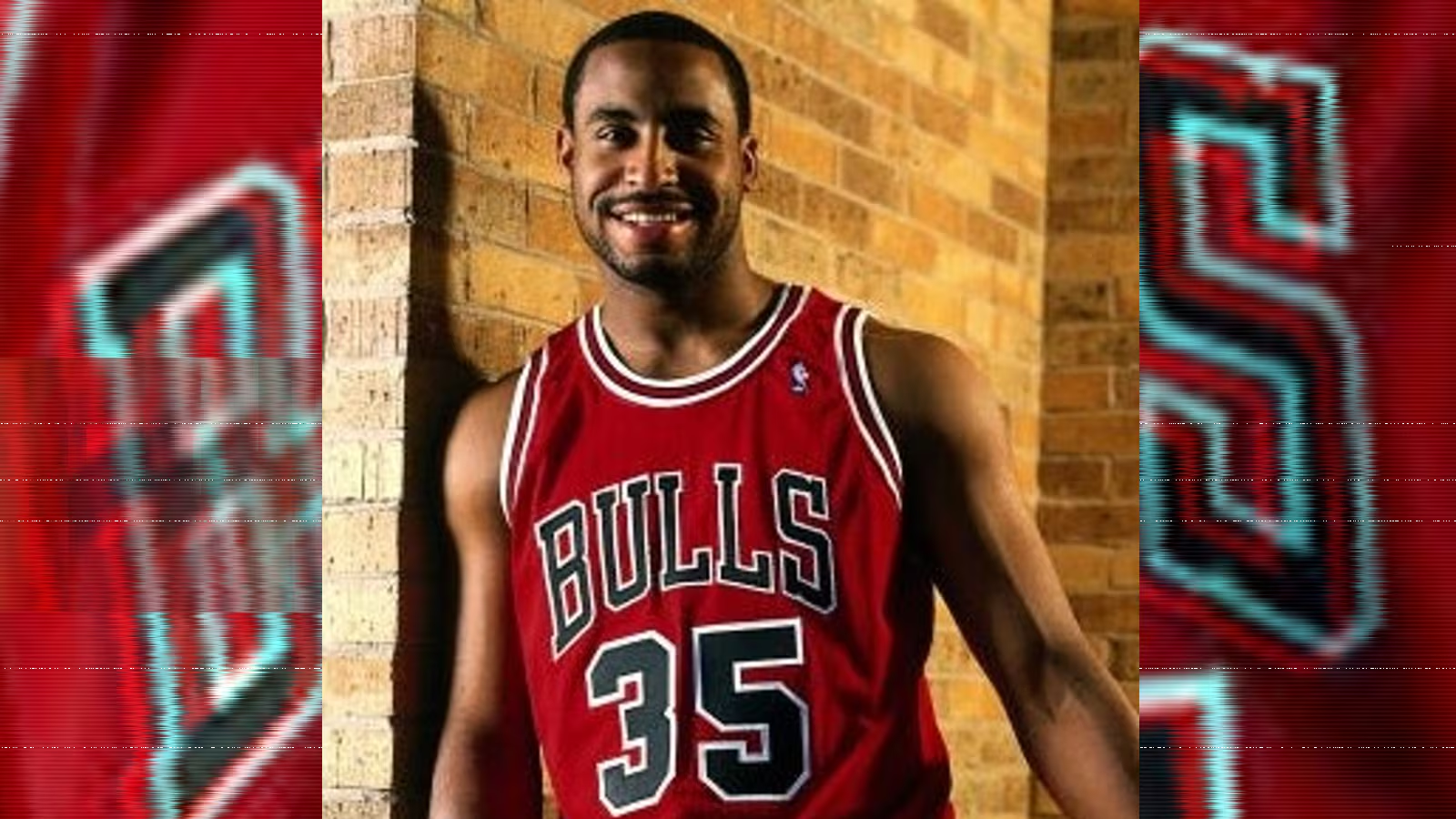
Appearing on this week’s episode of the Scoop B Radio Podcast, his journey from the high-pressure environment of the NBA Finals to the quiet dedication of the library serves as a testament to his chosen watchword: perseverance. No longer silenced by the stigma of the 90s, Caffey has become a vocal advocate for mental health awareness and a mentor for at-risk youth in Montgomery, proving that a career is not just defined by the rings on your fingers, but by the lives you touch afterward.
This transcript has been edited and condensed for clarity and space. You can watch the full, unedited Scoop B Radio interview with Jason Caffey by clicking here.
Brandon “Scoop B” Robinson: You’ve had quite the academic journey lately. What led to you getting back into college and finding this level of success?
Jason Caffey: So I was living in Atlanta maybe five years ago and I rekindled with a flame and we have a daughter. She’s a pilot. Great young lady and great mother. It didn’t work out so I was on my way back to Mobile, actually which is my hometown and I stopped in Montgomery and somebody took me to a Alabama State basketball game and I was able to meet a couple of the deans; they know who I was through my college career and professional career and they asked me if I had graduated and I told them that I didn’t and they were interested in me attending Alabama State. I said, ‘Hey, it sounds good. I need to get my degree. Let me think about it…’ A week later, I was enrolled in school and last summer I graduated Magna Cum Laude in Interdisciplinary Studies and now I’m currently back in school pursuing my Master’s Degree in Applied Science. I feel proud of myself. I didn’t think that I had it in me, but the good Lord graced me. I did that and as I said, I was on my way back to Mobile, and this was three years ago, I haven’t made it back to Mobile yet. I’m STILL in Montgomery here at Alabama State.
Brandon “Scoop B” Robinson: Looking back at those Chicago Bulls championship years, what was the tipping point in the relationship between the players and the front office?
Jason Caffey: When I came into the situation, the guys NEVER got along with Jerry Krause. He was just a shrewd businessman. God rest his soul, but Michael would sit there on the bus and call him “the sloop” and once Michael chimed in on him, then there’s Scottie of course he was a little disgruntled about his contract, which I think he should be. But those two would just kill and murder the man on those bus trips and that kind of set the tone for how the rest of the team felt about Jerry Krause.
Brandon “Scoop B” Robinson: What was the mental preparation like playing alongside a personality like Dennis Rodman, and how did he influence your approach to rebounding and defending?
Jason Caffey: Dennis was a great guy to learn up under. He didn’t say three words the whole year but, one of the first guys at practice; he’s gonna ride the elliptical an hour before practice. He’s gonna practice the ENTIRE practice and I would have to beg him to step off the floor to let me get some time in with the first string because I knew that at some point, I would have the opportunity to play with them. What a beast. I’ve never seen a man who went at it so hard and I’m 52 years old today and one the reasons that I’m still in the gym all the time is because of what I learned from Dennis, Michael and Scottie as far as training.
Brandon “Scoop B” Robinson: In 1998, you were traded to Golden State, and Michael Jordan and Dennis Rodman actually fought publicly for you to stay. How did missing out on that third title affect you?
Jason Caffey: It DEFINITELY ended my shot at a third ring. I was looking forward to that year and it was awesome that my teammates trusted me at that time and they wanted me on the team. As you know in the past, there had been several players that had come through Chicago at the power forward position. Some like Horace Grant, they wanted to keep around but, Horace had different ideas and views but some of the other guys just didn’t make it and didn’t last ‘cause Michael didn’t want ‘em there so for him to step up and speak on my behalf in a good manner really made me feel proud of myself.
Brandon “Scoop B” Robinson: You played in the SEC in the 90s under David Hobbs and Wimp Sanderson. How did that conference play prepare you for Phil Jackson and the Bulls?
Jason Caffey: Wimp was a tough old cat! I still talk to him. I spoke to him last week, he was hard on us. We had some really elite athletes come out of there because of the training style that we had at Alabama Antonio McDyess, Robert Horry, Latrell Sprewell, [James] ‘Hollywood’ Robinson… The list goes on and on. People think that Alabama just became a basketball school with Nate Oats and that’s just not true. I love Nate and like what he’s doing there but, at one time the basketball team was putting out more professional basketball players than the football team was so that goes to say a lot about University of Alabama basketball.
Brandon “Scoop B” Robinson: How difficult was it to transition from that winning culture in Chicago to a rebuilding environment where you had to be a leader with the Golden State Warriors?
Jason Caffey: It was VERY difficult for me because I always considered myself a really good role player. Never was going to be a superstar player, and I was content with working hard to make the best out of a situation with superstar players. Starting at center at 6’8” in the West when you got [Hakeem] Olajuwon over there, Tim Duncan… because Eric Dampier was out for a year? It was just terrible for my career, man. The injuries I sustained from trying to play against Shaq and guarding all these bigger guys outweighed me by 20 to 30 pounds. So, it was a terrible experience.
Brandon “Scoop B” Robinson: Do you think guys like yourself, Clarence Weatherspoon, and Charles Barkley played in the wrong era, or were you just ahead of your time?
Jason Caffey: I don’t really know Scoop. I haven’t looked at it in those terms, but you are correct. Clarence [Weatherspoon], Charles… we all had somewhat the same deal. I’m a little taller than both of those guys but with very broad shoulders, thick guys, 255-265 lbs playing at that weight and can jump out the gym, run all day… so we were a different breed and you don’t really see that much anymore in the league they’re getting up and down a lot. I don’t know how the wear and tear would’ve been on the bodies of guys who are heavier like myself and Charles and Clarence.
Brandon “Scoop B” Robinson: What would a Draymond Green look like on those 90s Chicago Bulls teams during The Last Dance era?
Jason Caffey: I think that he would be very effective because he’s a defensive minded player and as you know, we didn’t need the power forwards to score. We were going to get all the scoring we needed from Michael, Scottie, Toni Kukoč… we had that going for us. Draymond who is a little smaller than myself and a little smaller than Dennis [Rodman] but has a heart as big as a whale and I would’ve welcomed that brother and he would’ve done very good in that era.
Brandon “Scoop B” Robinson: Is comparing Draymond Green to Dennis Rodman a lazy comparison?
Jason Caffey: I can’t say that at all because he rebounds. That’s his job to rebound, assist and play great defense and that’s exactly what Dennis did for us. So, I don’t agree with that and I don’t know where Draymond is coming from that perspective because I’m not reading his mind but yeah, I would’ve loved to play with him.
Brandon “Scoop B” Robinson: You played on that loaded 2001 Milwaukee Bucks team with Ray Allen, Glenn Robinson, and Sam Cassell. You were one game away from the Finals what was that experience like?
Jason Caffey: It bothered the hell out of me because I felt like that team had more talent than the Chicago Bulls team. I mean, you had Tim Thomas on that team, you had Ray Allen, you had Big Dog, Sam Cassell… straight up scorers! If you look at the regular season that year, we swept the Lakers! The four games we played them, they COULD NOT compete with us, you know? No disrespect to the Lakers, we just had too many jump shooters. That would’ve been a TERRIBLE matchup for them in the Finals. However, our guys in Milwaukee the defensive standpoint wasn’t there. Ray Allen was one of the better athletes in the league and I was trying to tell him that, ‘Ray, you don’t need to score all the points all the time and maybe if you can slow Allen Iverson down just a little bit. Sam can’t do it. He’s not the kind of athlete you are. You’re really going to have to be the guy that’s going to sacrifice your number to shut AI down. If we shut AI down, we beat those guys.’ and I could never get those guys to buy into that philosophy.
Brandon “Scoop B” Robinson: Was Ray Allen as meticulous as Michael Jordan when it came to his craft?
Jason Caffey: Totally different. Ray? Great player. All out, flat out shooter. I don’t think that he’s driven as much as Michael. I think Ray does better when he really has good players on his team like a KG or a Paul Pierce who’s gonna demand more out of him and he respects them and he gives that to them. I think that’s what happened in Boston for Ray and I was happy to see him win a championship there and I think that’s what kind of happened there in Miami for him. When he’s the leader of the team, I don’t think he wants to be the enemy of his teammates. Mike didn’t care if you liked him or not. He was gonna give it to you and you were going to have to give it back to him or you would be off that team. It’s as simple as that.
Brandon “Scoop B” Robinson: Do you see James Harden continuing his career and becoming a modern-day Ron Harper?
Jason Caffey: I don’t see James transitioning because he likes the rock in his hand a lot. Harp sacrificed a lot but at the same time, he knew his game was diminishing at the time so he focused more on defense and he gave us what we needed to win championships. I don’t know Harden personally, but I don’t see him transitioning to that. I see him wanting to keep the ball in his hands at all times and be that scorer and that guy and he’s doing that.
Brandon “Scoop B” Robinson: Then who is the more modern-day Ron Harper?
Jason Caffey: The modern day Ron Harper? That’s a GREAT question Scoop, thank you. Throw some names out there and let me pick one and elaborate on that because I’ve never thought about that obviously, you have some ideas on some people. Yeah man, Ron made one helluva jump right there to go from Cleveland and the Clippers as the guy and then come to Chicago and accept the role he accepted but it worked for him everywhere he went. He left Chicago and did the same thing. A little lesser role with the Los Angeles Lakers, and he won championships over there again, so he was a great guy to have on the team and a clear leader of men.
Brandon “Scoop B” Robinson: How did you manage your anxiety during your time in the NBA?
Jason Caffey: I didn’t manage it well because at that time everybody didn’t know you’re either straight or Caffey’s crazy. Nowadays, you have guys who have mental illnesses like anxiety or depression which I suffer from and that runs in my family, and they have contracts with pharmaceutical companies. Back when I had those issues, it was “Get on this plane” and they don’t know that I’m having a breakdown at the time and I don’t wanna fly and I’m nervous. So instead of getting me help, I would be fined $50,000 dollars for missing a flight, so it’s totally different now. It has changed and the awareness is up and I don’t mind talking about it because, when I dealt with it, nobody knew what was going on so nobody could give me any help with it. So every time I touch on it or you see me on social media talking about it, it’s not just to talk about me. It’s to help someone who’s dealing with it who’s not aware of who’s dealing with it.
Brandon “Scoop B” Robinson: It feels like mental health was completely misunderstood in the 90s.
Jason Caffey: I agree with you on that, Scoop. It’s totally misunderstood during my day. I had so many arguments with the GM and he just couldn’t figure out what was going on for me to be straight one month and then the next month, I’m having all these “personal” issues. He never wanted to discuss it with me or talk about it or even get me any help. I started to reach out on my own and got a psychiatrist and finally got it under control.
Brandon “Scoop B” Robinson: What is the one lesson from the locker room that you find most effective when mentoring at-risk youth today?
Jason Caffey: We work with at-risk youth and I’ve had opportunity to coach and to do things like that but, it didn’t touch my heart enough to coach because most of the kids who were playing basketball, some of the kids come from 2-parent homes and have at least one good parent in the house. I like to work with the kids who don’t have that parent around or are on the street on drugs or whatever. Those are the youth I like to try to reach because they are the ones that have the hardest times finding a job or trying to find their way, and they’re committing crimes every day. Here in Montgomery, it’s really bad and I just hate for a 16-17 year old to go to prison for the rest of their lives for committing a silly crime when he could’ve had a mentor or somebody to talk to like myself that could’ve got him a truck driving position or getting his CDL or learning how to do brick masonry work. There are several things out here. A lot of kids these days are not traditional college students, and that’s fine. We gotta find somewhere for them.
Brandon “Scoop B” Robinson: If you had to define your career in one quote to the next generation of power forwards, what would it be?
Jason Caffey: [smiling] You come up with some of the best questions, Scoop. Perseverance. Can I elaborate on that a little bit? You didn’t know me at ‘Bama, obviously but my sophomore year at Alabama I broke my right foot. I wasn’t even on the draft board and when it came time for the draft to roll around, I did really well at Chicago and got my name on the draft board and I ended up going 20th in the draft that year by the Chicago Bulls. So, perseverance would probably describe my whole career.
Wrapping Up
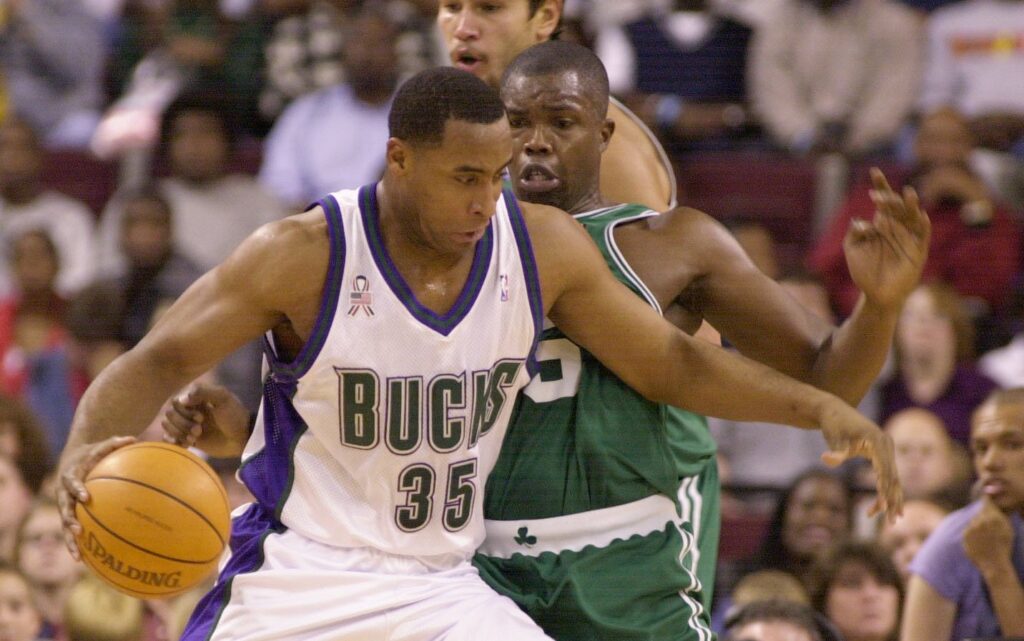
Jason Caffey’s story, as discussed on this week’s Scoop B Radio Podcast, is a powerful reminder that the most significant victories often happen away from the bright lights of the arena.
While he will always be remembered as a champion who earned the respect of Michael Jordan, his current pursuit of higher education and his dedication to at-risk youth in Montgomery highlight a man who has successfully redefined himself. By speaking openly about his struggles with anxiety and the physical toll of his later playing years, he provides a roadmap for modern athletes to prioritize their well-being over their box scores.
Ultimately, Caffey’s transition from the hardwood to the classroom is a masterclass in resilience. He has moved past the regrets of missed championships in Milwaukee and the physical strain of guarding giants to find a purpose that resonates deeper than sport.
Whether he is studying for his Master’s or helping a young man find a vocational path, Caffey embodies the “perseverance” he spoke of. He remains a leader of men, no longer by grabbing rebounds, but by showing that it is never too late to finish what you started and help others do the same.