
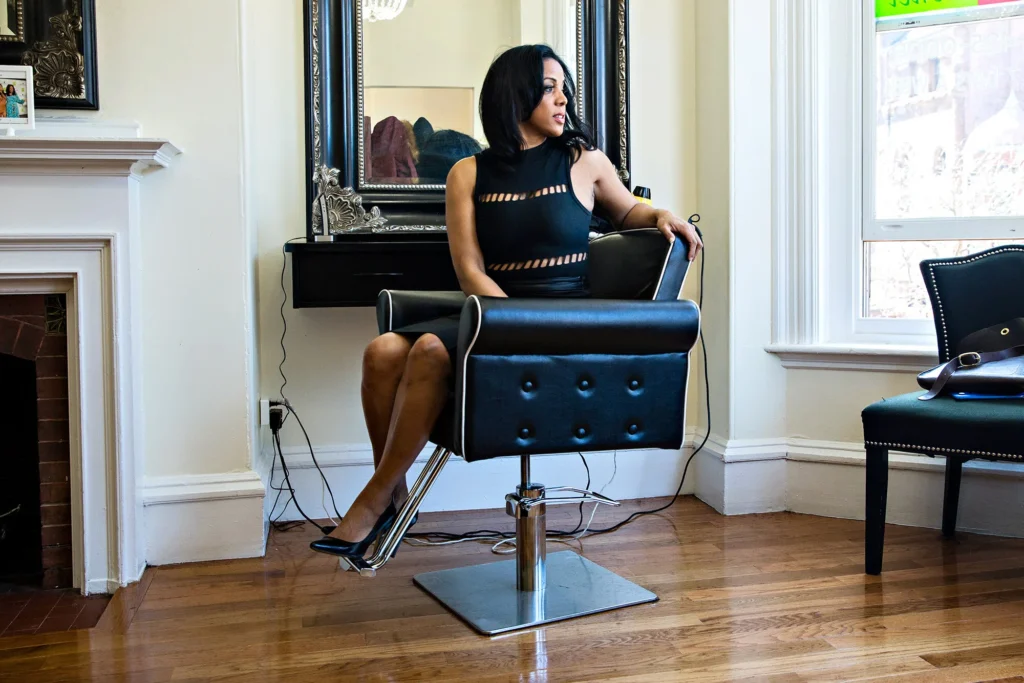
Shellee Mendes is more than a stylist; she is a trailblazer who redefined the landscape of luxury in Boston. As the first and only African-American woman to own a salon on the prestigious Newbury Street, Mendes turned a vision born out of necessity into a cornerstone of the city’s beauty industry. Her journey from experiencing homelessness while in cosmetology school to becoming a celebrated CEO and philanthropist serves as a masterclass in grit, proving that your current circumstances are never a permanent destination.
In this candid conversation, Mendes pulls back the curtain on the discipline required to build a legacy. She discusses the transition from artist to executive, the importance of inclusive excellence, and how she navigated the skepticism of “experts” to claim her space on one of the most expensive streets in New England. Through faith and unshakeable focus, she has transformed Salon Monét into a sanctuary of quality over quantity, proving that authentic connection is the ultimate luxury.
On Breaking Barriers and “Firsts”
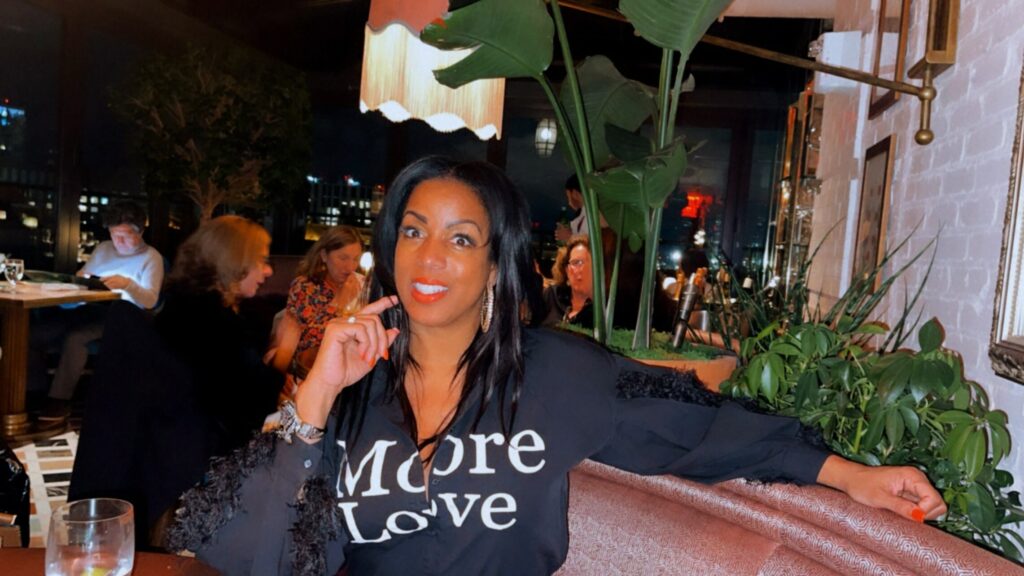
Breaking through the glass ceiling on one of the most exclusive shopping streets in the world wasn’t a matter of vanity for Mendes; it was a matter of presence. She reflects on the duality of managing a high-stakes lease while simultaneously carrying the symbolic weight of being a pioneer for Black business owners in the Back Bay.
Brandon “Scoop B” Robinson: You are the first and only African-American woman to own a salon on Newbury Street. When you first signed that lease, did you feel the weight of that “first,” or were you focused entirely on the business logistics?
Shellee Mendes: I was honestly focused on survival and execution. I didn’t sit there thinking, “I’m making history.” I was thinking, “How do I make this work?” The weight of being the first came later—when I noticed that my presence challenged a narrative that said women like me didn’t belong on Newbury Street. That’s when I knew it was a game changer.
Brandon “Scoop B” Robinson: Many people suggested you open your salon elsewhere, but a client pushed you to stay on Newbury. What advice do you have for entrepreneurs whose dreams are being questioned by “the experts”?
Shellee Mendes: My advice is: listen carefully, but trust selectively. “Experts” often speak from their own limitations, not your vision. One client (Dr. McCallion) believed in me enough to say, “You belong here.” Sometimes God sends confirmation through unexpected people. Don’t abandon your dream just because it makes others uncomfortable.
The Evolution of a CEO
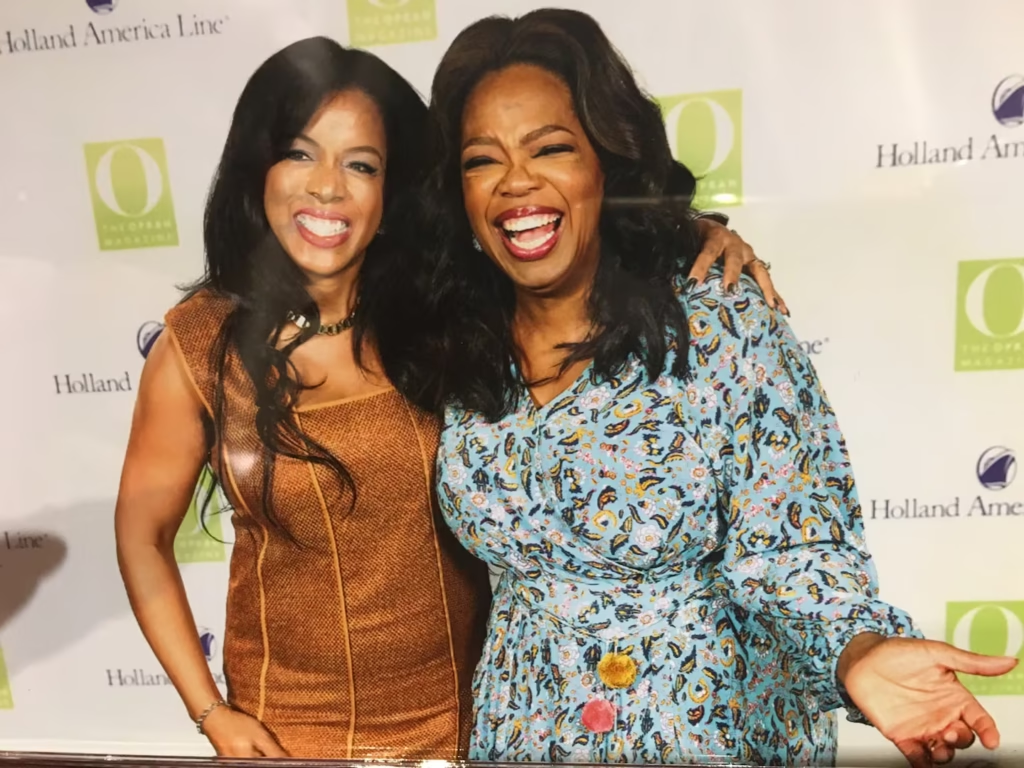
The shift from being a master of one’s craft to a leader of a brand involves a painful but necessary shedding of the ego. Mendes details how she traded the comfort of the stylist’s chair for the complexity of executive decision-making, ensuring that Salon Monét evolved alongside Boston’s changing retail climate.
Brandon “Scoop B” Robinson: What was the most difficult shift for you personally when transitioning from being a talented stylist to being a CEO and business owner?
Shellee Mendes: The hardest shift was learning that being great behind the chair wasn’t enough. As a CEO, I had to make decisions that weren’t emotional, even when they affected people I cared about. Letting go of control and trusting systems—that was humbling.
Brandon “Scoop B” Robinson: How has the luxury retail landscape in Boston changed since you first opened Salon Monét, and how have you adapted to stay relevant?
Shellee Mendes: Boston’s luxury market has become more experience-driven and more diverse in its expectations. When I opened, luxury meant exclusivity. Today, it means inclusivity with excellence. I adapted by staying rooted in education, wellness, and personalized care—things trends can’t replace. Being on one of the most expensive streets in New England, you must choose wisely or you’ll find yourself in a long-term bind that’s hard to get out of.
Survival, Faith and Fame
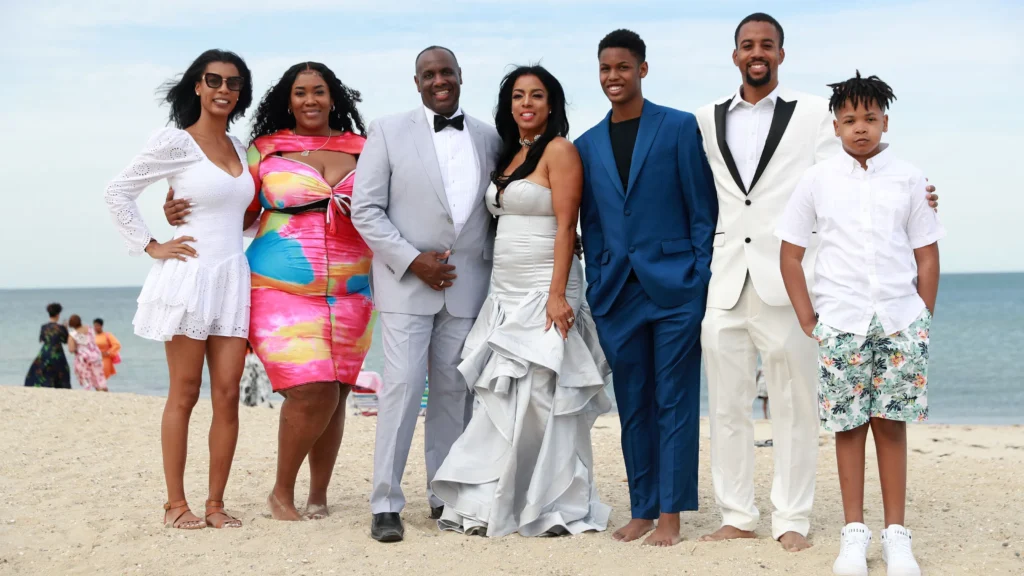
Long before she was dining with icons like Oprah Winfrey, Mendes was navigating the stark reality of poverty. She shares how she used visualization as a tool for survival, holding onto a mental image of a professional future that seemed impossible to everyone but herself.
Brandon “Scoop B” Robinson: You’ve been very open about your experience with homelessness while in cosmetology school. During those difficult nights, what was the specific “mental image” of your future that kept you going?
Shellee Mendes: During those nights I envisioned myself graduating and being a certified cosmetologist in an industry I love. Everyday I found myself one step closer to making my dream a reality.
Brandon “Scoop B” Robinson: You often talk about “getting comfortable with being uncomfortable.” Can you share a moment in your career where you felt like an outsider and how you overcame that feeling?
Shellee Mendes: I’ve often been the only woman of color in rooms where decisions were being made. Instead of shrinking I leaned into preparation. Confidence comes from knowing your value before you enter the room. I learned to take up space without apology; sometimes it felt uncomfortable, but achieving it was a win-win.
Brandon “Scoop B” Robinson: You have met and dined with Oprah Winfrey. What is the single most important lesson she taught you that you still use in your business today?
Shellee Mendes: Oprah taught me the power of alignment. She said when your work aligns with your truth, longevity follows. That lesson reminds me to never chase trends at the expense of integrity. Although she was such an inspiration, I have to say my kids were the biggest inspiration in finding a better life for us.
Navigating Identity and Corporate Culture
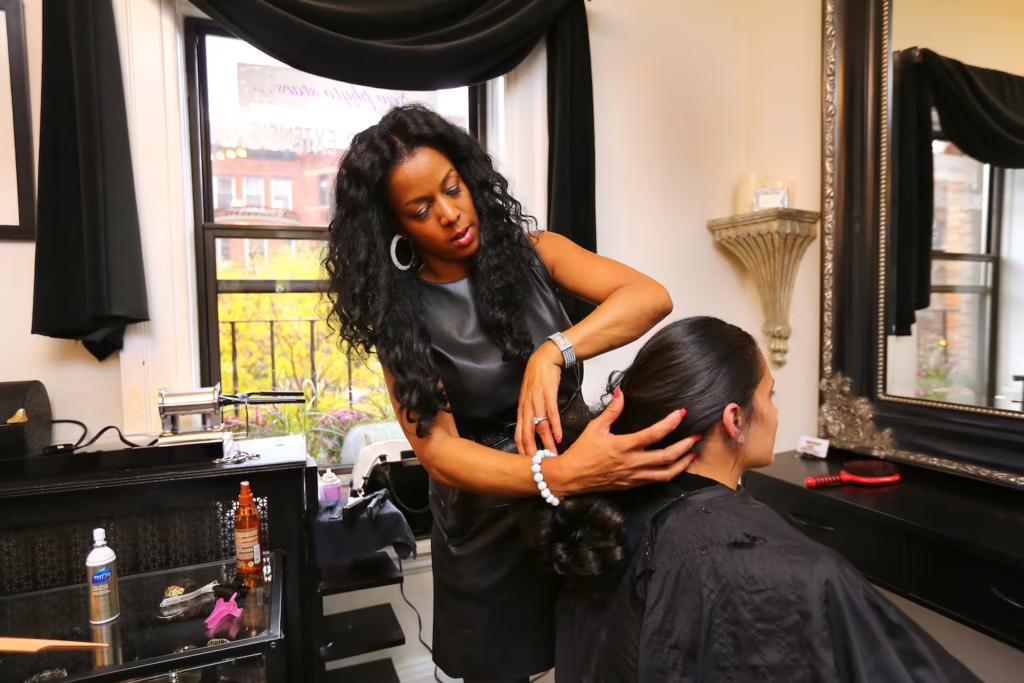
As an advocate for women in the workplace, Mendes addresses the ongoing friction between corporate standards and cultural identity. She argues that “professionalism” is frequently used as a tool for conformity, and explains why her salon remains a sanctuary of high-touch service in a world increasingly dominated by “fast beauty.”
Brandon “Scoop B” Robinson: How do you protect your energy and maintain your drive after more than two decades in a high-pressure industry?
Shellee Mendes: I protect my energy by honoring rest, boundaries, and purpose. I no longer say yes to everything. Longevity comes from knowing when to pause, reflect, and realign. I do what makes me happy and I enjoy spending time with family and friends that make me smile.
Brandon “Scoop B” Robinson: You lead important roundtables on race and hair in the professional world. What is one thing corporate managers still get wrong about ethnic hair and professional standards?
Shellee Mendes: Corporate managers still confuse uniformity with professionalism. Ethnic hair is not a trend or a statement—it’s identity. Professionalism should be about performance and character, not conformity.
Brandon “Scoop B” Robinson: In an era of TikTok trends and “fast beauty,” how do you maintain the high-touch, intimate client experience that your brand is famous for?
Shellee Mendes: I started Salon Monét 22 years ago when social media did not exist like it does now. At the time, word of mouth was our “trending.” Today, we adapted quickly but we also remember to lead before following. We are quality over quantity. Personally, I’d prefer 100 real supportive clients over 1,000 likes. We know our clients; we educate, listen, and personalize every experience. High-touch service will always outperform fast beauty trends because people remember how you made them feel.
Community and Legacy
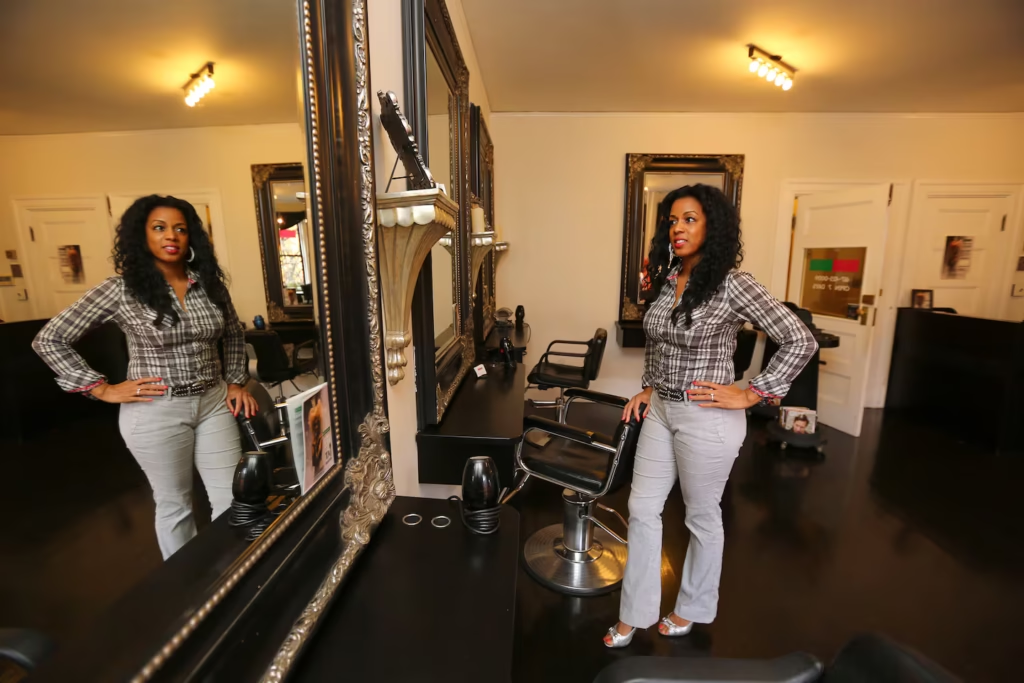
Success for Shellee Mendes is measured by the doors she holds open for others. Drawing from her own lived experience with housing insecurity, she explains how her philanthropy is driven by memory rather than theory, and what she hopes the city of Boston will remember about her work decades from now.
Brandon “Scoop B” Robinson: Through your annual White Party, you’ve raised significant funds for organizations like EMPath and BGCB. How do you decide which community issues get your focus each year?
Shellee Mendes: Having lived through poverty, I lead with empathy and urgency. I don’t see statistics—I see potential. Every decision I make I ask myself, “How does this truly impact a child’s future?” That’s how my donations are distributed.
Brandon “Scoop B” Robinson: As someone who has lived the experience of poverty, how does your perspective change the way you serve on boards for organizations like the Boys & Girls Clubs & EMPath?
Shellee Mendes: Growing up with limited resources gives you a very different lens. Poverty isn’t a theory to me—it’s memory. It’s knowing what it feels like to need support, guidance, and opportunity, not just sympathy. That experience keeps me grounded and intentional in how I serve.
Brandon “Scoop B” Robinson: If you were speaking to a young woman in a Boston shelter today who wants to be where you are, what is the very first practical step she should take?
Shellee Mendes: The first practical step is education—whether that’s enrolling in a program, finding a mentor, or committing to self-discipline. Dreams require structure before they require money.
Brandon “Scoop B” Robinson: What do you want the “Shellee Mendes” legacy to be in the city of Boston fifty years from now?
Shellee Mendes: I want my legacy to be that I opened doors and held them open. That I proved excellence and inclusivity can coexist. And side note—I would also like to see a friendlier, southern-like hospitality amongst everyone here in Boston.
Brandon “Scoop B” Robinson: What is the one thing about your journey that people always get wrong, or that you wish people asked you about more often?
Shellee Mendes: People often think my journey happened overnight. It didn’t! The daily routine between getting my kids ready, myself ready, working, and going to school were things that eventually paid off. The doubt and the discipline is where the real story lives. It strengthened me and brought out greater resilience.
Wrapping Up

Shellee Mendes’ story is a powerful reminder that success is rarely a straight line. From the uncertainty of a shelter to the pinnacle of Boston’s high-end retail scene, she has maintained a commitment to authenticity and excellence. Her legacy is not just found in the hairstyles she creates, but in the doors she has kicked open for the next generation of entrepreneurs of color who seek to claim their own space on the world’s “Newbury Streets.”
As she continues to lead with empathy, Mendes proves that resilience is the most valuable asset any business owner can possess. By focusing on quality, education, and the human element of service, she has built a brand that stands the test of time and trend. Shellee Mendes didn’t just change the face of a street; she changed the expectations of an entire city.