
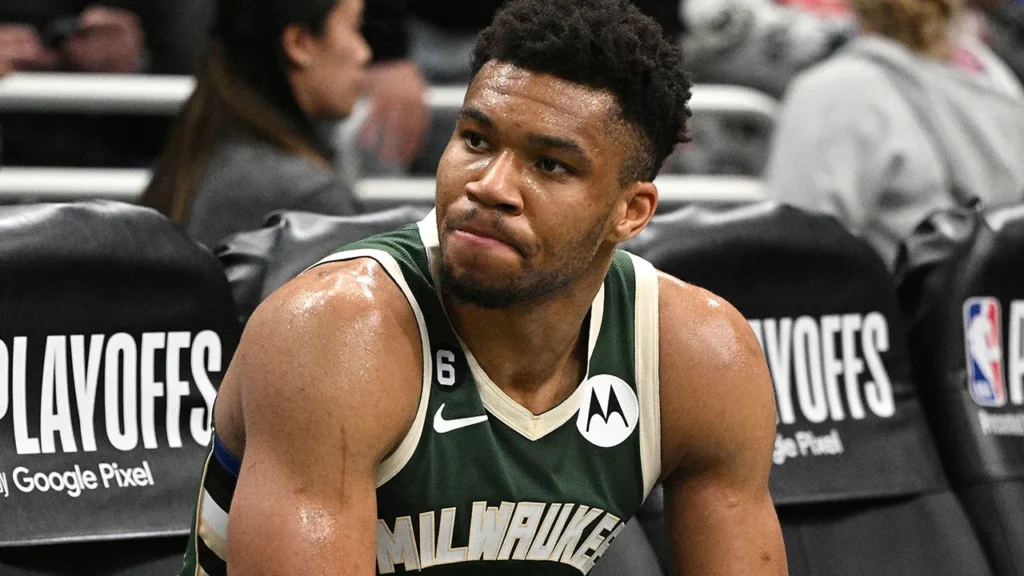
The NBA is a league defined by movement but in Milwaukee the tectonic plates are shifting with an intensity never felt before. As of January 24, 2026, the headlines are dominated by a singular, haunting question: Is the era of the “Greek Freak” coming to an end? Despite a championship trophy in the case and a loyalty that has defined his decade-long tenure, the whispers of Giannis Antetokounmpo leaving the Bucks via trade have reached a fever pitch.
Following a grueling 102-100 loss to the Nuggets that left the team at 18-26 and languishing in 11th place in the Eastern Conference, the stakes have never been higher. To make matters more dire, Giannis exited that contest with a right calf strain expected to sideline him for four to six weeks—a timeline that carries the team past the February 5 trade deadline.
To the outside world the Bucks are a team in transition, a generational superstar potentially looking for a new home. But inside the locker room, away from the pundits and the social media firestorms, the narrative is vastly different. When you speak to the men who actually run the floor with him—the star role players and the new arrivals—you don’t hear about exit strategies. You hear about an exhausting, exhilarating and unique brand of basketball that only one human being on Earth can provide.
Through the insights of Bobby Portis, Kyle Kuzma and Myles Turner, a clearer picture emerges. It is a portrait of a man who isn’t just a player but a system unto himself—a force of nature that demands his teammates rethink everything they know about the game.
The Architecture of an Icon: Portis on the “Star DNA“
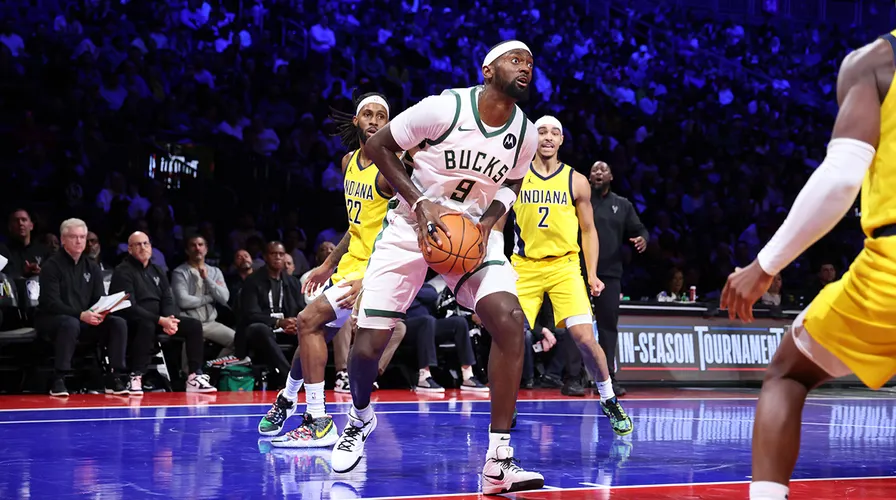
Bobby Portis has become the emotional heartbeat of Milwaukee, a player whose blue-collar intensity mirrors the city itself. Having played alongside various tiers of NBA talent, Portis is uniquely qualified to dissect what makes a megastar tick. When comparing Giannis to another first-ballot Hall of Famer he shared a locker room with, Dwyane Wade, Portis notes that the greatness starts long before the opening tip.
“I would say similar is just the approach,” Portis told ScoopB.com. “Wanting to be great, the direct dialog that you get from them, wanting to do certain things on the court.”
Portis believes that this elite mindset filters down to the rest of the roster. He explains that “every guy on the team obviously has a role to kind of help the star in different roles.” Whether that means finding the right “spacing” or “setting the screen where it is,” the shared mission is what holds the locker room together despite the trade winds.
“I think that their intent is the same,” Portis notes.
However, while the intent might be the same, the execution is where Giannis enters a stratosphere of his own. Portis describes Giannis as a “one-on-one type of player” that the league rarely sees.
“Not many guys are like him,” Portis explains. “Get the ball off the rim, push it, put pressure on the rim. Get to the line, things like that, get downhill.”
While Wade was a master of the mid-post and the face-up game, Portis sees a different kind of psychological warfare in Giannis’s game. He describes the Greek Freak as a “transition, catch it, get you on your heels” type of player. This ability to make a defender “play on your heels” is the hallmark of his dominance.
The Dominance Dilemma: Shaq, Giannis and Evolution
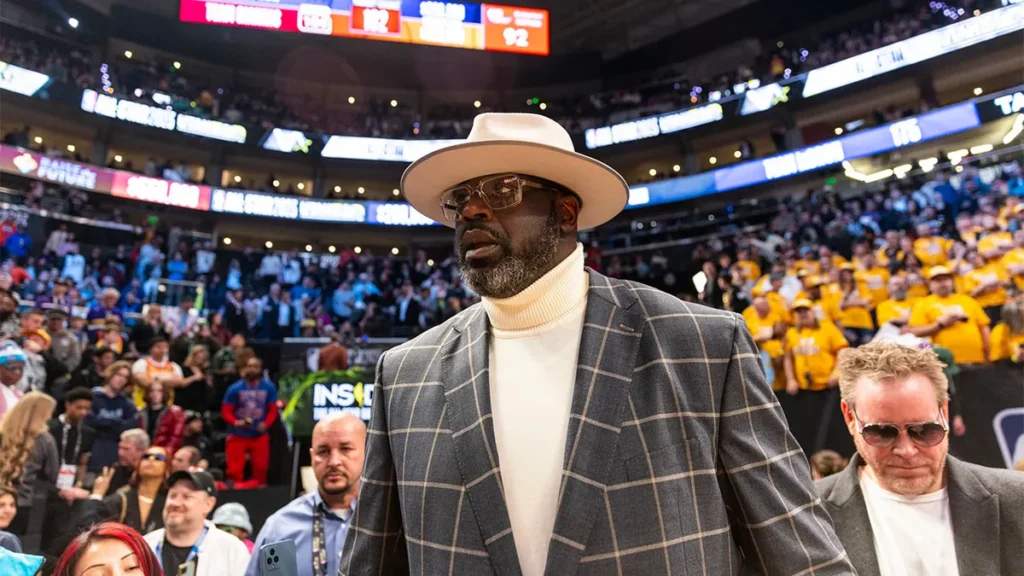
The most common historical parallel for Giannis is Shaquille O’Neal. Both are physical anomalies who rendered traditional defensive schemes obsolete. Yet, Portis argues that the comparison requires an understanding of how the game has evolved. If you dropped Giannis into the 90s or Shaq into 2026, the results would be catastrophic for their opponents—but for very different reasons.
“Shaq will be a force in this era,” Portis told ScoopB.com. “It just kinda slows the game down though. When you need to dump it in, down low.”
Portis points out that modern basketball has a short memory. “Guys nowadays like to get up and down the court and they sometimes forget about big starting down low,” he observes. In his view, the Diesel’s personality would be just as big as his game.
“Shaq [will]probably yell at somebody for real to pass the ball or something like that,” Portis says.
Conversely, Portis suggests that Giannis is perfectly calibrated for the modern era’s officiating and space. He points out that the “banging” and “hand checking” allowed in previous eras would have changed the game for Giannis.
“I don’t know how it would be with Giannis in their era,” Portis muses. “You know, a lot of hand checking, they didn’t really call fouls like that. You see how they were doing Jordan going to the rim.”
In today’s NBA, defenders are restricted in how they can touch players. “Giannis gets a lot of whistles now, though, especially playing this era,” Portis says. “Can’t really touch guys, so I think it suits him really well.”
The Spacing Paradigm: Kuzma and the “Eight Feet” Rule
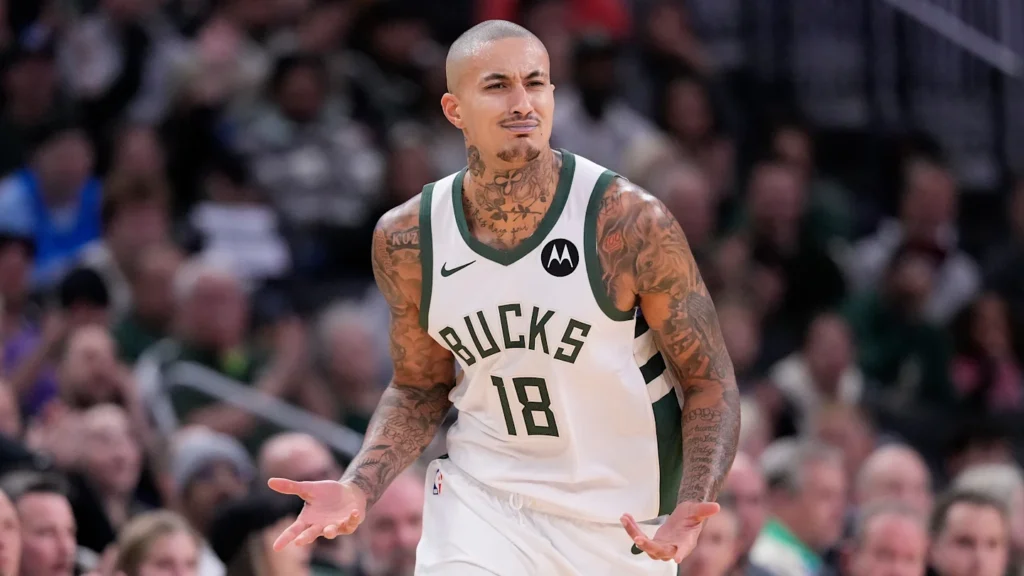
If Portis provides the emotional perspective, Kyle Kuzma provides the tactical one. Having won a championship alongside LeBron James, Kuzma understands the “gravity” that a superstar exerts on the floor. When you play with a player of that caliber, the geometry of the court changes.
Kuzma sees striking similarities between LeBron and Giannis in how they command the floor. When asked about the difference in floor spacing between the two, Kuzma finds their impact remarkably aligned.
“That’s a good question. Very similar,” Kuzma told ScoopB.com.
According to Kuzma, that “damage” is concentrated in a very specific area.
“But they play different positions in the fourth,” Kuzma explains. “You know, Brown’s more of a guard. Giannis is a guard as well, but a lot more damage.”
According to Kuzma, that damage is primarily from “eight feet and in.” That “eight feet and in” zone is where Giannis’s teammates find their bread and butter. For a player like Kuzma, the spacing isn’t just about where you stand; it’s about the fear Giannis strikes into the defense, forcing them to collapse and leaving the perimeter wide open.
The Adjustment Period: Myles Turner’s New Reality
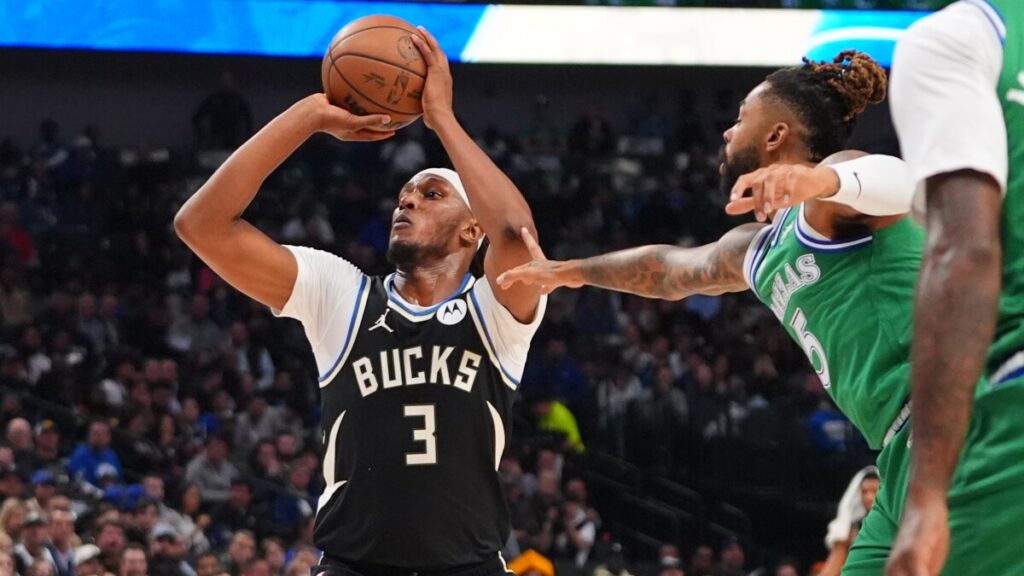
Perhaps no player has had a more jarring adjustment to the Milwaukee system than Myles Turner. Transitioning from a “free-flowing” environment in Indiana where the “ball never sticks” to the star-centric orbit of the Bucks is a massive undertaking for any veteran.
“I think of my group last year, we were a free-flowing, like, ball-never-sticks, you know, point-pod type of team,” Turner told ScoopB.com.
Turner admits that playing with a “generational superstar” requires a total shift in philosophy. In his previous system, the offense was a “point-pod” style where everyone touched the ball equally. In Milwaukee, Turner has had to learn a different discipline.
“Here, you’re playing with a generational superstar at times,” Turner explains. “You gotta just pick and choose your spots.”
Despite the “challenges” of learning a “different type of offense,” Turner is quick to point out the competitive advantages.
“It also has its benefits,” Turner says. “You get a lot more wide-open threes and a lot more chances to create for others, so yeah, it’s a different change of system.”
Conclusion: The Man Behind the Machine
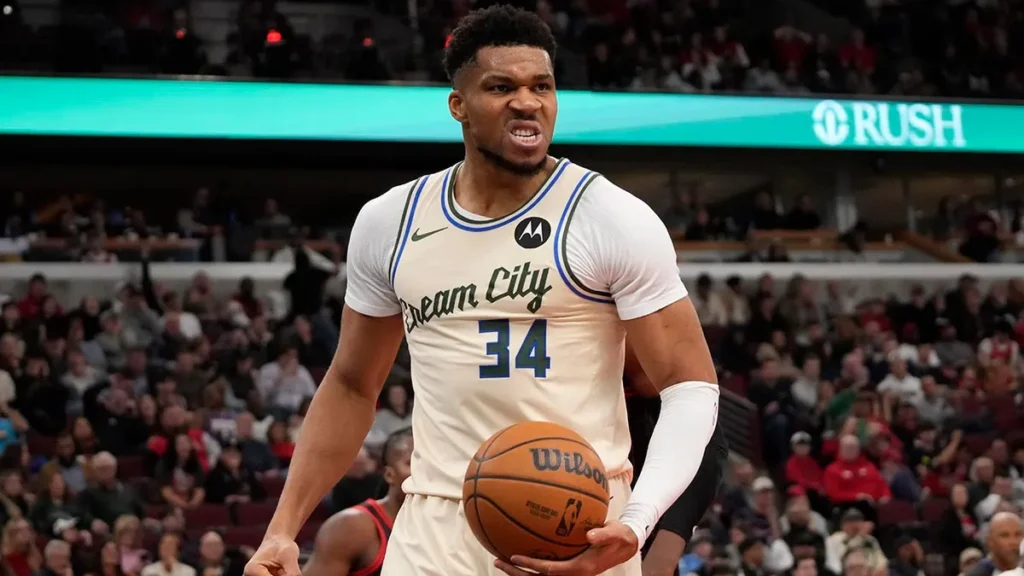
The noise surrounding a potential Giannis Antetokounmpo trade will not quiet down anytime soon, especially with the Bucks sitting at 18-26 and the superstar currently sidelined. In the modern NBA, speculation is the primary currency of the media. But for Bobby Portis, Kyle Kuzma and Myles Turner, the man in the locker room isn’t a trade asset or a flight risk. He is a teammate whose habits and “direct dialogue” define their professional lives.
While the world talks about where Giannis might go, his teammates are too busy reaping the benefits of where he is. They see the “intent,” the “approach” and the relentless “pressure on the rim.” As long as those things remain true, the Bucks aren’t just a team dealing with rumors—they are a team built around a force of nature that the rest of the league is still trying to figure out how to stop.