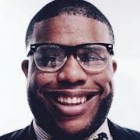
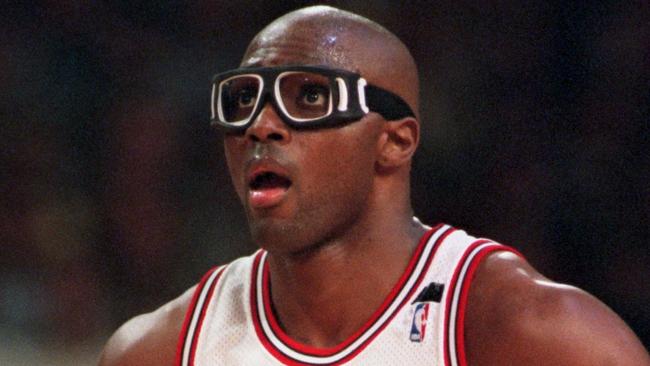
In May 2017, I had a truly “buttoned-up” conversation with Horace Grant on Scoop B Radio Overtime. While every NBA fan remembers the white and red goggles he wore while winning three titles with the Bulls—or the blue and white ones he rocked with the Magic—most people assumed they were strictly medical. During our session, Horace revealed that the goggles eventually became less about his own eyes and more about the eyes of every kid watching him.
Reflecting on this in 2025, Horace’s story remains one of the greatest examples of an athlete using their platform for pure, empathetic leadership.
“From Outer Space”: The Origin Story
When I asked Horace where the heck he got those iconic Rec Specs from, he couldn’t help but joke about their “supernatural” origin before getting real about his vision struggles.
“Man, from the moon, from the stars,” Horace joked. “They came down and right in front of my locker it said: ‘Horace Grant wear these and you’ll be unique.’ So from out of space that’s where I tell people I got them from.”
All jokes aside, Horace was diagnosed as legally blind during his playing career. He didn’t wear them in college at Clemson; it was a strictly professional necessity suggested by the Bulls’ training staff to help him see the rim and his teammates in the high-stakes Triangle Offense.
The LASIK Pivot: Choosing the Kids Over Comfort
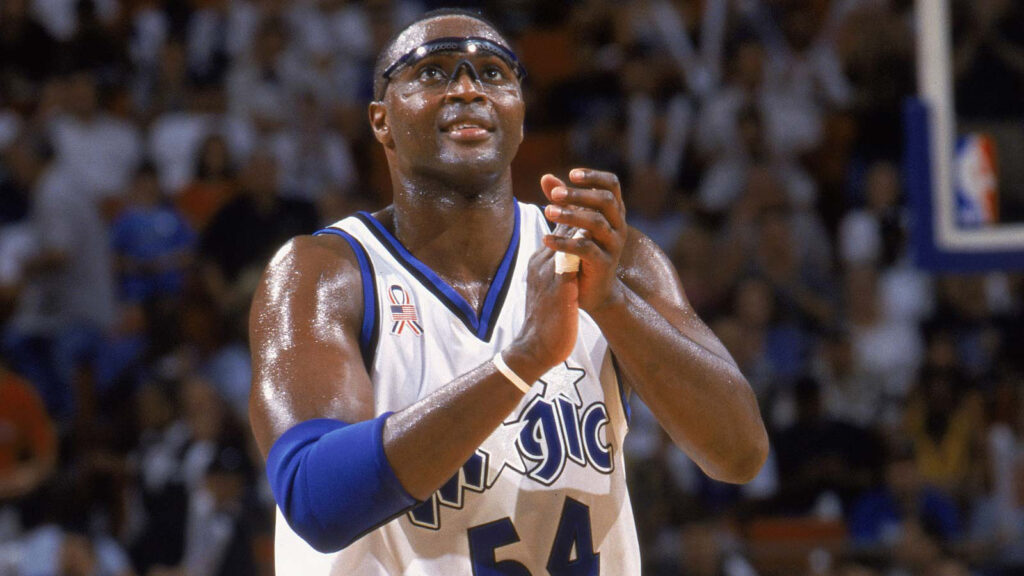
The most fascinating part of our 2017 dialogue was the revelation that Horace didn’t actually need the goggles for the latter half of his career. After undergoing LASIK surgery to correct his vision, he had a choice: ditch the gear or keep the brand. He chose a third option: mentorship.
“After a few years I got Lasik surgery, but I kept wearing them without the prescription lenses,”Horace told me. “I had grandparents and parents come up to me and thank me for wearing them. Their kids and grandkids would get made fun of for wearing protective eyewear… so I kept wearing them to help make it cool for the kids.”
In an era where “player branding” is often about selling shoes, Horace’s brand was about selling confidence. He became a shield for every “four-eyes” on the playground, proving that you could be a fierce, championship-winning “General” while wearing specs.
The “Devil” in Practice
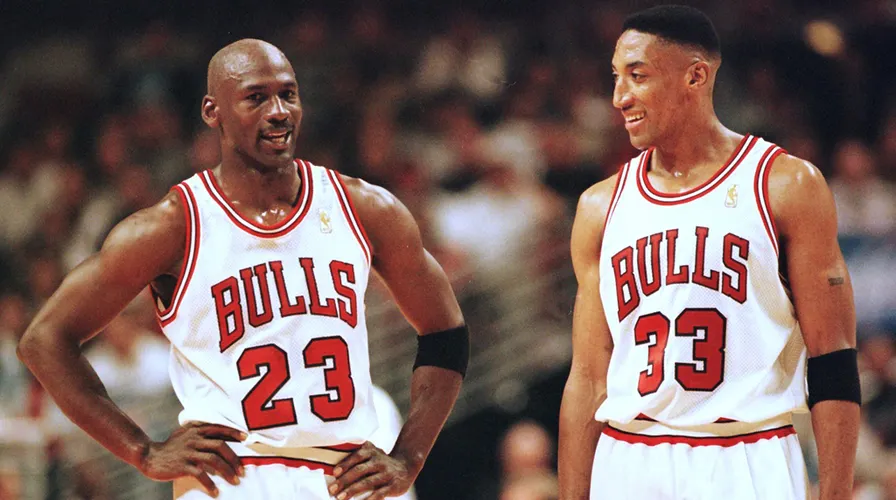
Beyond the fashion, Horace gave me a peek behind the curtain of the 90s Bulls. He recounted how Michael Jordan was “the devil” in practice—a term he used with the highest respect. He noted that the intensity MJ brought to the floor forced everyone, including Horace, to be “buttoned-up” and prepared for war every single day.
“If you weren’t on his team in practice, you were his enemy,” Horace remarked. “That drive is what made us champions.”
2025 Retrospective: The Goggles as a Badge of Honor
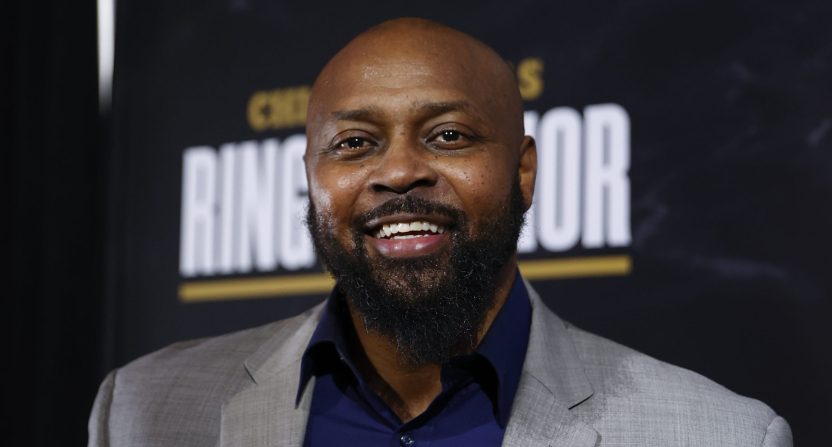
Today, Horace Grant is often seen as the unsung hero of the first Bulls three-peat. His 2017 session on Scoop B Radiocemented his legacy as an athlete who understood that his “look” wasn’t just his own—it belonged to the fans.
| Era | Goggle Color | Team |
| 1991–1993 | White / Red | Chicago Bulls |
| 1994–1996 | Blue / White | Orlando Magic |
| Post-LASIK | Clear (Non-Prescription) | Lakers / Sonics |
As Horace told me:
“I guess I made it pretty cool to wear.”
In the age of 2025, where “Rec Specs” have seen a retro-fashion resurgence, we can trace that confidence directly back to the man who decided to keep his goggles on so a kid in the nosebleeds wouldn’t feel alone.