
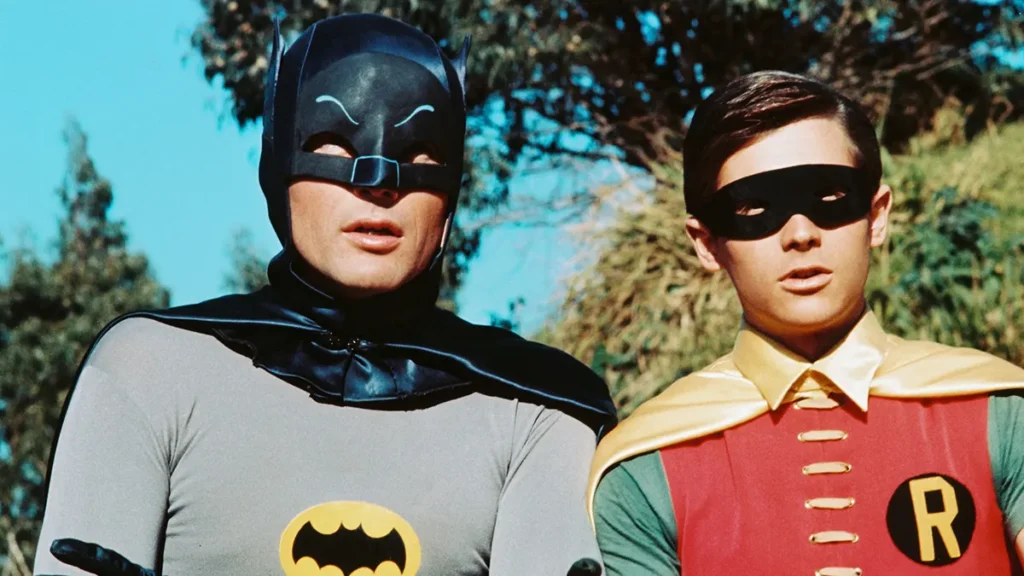
In June 2017, just as the world mourned the passing of the legendary Adam West, I dug into the Scoop B Radio vault to share a conversation with the Boy Wonder himself, Burt Ward. At the time, we were celebrating the chemistry and “pure nature” of the 1960s Batman series. Today, in 2025—as the “campy” aesthetic of the 66′ series has been fully embraced by modern pop-art movements—Ward’s memories of the “Batusi,” the feline energy of Eartha Kitt, and the “King Tut” era remain a buttoned-up tribute to a golden age of television.
Reflecting on that dialogue today, Ward didn’t just see a co-star in Adam West; he saw a comedic genius who knew exactly how to play “the joke” without ever breaking character.
The King Tut Dance and the “Batusi” Phenomenon
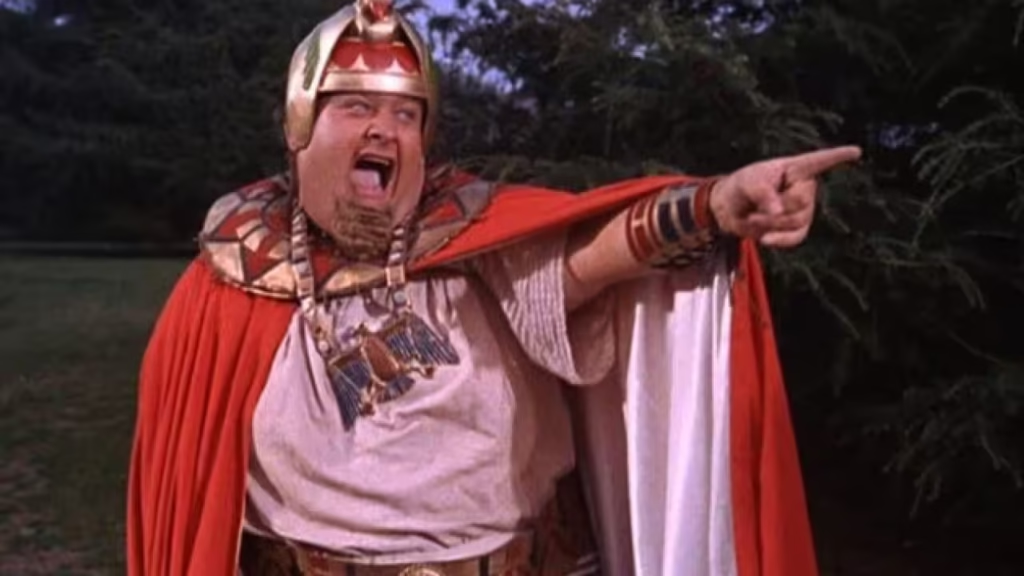
One of the most iconic elements of the 66′ series was Batman’s unexpected prowess on the dance floor. Whether it was the “Batusi” in the pilot or the rhythmic encounters with villains like King Tut, Burt Ward recalled how Adam West’s physicality defined the show’s humor.
“Adam was a brilliant comedic actor,” Ward told me. “He had this way of doing things, like the dance moves or the way he delivered a line, where he was completely serious, but the audience knew it was fun. We just had the best time; all we did was laugh.”
In 2025, that “King Tut” dance is a viral staple of retro-cool. Ward’s 2017 reflection highlights the “precision” we discussed—where even a goofy dance move was executed with the professional integrity of a Shakespearean monologue.
The Eartha Kitt Synergy: A New Kind of Catwoman
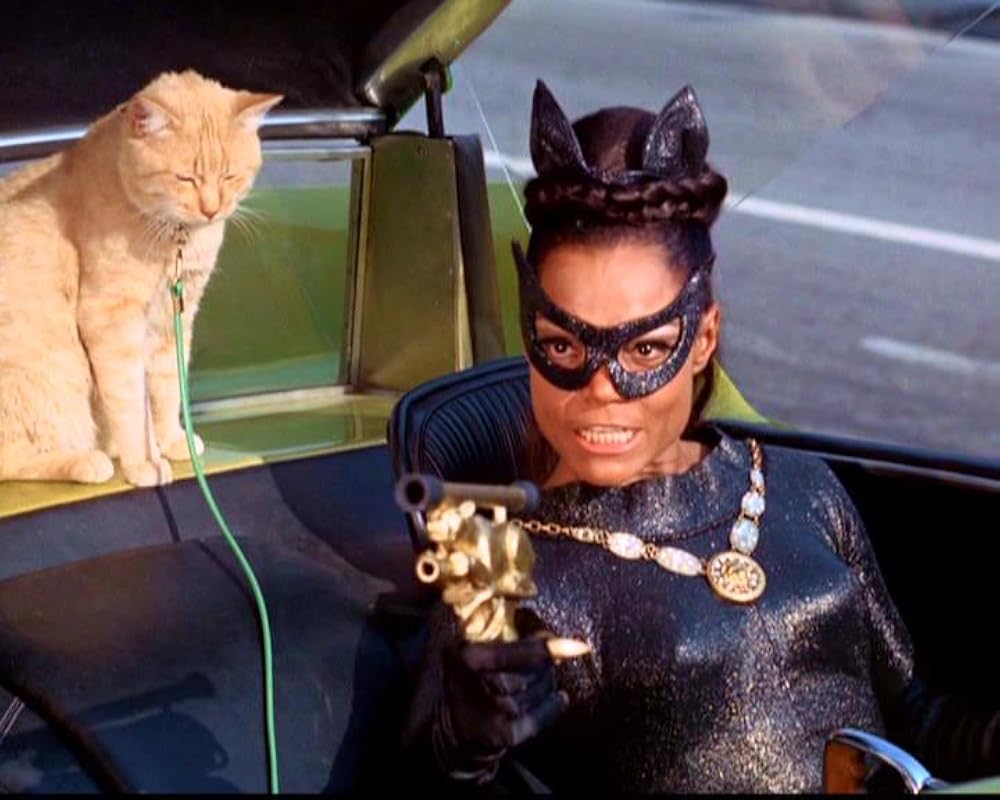
When we discussed the legendary Eartha Kitt, Ward was quick to praise how she shifted the energy of the show. Replacing Julie Newmar was no small feat, but Kitt brought a “slinky, rhythmic” power that was entirely her own.
“Every actress who played Catwoman brought something different, but Eartha… she was just so distinctive. Her voice, her movement—it was like she didn’t have to try to be a cat, she just was one. The chemistry between her and Adam was electric in a completely different way.”
Looking back from 2025, Kitt’s casting is recognized as a landmark moment for representation in superhero media. Ward’s “buttoned-up” respect for her “tonal” shift in the role reminds us that the 60s Batman was a pioneer in letting actors “own” their characters.
The “Bright Knight” Philosophy
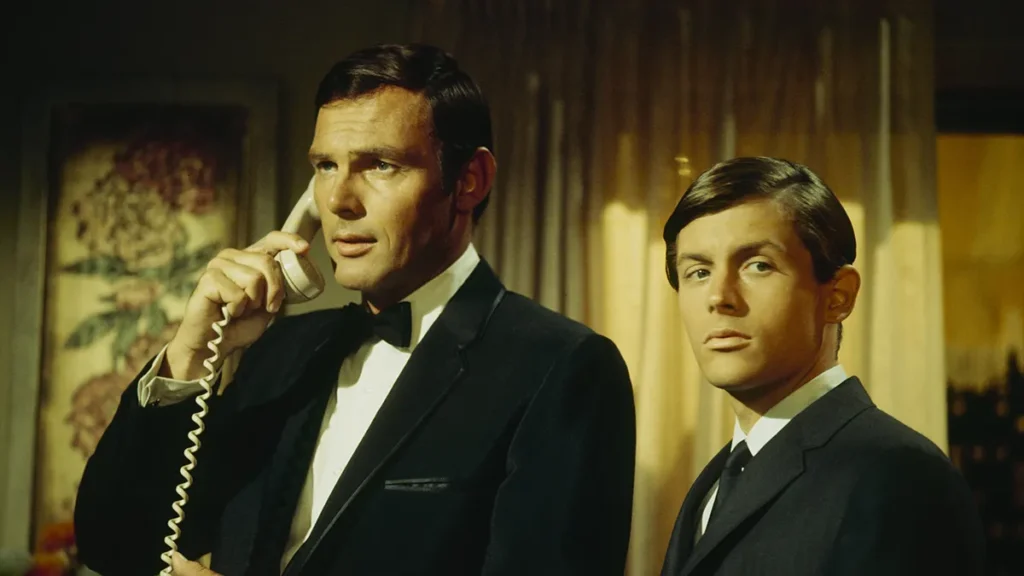
In 2017, the term “Bright Knight” became the definitive way to describe Adam West’s legacy, contrasting him with the “Dark Knight” iterations of the modern era. Ward took great pride in the fact that their show was a “safe haven” for families.
“We were a show for everyone. The kids saw a hero, and the adults saw the satire. Adam understood that balance better than anyone. There will only ever be one real Batman in my eyes, and that’s Adam West.”
This sentiment has only grown stronger by 2025. In a world of gritty reboots, the “Bright Knight” remains a necessary beacon of optimism. Ward and West’s 50-year friendship was the heartbeat of that optimism, proving that the “Dynamic Duo” wasn’t just a stage name—it was a lifelong partnership.