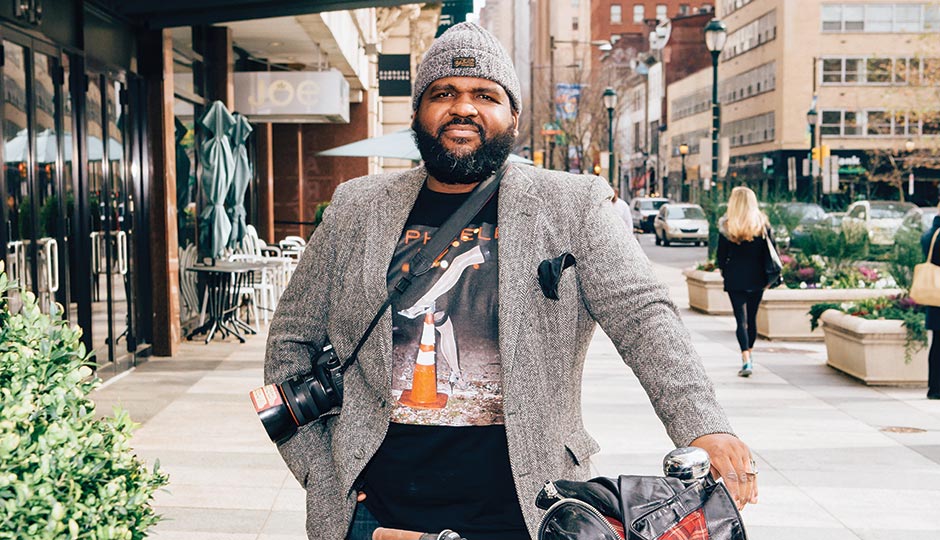
Ruben “Big Rube” Harley pictured in 2017 Photograph by Adam Jones
Long before algorithms, influencer marketing agencies and pre-game tunnel walks dictated global fashion, Reuben “Big Rube” Harley was operating on pure instinct.
Armed with an unyielding hustle, an unmatched eye for street style and a Motorola two-way pager, the Philadelphia legend single-handedly transformed Mitchell & Ness from a quiet, century-old local sporting goods shop into a multi-million-dollar global powerhouse. By placing authentic throwback jerseys on cultural giants like Jay-Z, Allen Iverson, Fabolous and Puff Daddy in the early 2000s, Rube didn’t just seed product—he permanently fused hip-hop culture with professional sports apparel.
Beyond his monumental mark on fashion, Big Rube’s journey is a masterclass in creative versatility, resilience and reclaiming narrative. From sitting across dinner tables with league commissioners like David Stern to navigating the complex realities of ownership, intellectual property and personal health, Rube has remained an authentic vessel for Philadelphia’s true soul. Whether behind a camera lens capturing street style, in the kitchen as a celebrated chef, or documenting the city’s rawest moments, his impact is etched into the very fabric of American culture.
In this exclusive conversation, Big Rube breaks down the birth of the throwback boom, untold stories featuring Kobe Bryant, Rich Paul and LeBron James, the business lessons learned from his departure from Mitchell & Ness and the enduring legacy he continues to build.
The Birth of Throwback Culture & Celebrity Seeding
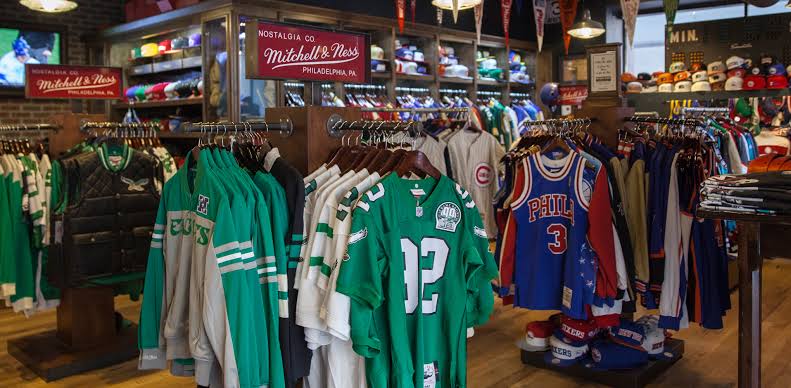
Before Instagram feeds, pre-game tunnel walk fit pics and coordinated influencer seeding campaigns existed, Reuben “Big Rube” Harley was setting global trends using little more than raw intuition, an unyielding hustle and a Motorola two-way pager. He took Mitchell & Ness, a modest Philadelphia sporting goods shop geared toward middle-aged white men and transformed it into an essential pillar of hip-hop royalty and global fashion. By strategically placing rare, authentic throwback jerseys on cultural giants like Allen Iverson, Fabolous, Jay-Z and Puff Daddy, Rube single-handedly turned $300 vintage sportswear into the ultimate status symbol. Below, Big Rube takes us back to the turn of the millennium to break down the exact origin of the throwback boom, the legendary 2002 AMAs moment that set the world on fire and how doing it strictly “for the culture” changed sports apparel history forever.
Brandon “Scoop B” Robinson: Big Rube, you basically were the blueprint for celebrity seeding before social media existed. When you were putting Mitchell & Ness throwbacks on Allen Iverson in Philly and Fabolous in those early 2000s music videos, did you realize at the time you were permanently changing hip-hop and NBA fashion history?
Reuben “Big Rube” Harley: You know, I didn’t at the present time. My good friend I grew up with, Orion “Set Free” Richardson, who blew up And 1, he told me after I put the deal together with Mitchell & Ness: “You’re about to change the world.” I’m like, “I’m just doing it for the culture, you know what I mean?” So that’s what I had in mind—just doing it for the culture.
Brandon “Scoop B” Robinson: Do you remember your first throwback jersey?
Reuben “Big Rube” Harley: Yes, it was a 1983 Cleveland Indians pullover home jersey—Andre Thornton, number 29. I bought it because I had the Indianapolis Clowns fitted hat that was red, white and navy blue—the team Hank Aaron started with—and that matched it. It was $250 and I remember putting it on layaway. I got it when I was 17 years old and wore it to a teenage club back then and it set the world on fire. Everybody was looking like, “Yo, where’d you get that?”
Brandon “Scoop B” Robinson: Philly is AI’s city and Fabolous was the ultimate throwback jersey ambassador in New York City. What are your favorite memories or untold stories from working directly with AI and Fab to make Mitchell & Ness a multi-million-dollar global movement?
Reuben “Big Rube” Harley: So I met Fab in the beginning on Memorial Day weekend in Miami. He had a jersey on and I went right up to him: “I’m Big Rube. You know Mitchell & Ness; I see you like this stuff. I’m him.” We exchanged numbers and when that video with Nate Dogg came up, I put him in the Texas Rangers jersey and the iconic 1977 Dr. J (Julius Erving) jersey. That was one of my favorites because that was my second NBA Hardwood Classic jersey. My first was the 1967 San Francisco Warriors Rick Barry “The City” jersey. Once Fab wore it, it just bubbled up. This was pre-internet—you only saw it in videos and magazines—and people came to 1229 Walnut Street [the Mitchell & Ness flagship store] asking for it.
Brandon “Scoop B” Robinson: How did you decipher the difference between who got free jerseys, who got discounted jerseys and who had to pay full price?
Reuben “Big Rube” Harley: It was a pecking order. Back then, we had Motorola two-way pagers, and I would hit them up with what was coming. But when Jay-Z, Puffy, or Fab had a performance, or a magazine shoot, I would send the jersey for them to keep. Other than that, if they wanted to shop and be like everybody else, they paid the price. I gave a little discount, but they paid. I always had it in my mind: if you want it that bad, you’ll pay for it.
Brandon “Scoop B” Robinson: You mentioned that when notable people went on stage or on tour, that’s when you gave them free merch. Can you give a specific example of an instance like that?
Reuben “Big Rube” Harley: The one that really started it all was January 2002. Puffy hosted the American Music Awards with Jenny McCarthy. He performed with Snoop, Ben Stiller came out wearing a Mickey Mantle jersey, and everybody wore Mitchell & Ness gear. He had 14 outfits that night, and 11 of them were Mitchell & Ness. The next day, I got calls from all the media in the world because he changed every commercial break using the Diana Ross template. People were calling me saying, “Puffy’s wearing your stuff!” and I said, “I’m standing right next to him and his stylists, Mike B and Groovy Lew, custom outfitters.” The next day, the world was set on fire.
Brandon “Scoop B” Robinson: Many people credit Outkast as ambassadors for Mitchell & Ness, though they were a bit quieter. How much credence do you give to Outkast actually being among the most notable firsts to rock Mitchell & Ness jerseys?
Reuben “Big Rube” Harley: I loved it because they were responding to what I was doing. When the “Black Ice” video came out, people said, “Big Boi and them are wearing the jerseys you wear!” It validated our culture. Mitchell & Ness was a sporting goods store geared toward middle-aged white men. They were selling to Distant Replay in Atlanta—another mom-and-pop store that Mitchell & Ness wholesaled to. Nobody initially wanted to buy $300-plus jerseys. They had maybe two dozen accounts across the country with no big brand names. When I opened everything up, that’s when everybody came calling.
Kobe, MJ & Meetings with League Bosses
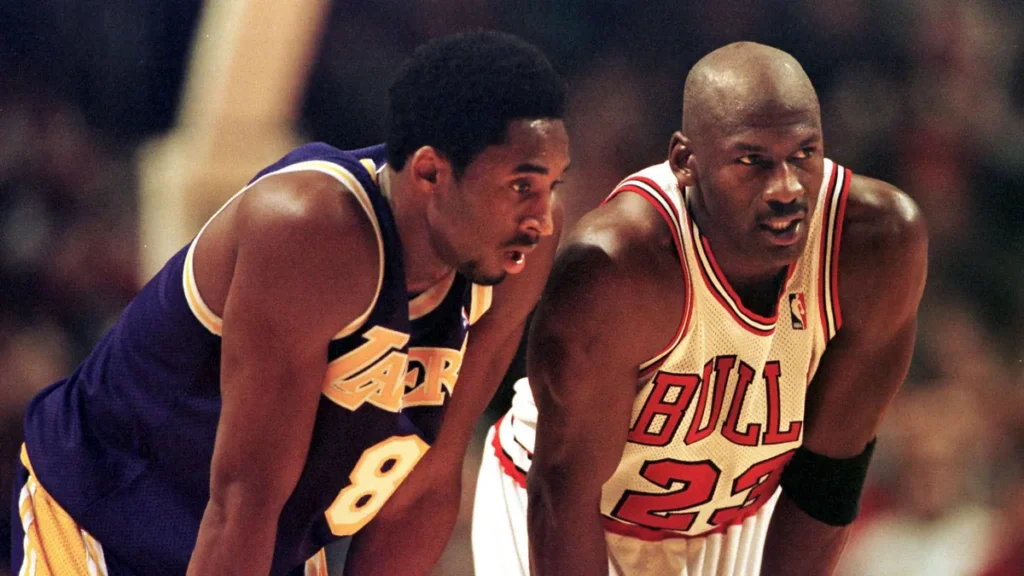
Before throwback jerseys became ubiquitous across sports culture, they were an exclusive luxury reserved for high-end collectors and insiders—until Big Rube bridged the gap between sports executives and the streets. In this segment, Rube breaks down the truth behind Kobe Bryant’s iconic 2002 NBA Finals outfit, why Michael Jordan and Charles Barkley were the final corporate holdouts, and how his high-level dinners with David Stern, Paul Tagliabue and Gary Bettman fundamentally reshaped how major sports leagues market their apparel to the masses.
Brandon “Scoop B” Robinson: During the 2001 and 2002 NBA Finals, Allen Iverson and Kobe Bryant both wore throwback jerseys. Kobe famously wore a Michael Jordan Chicago Bulls jersey, but back then, Mitchell & Ness didn’t have the licensing to produce Jordan Bulls jerseys.
Reuben “Big Rube” Harley: If you look at that jersey Kobe wore, that was actually a Champion jersey. The only Jordan jerseys we made back then were custom items, like one my grandmother made into a dress for Eve, or special items for his charity. Michael Jordan and Charles Barkley were the only two holdouts who wouldn’t let us do their jerseys at the time. Every other Hall of Famer was on board. NBA players would call me personally asking, “Can you make my jersey?”
Brandon “Scoop B” Robinson: What changed that allowed Jordan’s licensing to come through later?
Reuben “Big Rube” Harley: Once it got corporate and after I left, it became a bigger thing and they eventually did a collaboration with Jordan and Nike.
Brandon “Scoop B” Robinson: You sat down for dinners with major sports leaders like David Stern, Paul Tagliabue and Gary Bettman. What were those meetings like?
Reuben “Big Rube” Harley: I had separate dinners with all of them. David Stern and Sal LaRocca sat with me and were like, “How did you do it?” I broke down the culture for them: “When Black Americans get into something, everybody eats. We’re the arbiters of cool. I took silhouettes geared toward 55-plus-year-old men and brought them to the culture.” That’s why leagues had to create lower-tier lines like Rewind and Swingman with Nike and Reebok—to capture the mass billions built on what I started.
My dinner with NFL Commissioner Paul Tagliabue was at BLT Steakhouse in New York. He was soaking up my perspective on how throwback apparel was driving culture. With NHL Commissioner Gary Bettman in late 2002, we secured the NHL Vintage license. I brought media to The Palm, showed them hockey jerseys worn by hip-hop stars from Biggie to Buckshot, and explained how the hockey silhouette had always been part of street culture.
Rich Paul, LeBron James & Eagles History
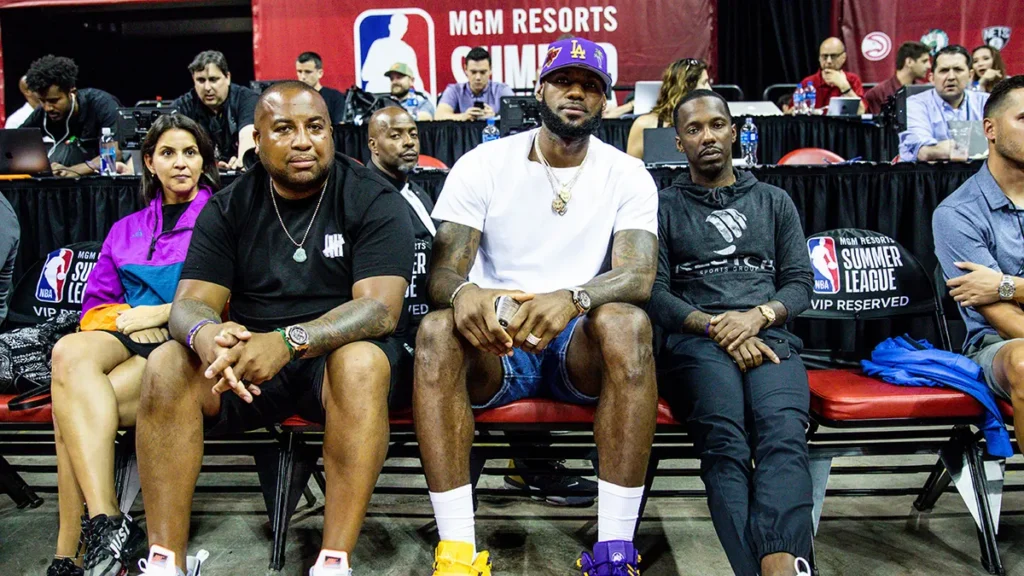
Before Rich Paul built Klutch Sports into an agency giant, and long before LeBron James became an empire unto himself, sports apparel served as the connective tissue that brought them together. In this segment, Big Rube reflects on the unseen roots of Rich Paul’s origin story, his own personal role in bringing young LeBron to Philadelphia during his early NBA years and how throwback jersey culture sparked major administrative battles—including a standoff with Eagles ownership over kelly green history.
Brandon “Scoop B” Robinson: Rich Paul famously got his start selling authentic jerseys out of his trunk before meeting LeBron James at the Akron airport. How do you view Rich’s origin story and how did sports apparel spark one of the biggest empires in sports history?
Reuben “Big Rube” Harley: As a Black man in this industry, I wish he’d give me more credit for his beginnings. He mentioned me on his podcast recently, but he had connected with Andy Hyman at Distant Replay. In February [2002] at the All-Star Game, he paid $2,000 for me to open the Mitchell & Ness store doors for him while the line was wrapped around the building. I liked his spirit and that’s how our connection started. A few months later in April at the Final Four in Atlanta, he introduced me to LeBron. He called me up and said, “You’re the reason I met LeBron.” I met young LeBron there and we stayed close ever since. During his first three years in the NBA, LeBron would spend almost a month with me in Philly every summer, and I’d drive him around to local spots, clubs and the YMCA.
Brandon “Scoop B” Robinson: When LeBron was a free agent in 2018 and there were rumors about him joining the 76ers, how close do you think he came and what would that have meant for the city?
Reuben “Big Rube” Harley: Back in 2018, I had an inside track from Rich that Philly was one of the teams they were seriously considering. I went on WIP Sports Radio telling people LeBron was going to play in Philly eventually and they thought I was crazy. He’s always had a real connection to this city.
Brandon “Scoop B” Robinson: Donovan McNabb led the Eagles to five NFC Championship games and a Super Bowl, but his era ended on a polarizing note. How do you evaluate the Eagles’ transition post-McNabb through Michael Vick, Nick Foles and Jalen Hurts?
Reuben “Big Rube” Harley: It’s beautiful to see Black quarterbacks like McNabb, Vick, and Jalen Hurts represent Philly. I’m a Steelers fan by birth, but seeing Jalen Hurts finish the job and bring the Super Bowl home was amazing.
Regarding throwback history, Eagles owner Jeffrey Lurie actually tried to stop us from making kelly green throwback jerseys initially. At the last Eagles game at Veterans Stadium, Warren Sapp wore a No. 17 Harold Carmichael throwback jersey on national television. Lurie sent a letter to the NFL saying fans should focus on current colors. I had to sit in a meeting with NFL executives and Lurie to calm him down so we could keep making Eagles throwbacks. Harold Carmichael is a good friend of mine—he still tells stories about how I brought him royalty checks long after his playing career ended because nobody was paying retired players for their name and number back then.
Business Realities, Health & Legacy
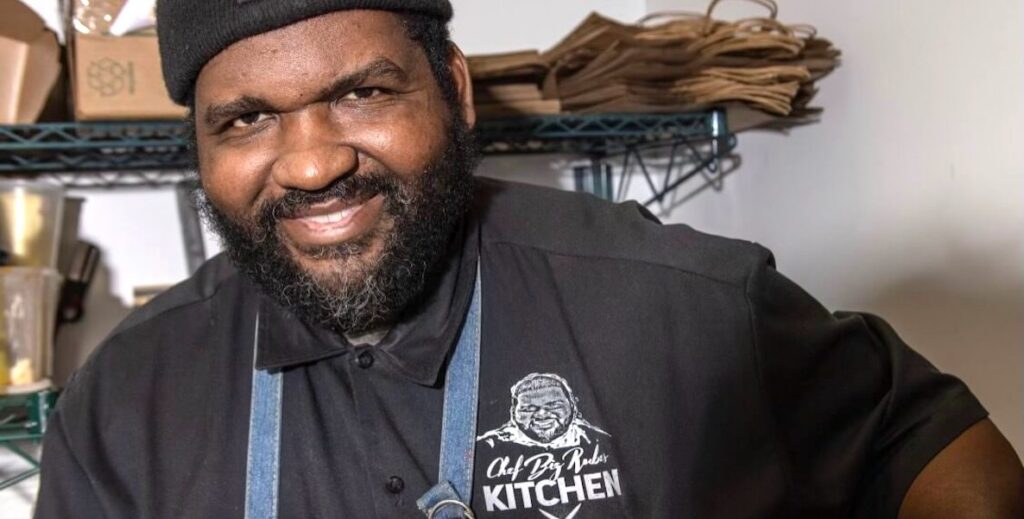
Before a corporate acquisition reshaped Mitchell & Ness and before the harsh realities of intellectual property, ownership and health challenges took center stage, Big Rube was living out a real-world masterclass in brand building.
Rube candidly addresses his departure from Mitchell & Ness, the invaluable hard-won business advice he passes down to young Black creators and innovators and how the surrounding Philadelphia community lifted him up during his darkest health battles.
Brandon “Scoop B” Robinson: How did things ultimately end between you and Mitchell & Ness and what was that transition like for you personally?
Reuben “Big Rube” Harley: It was a ten-year market study for me. I built something out of nothing, but homage was never properly paid. I got written out of the story. When Peter Capolino sold the company to Adidas/Reebok the year after I left, an Adidas executive told me, “You were the equity; we got the company cheaper because you weren’t there anymore.” I looked at Peter like a father figure and trusted his word that he’d take care of me, but it was never put on paper.
Brandon “Scoop B” Robinson: What advice do you give to young creators today about protecting their intellectual property and equity when partnering with established companies?
Reuben “Big Rube” Harley: Never take someone’s word as a promise—put it on paper. Give companies a little leg tease, then pull it back. Once they realize they need your creative spark, don’t turn the faucet back on until your attorney gets the paperwork signed. Protect your IP and equity.
Brandon “Scoop B” Robinson: How do you feel today when you see Mitchell & Ness throwbacks everywhere from music videos to stadium arenas?
Reuben “Big Rube” Harley: It’s love and hate. Love because something I incubated became global. Hate because I can’t fully rejoice knowing my daughter isn’t reaping the financial rewards of what I built. But when people pay me to sign their throwback jerseys like an athlete, that’s a feather in my cap. As my grandmother said, “They can’t take away what’s between your ears, your knowledge, or the history you made.”
Brandon “Scoop B” Robinson: Philly’s creative, sports, and culinary communities have rallied around you during your health journey. What has that outpouring of love meant to you personally?
Reuben “Big Rube” Harley: I cry every day out of gratitude. Two years ago, sitting in a hospital bed, I thought my life was over. The global outpouring of support through calls, DMs, GoFundMe, and photo exhibitions showed me how many lives I’ve touched. I don’t take anything for granted.
Brandon “Scoop B” Robinson: What is the core thread you want people to remember about Big Rube’s legacy?
Reuben “Big Rube” Harley: I responded to what was in front of my eyes. I became the Bill Cunningham of Philly. Someone once told me, “Your children will never have to worry about history because you captured the emotion, style, and landmark culture of this city on record.” I’m just a vessel sharing my passion.
Beyond Corporate Boardrooms: The Undeniable Legacy of Reuben “Big Rube” Harley
Reuben “Big Rube” Harley’s journey is a striking reminder that true culture cannot be manufactured in corporate boardrooms—it must be lived, built, and defended. Long before multi-million-dollar endorsement deals and algorithmic seeding campaigns became standard operating procedure, Rube understood a fundamental truth: Black culture is the ultimate arbiter of cool. His visionary work didn’t just change how sports apparel was marketed; it fundamentally redefined how generations express their allegiance to sports, music, and regional pride.
While corporate structures may try to dilute or rewrite his contributions, Rube’s fingerprint remains permanently embedded across global fashion, Philadelphia culture, and sports history. As he continues to inspire through photography, culinary arts, and candid storytelling, Big Rube stands tall as a blueprint for ownership, creativity, and unapologetic authenticity. His legacy isn’t defined by the titles corporate entities denied him, but by the undeniable history he captured and the culture he helped create.