
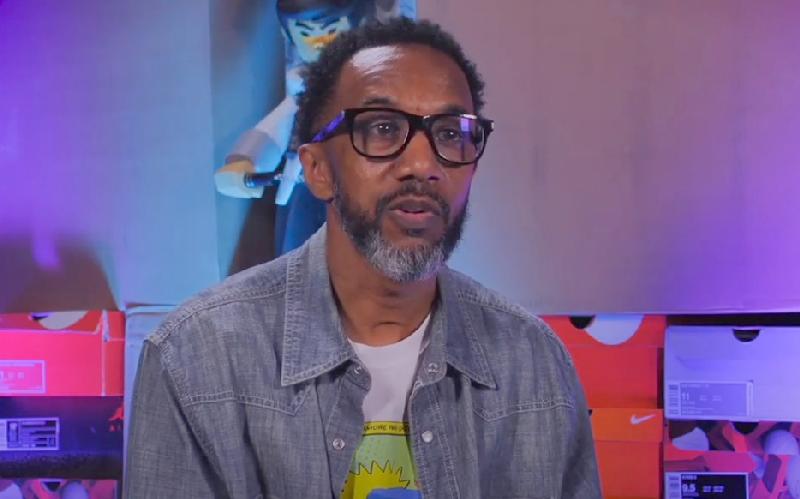
CHICAGO — What happens when two of the most distinctive voices in sports media sit down in the Chi? On Episode 3 of The Pull Up With Scoop B, host Brandon “Scoop B” Robinson connects with legendary writer, author, and cultural pioneer Robert “Scoop” Jackson.
From the golden era of SLAM Magazine and navigating Michael Jordan’s inner circle during the Bulls’ dynasty, to the night Scoop Jackson unintentionally blew up World Wide Wes’s identity at ESPN, this conversation is a masterclass in independent journalism, hip-hop history, and media sovereignty.
Grab your seat as two generations of “Scoop” decode the game, honor the roots, and break down what it truly takes to protect the integrity of the narrative.
Brandon “Scoop B” Robinson: I feel like it’s that Spider-Man pointing meme! I’m Scoop B… wait, I’m Scoop B, and you’re Scoop Jackson!
Robert “Scoop” Jackson: Right, right, right, right!
Brandon “Scoop B” Robinson: Brother, funny story—I get calls from people all the time saying, “Man, it’s an honor to meet you! I’ve been following you since your time at SLAM Magazine.” And I’m like, “I think you meant the other Scoop!”
Robert “Scoop” Jackson: Right?
Brandon “Scoop B” Robinson: Does it ever happen the other way around for you?
Robert “Scoop” Jackson: Not so much, mainly because I’m a little bit older than you, so I benefit from OG status! Plus, there’s no “B” attached to my name. My real name is Robert, so as a joke, people close to me call me Bobby or Bob because my father’s name was Bob. But every now and then somebody will tell me, “That was dope what you did, man! I love Scoop B Radio.” And I’m like, “That’s my man! That’s my man’s work.”
Brandon “Scoop B” Robinson: For those who are tardy to the party, Scoop Jackson joins us on The Pull Up With Scoop B. It’s only right that I’m connecting with folks I have real relationships with—Antoine Walker, Kendall Gill, and now you.
Robert “Scoop” Jackson: Can I interrupt and ask you a question? I know your passion started out East, but what made you come back to Chicago to get The Pull Up off the ground? You could have done this anywhere. Why the Chi?
Brandon “Scoop B” Robinson: So I don’t know if you know this, but I fell in love with basketball in 1991 when the Bulls were playing. I grew up in New York and New Jersey, but my stepfather is from the West Side of Chicago—a Northwestern grad, De La Salle High School alum, and his family is tied to Farragut Career Academy.
Robert “Scoop” Jackson: Oh, so you’ve got the whole nine! It’s in your DNA.
Brandon “Scoop B” Robinson: Exactly. I pulled the Chicago card!
Robert “Scoop” Jackson: Okay, I get it now! I didn’t know there was connective tissue like that. With everything you’ve built over the last two decades, you could have done this anywhere—and probably for less money than traveling all over. I knew your love for basketball had origins here, but coming to Chicago to pull up with people you already knew makes complete sense now.
Brandon “Scoop B” Robinson: As an adult, the two cities I was always fascinated by were Chicago and Los Angeles. My brand manager, Briahna Gatlin of Swank PR, is based here in Chicago. And in L.A., my late biological father was a huge Lakers fan. I’ve always felt connected to both cities without living in either. To me, Chicago for my generation was what the Lakers were for my parents’ generation. We’re in an era now where the ’90s culture is being uncovered again, so going back into that roots story made total sense.
Robert “Scoop” Jackson: It’s smart. It makes a lot of sense.
The Architecture of SLAM Magazine & Building Culture
Long before digital platforms and personal branding redefined sports media, SLAM Magazine served as the blueprint for connecting basketball to the heart of hip-hop culture. Here, Scoop Jackson reflects on the groundbreaking vision behind the iconic publication and how his early work anticipated a global cultural shift. That legacy laid the foundation for how the game, sneakers, and music are covered today.
Brandon “Scoop B” Robinson: School me on SLAM Magazine. That’s where I first locked into your imprint. In today’s media landscape, everybody is independent, everybody is a brand. Looking back, do you feel like you were ahead of your time?
Robert “Scoop” Jackson: I can’t disagree with that now, but I didn’t realize it during that era. Looking back at what we built, yeah, maybe we were ahead of the curve. My mind has always operated a bit ahead of the curve—like being deep into sneaker culture as a kid before it was an industry, or taking rap music seriously as an academic subject.
In 1990 or 1991, I did my Master’s journal at Howard University on the pro-social effects of rap music on the Black community. At the time, no university had an academic study on rap. Hip-hop was still viewed by mainstream media as noise or a passing fad, but I knew it was going to have a global impact and speak directly for us as Black people.
When we were building SLAM, we weren’t thinking about being ahead of the curve; we were just trying to establish something different. We weren’t trying to compete with Sports Illustrated, Sporting News, or USA Today. We weren’t even trying to be the basketball version of The Source. We were just trying to be dope in the truest sense of the word. We wanted to document and tell stories about the entire culture of basketball, not just the NBA or NCAA. Basketball has its own culture—just like soccer does in Europe and South America, or baseball in the Caribbean. We wanted to make sure those stories were being documented on a major platform.
Brandon “Scoop B” Robinson: You mentioned The Source. I worked at The Source from 2013 to 2015, and everybody has Source stories. But sports heads always have SLAM stories—specifically about the office environment. What was the SLAM office like back then?
Robert “Scoop” Jackson: They called it the “SLAM Dome.” I think Russ Bengtson or Dennis Page came up with that name. I was a bit of an outsider because I commuted in from Chicago, but the energy in that space was legendary.
Harris Publications had about 36 titles on Broadway—everything from Guitar World to Dog News. Each title had its own little section for sales and writers. SLAM occupied the back corner of the floor, and it had its own distinct energy. At most, there were maybe five cubicles. I didn’t even have a cubicle at first!
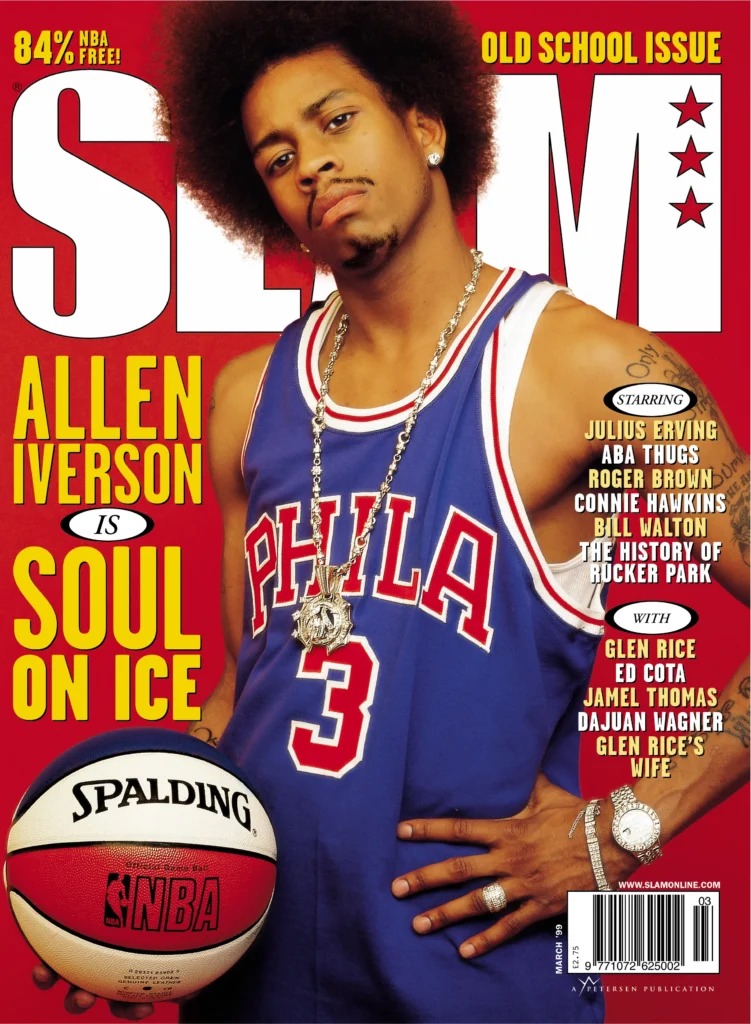
What made SLAM special was the internal, creative competition. We respected each other’s talents and never got in each other’s way. I’d write a piece, and Russ Bengtson would read it and say, “Alright, I’ve got to write a headline to match Scoop’s story.” Don Morris would throw out a layout concept for a Dennis Rodman feature, and I’d say, “I’ve got to write something elevated enough to match this visual.” Or Tony Gervino would come up with the iconic concept of putting Allen Iverson on the cover in the Mitchell & Ness jersey with the afro. It was a healthy, internal iron-sharpening-iron environment.
While other magazine departments were playing rock or grunge, the back of our floor was blasting hip-hop. Even as the primary Black writer in the office alongside guys like Jamal, I never felt tokenism or imposter syndrome. They held me to a higher standard. Tony Gervino used to say, “Scoop was the only real journalist we had.” Because I was a little bit older, it was like being Yoda in the room! When we started XXL later, that’s when I spent more time in the office and finally got my own cubicle alongside guys like Datwon Thomas, Black Spot, and Miles Marshall Lewis.
Authenticity vs. Corporate Commodification
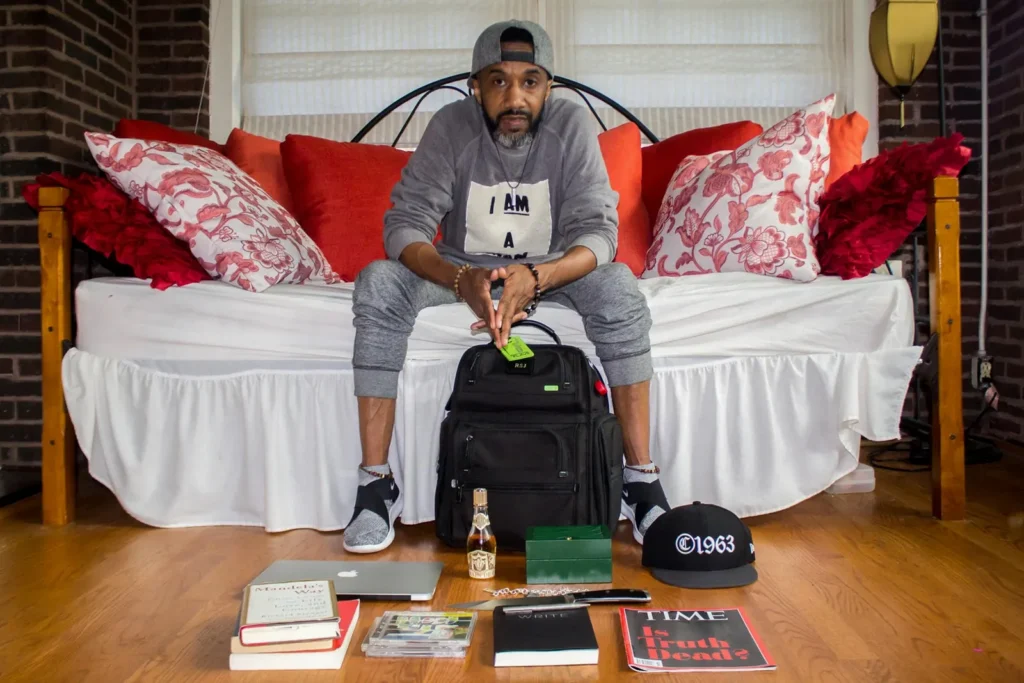
As corporate interests increasingly move to package and monetize Black culture, preserving narrative integrity requires a deliberate strategy. In this section, Scoop Jackson breaks down the fine line between mainstream co-optation and true media ownership. He offers an unfiltered look at navigating corporate giant ESPN without compromising identity, illustrating how SLAM laid the groundwork for today’s player-led media movement.
Brandon “Scoop B” Robinson: That era was unique because you had figures like you, Stuart Scott, and Ahmad Rashad. Today, being “for the culture” is everywhere, but it often feels commodified. How do you protect the authenticity of the narrative when major corporations package and sell our culture back to us?
Robert “Scoop” Jackson: It’s a double-edged sword. It irritates me when decisions are made in rooms where none of us are present. But at the same time, I’m a realist about capitalism in America. America respects capital above all else, which often means commodifying Black creativity and ideas.
Because it’s nothing new, I enter corporate spaces expecting it. When I signed my deal with ESPN 11 years after starting at SLAM, my mindset was: “They brought me in here assuming I’m going to mess up so they can justify not hiring someone like me again.” My personal mission was never to give them that luxury.
So when dealing with corporate commodification, my goal is not to become a victim of it. You stay true to what needs to be heard and seen so that the people watching can see themselves in your work—without the absence of who we are. If you’re going to be commodified in this industry, make sure it’s on your own terms.
Brandon “Scoop B” Robinson: Player media platforms are huge now. What is something commonplace today that was considered completely nuanced when you were at SLAM?
Robert “Scoop” Jackson: Giving athletes a platform to speak in their authentic voice. Today, former athletes are given major platforms, podcasts, and digital outlets like The Players’ Tribune to control their narrative.
Back at SLAM, we were one of the few outlets that gave athletes a space to speak with complete honesty, comfort, and freedom without having to code-switch. They knew what they said wouldn’t be weaponized against them. Historically, mainstream media did a brilliant job of shaping athletes into narratives that suited the outlets, not the players. That’s why players eventually built their own media empires. SLAM was really the prototype for that movement.
Covering MJ, AI and the Legendary “Velvet Hammer”
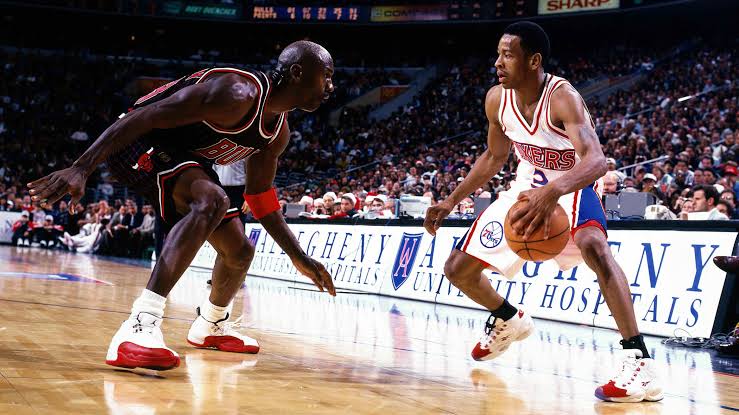
Managing relationships with elite superstars requires a delicate balance of professional distance, respect, and persistent storytelling. Here, Scoop Jackson details how his straightforward approach earned Michael Jordan’s trust during the Bulls’ second three-peat run while mainstream media was shut out. He also pulls back the curtain on how SLAM navigated athlete pushback using its legendary editorial strategy: the “Velvet Hammer.”
Brandon “Scoop B” Robinson: SLAM was the narrator for Allen Iverson, Kevin Garnett, and Larry Johnson. I’ve always been curious: What was Michael Jordan’s perception of SLAM, and how did he interact with you guys?
Robert “Scoop” Jackson: Everyone at SLAM had a different relationship with Michael. Unlike other outlets that assigned just one writer to MJ, everybody on our team did something with him at some point.
When SLAM launched in 1994, Michael had just retired to play baseball. Publisher Dennis Page was wondering how we were going to launch a basketball magazine without Michael Jordan! But when Mike came back in 1995, I was one of the few national writers living in Chicago with daily access to him.
Michael was getting tired of mainstream media finding fault with him. My approach with Mike was simple: I never got on his nerves. I didn’t treat him like a commodity or act like a vulture. I’d talk to him without a tape recorder running—just human to human. If I had an interview question, I’d ask it and get out of his space. He respected that fairness.
During the playoffs, when MJ went into total media lockdown and stopped doing locker room scrums, he’d still look at me and say, “Write your questions down, give them to me, and I’ll answer them on the plane ride back.” That level of access came from establishing trust and treating him with basic human dignity.
Brandon “Scoop B” Robinson: How hard was it to get exclusives with the Bulls’ PR department back then?
Robert “Scoop” Jackson: It wasn’t hard at all because Tom Smithburg ran PR for the Bulls, and he understood what SLAM was doing. Players like Michael, Scottie Pippen, and Charles Oakley loved the magazine.
When we tried to get Shaq for the cover of SLAM Issue #3 in the summer of 1994, SLAM was brand new. Shaq kind of gave me the runaround during a Reebok signing, giving me a quick 10-minute interview over the phone. Fast forward to Game 1 of the 1995 NBA Finals in Houston. I was sitting courtside, and Shaq ran straight across the floor toward me. I thought, “Oh man, what’s happening?” Shaq stopped and said, “Yo, I’ve been waiting to see you. I want to apologize for how I handled that cover interview last year. That cover was dope. Whatever you need from me moving forward, let me know.”
When players resisted doing interviews, Tony Gervino implemented what he called the “Velvet Hammer.” We’d publish a “Protest Story”—acknowledging that the player refused to talk to us, but writing a feature on them anyway that was executed so flawlessly that it delivered the point without being petty.
When Rasheed Wallace refused to talk to us in Portland, I later ran into him and asked why. Sheed said, “Man, nobody told me it was YOU writing it! They just said SLAM wanted an interview. If I knew it was you, we would’ve been good!”The same thing happened with Jalen Rose after the Pacers beat the 76ers in the playoffs. He ran over to me on the bench and said, “Scoop! Now you’ve GOT to write my SLAM story!” Guys were literally waiting for their turn to be featured.
Writing on the Block: Penny, Baron Davis and KG
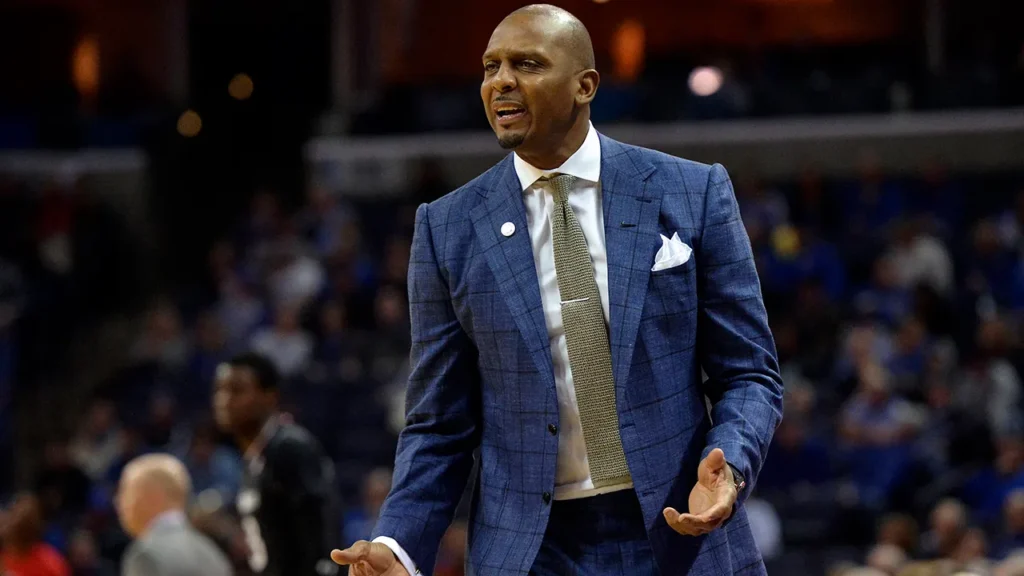
Great journalism isn’t confined to sterile press rooms or formal media availability; it happens wherever the story lives. In this section, Scoop Jackson shares how he captured raw, unfiltered human moments by writing classic features from city curbs, team buses, and local hangout spots. This relentless adaptiveness defined the signature, ground-level style that set SLAM apart from traditional outlets.
Brandon “Scoop B” Robinson: What are the two craziest non-arena places you’ve written or conducted a feature?
Robert “Scoop” Jackson: First one that comes to mind is Beale Street in Memphis doing a story on Penny Hardaway. I was sitting on a literal curb writing a Penny feature in poetic verse. I wanted the stanzas of the story to read like hip-hop lyrics to match his game. That turned into the “Revenge of Penny Hardaway” cover with the toothpick in his mouth—one of the most iconic SLAM covers ever.
The second was on the back of a team bus in Charlotte with Baron Davis. His PR team gave me a 20-minute ride from the practice facility to the hotel. I asked Baron one core question: “Explain to me how you got here from L.A. How did basketball bring you here to become Baron Davis?” He gave me a 45-minute life story right there on the bus. When he got off, I stayed in the back seat and wrote the entire piece right then and there.
And I can’t forget Kevin Garnett—we went down to Mauldin, South Carolina, and ended up at a local spot watching people line dance and “shag” while working on his feature!
The Legend of Uncle Wes & The ESPN “Manifesto”
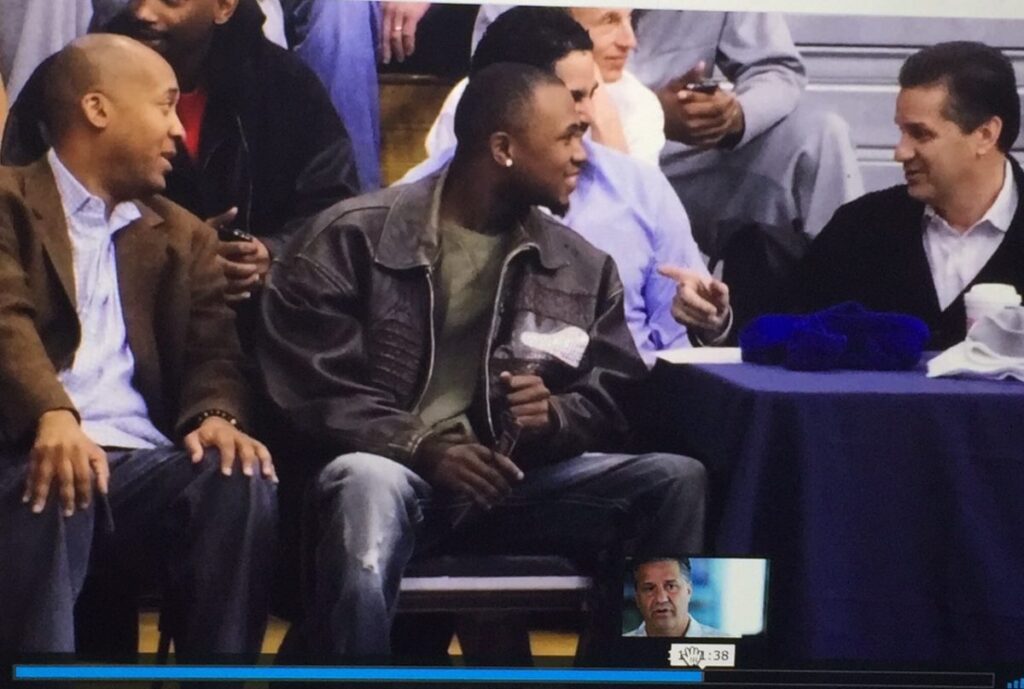
Behind basketball’s public stage lies an intricate network of unspoken alliances, deep trust, and power brokers moving in silence. In this section, Scoop Jackson reflects on his bond with Allen Iverson and shares the iconic story behind William “World Wide Wes” Wesley. He breaks down how a single sentence in his 2005 ESPN debut unintentionally lifted the veil on basketball’s most enigmatic figure.
Brandon “Scoop B” Robinson: Every great storyteller holds onto classic vault stories. Is there a piece of history you’ve kept in the vault that reminds you how special this journey is?
Robert “Scoop” Jackson: Allen Iverson’s true story. If Allen ever fully told his complete life story, he’d be on Oprah’s Angel Network. Allen and I had a unique bond—we represented a specific, Black authenticity in our respective fields at the exact same time. We both had braids, came from Black neighborhoods, and maintained a mutual respect for what shouldn’t be exploited.
The other legendary backstory is William Wesley—”Uncle Wes.”
Brandon “Scoop B” Robinson: World Wide Wes! Do you think there will ever be another William Wesley in basketball culture?
Robert “Scoop” Jackson: Someone with those connections? Yes. But someone who can operate with that level of absolute anonymity? Never again. Today, people are too thirsty for clout. Wes moved in the shadows for decades out of calculated precision.
When I made the jump from SLAM to ESPN in 2005, ESPN asked me to write an introductory column called “Scoop’s Manifesto” to outline my worldview. In that column, I wrote one simple line: “I believe the second most powerful person in sports behind Phil Knight is William Wesley.”
To SLAM readers, that was common knowledge. But to mainstream ESPN readers, executive offices, and The New York Times, it created a firestorm. People were asking, “Who the hell is William Wesley, and how is he more powerful than league commissioners?”
Wes called me up—he wasn’t angry, but he said, “Man, I’ve been moving in silence for 20 years, and you blew me up in one line!” Suddenly GQ, The New York Times, and national media were chasing him.
Today, as an executive with the New York Knicks alongside Leon Rose, Wes has a different type of power. He’s legitimized in the public space now, which is a great career evolution. But back when he was World Wide Wes, the power and mystique he held across the NBA, NFL, NCAA, hip-hop, and politics was completely unprecedented.
The State of Long-Form Journalism & Birth of a Culture
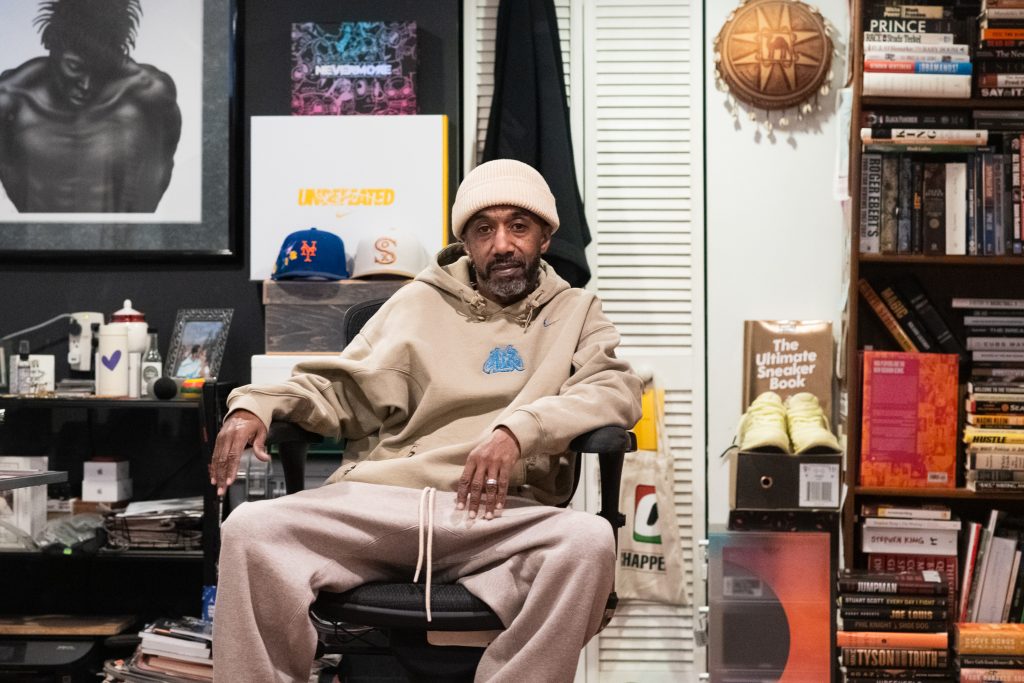
As media consumption shifts toward short-form feeds and fast content cycles, the art of long-form storytelling faces a quiet evolution. In this section, Scoop Jackson addresses the shifting realities of modern sports journalism, comparing his process of co-authoring Derrick Rose’s personal story to the intense, oral-history approach behind Grandmaster Flash’s Birth of a Culture.
Brandon “Scoop B” Robinson: Does the decline of traditional, long-form print journalism worry you?
Robert “Scoop” Jackson: Part of me misses the deep art and impact of long-form writing. But as a realist, the industry infrastructure is no longer there to support it.
Will there ever be another Gary Smith—a writer paid top dollar by Sports Illustrated to write six masterwork 10,000-word stories a year? No. Digital platforms aren’t funding that, and today’s top storytellers are moving into film, television, and podcasts. The media consumption model has fundamentally shifted.
Brandon “Scoop B” Robinson: You’ve authored the autobiographies of Derrick Rose and George Gervin, and you have a new book coming out with Grandmaster Flash called Birth of a Culture. Which project was the most tedious to write?
Robert “Scoop” Jackson: Hands down, the Grandmaster Flash book.
Flash wanted to tell the story of hip-hop’s origins differently. Instead of a traditional memoir, Birth of a Culture weaves Flash’s narrative alongside the living pioneers who built the culture from the ground up—Afrika Bambaataa, early graffiti artists, breakdancers, security guards at the original Bronx park jams, Fab 5 Freddy, Lady Pink, Charlie Ahearn, and key icons like Rakim, Chuck D, Run-DMC, Dr. Dre, Ice Cube, Q-Tip, and Queen Latifah.
It was like creating the hip-hop equivalent of Eyes on the Prize. Flash and I were working 16-hour days on a condensed five-month deadline. I didn’t leave my house the entire summer working on it!
Derrick Rose’s book was much smoother because D-Rose and I have known each other since he was in middle school. He didn’t have to explain his background to me—we lived through the Chicago roots together.
Advice for the Modern Sovereign Media Owner
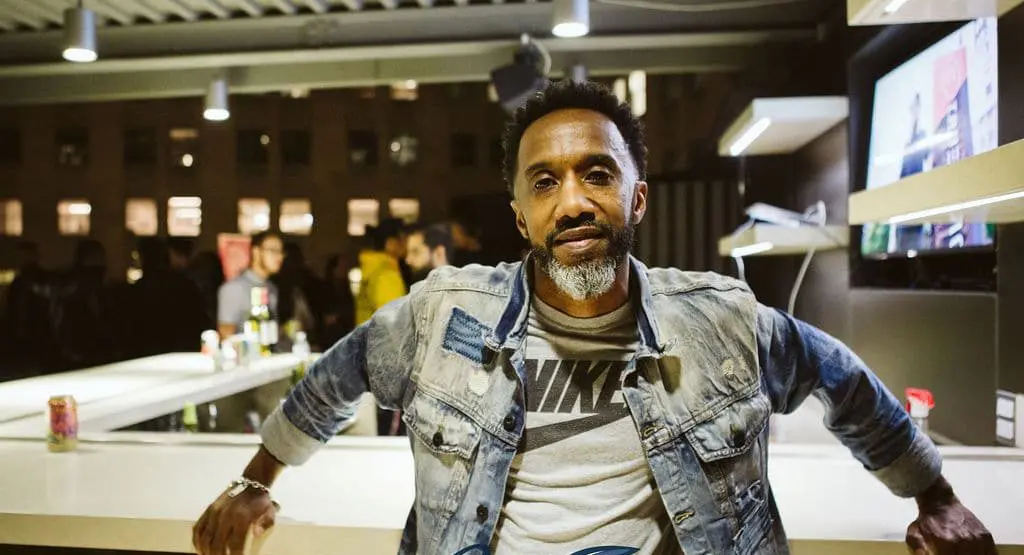
Building an independent media brand demands more than just producing great content; it requires uncompromising ownership over one’s vision. In this closing exchange, Scoop Jackson delivers an essential piece of advice for independent creators navigating legacy corporate partnerships without surrendering their voice or authority.
Brandon “Scoop B” Robinson: To close us out: There are very few people who carry the name “Scoop” in this business and mean something definitive to the culture. What is one piece of unfiltered advice you’d give to a modern, sovereign media owner on how to get the quote, decode the conversation, and keep their integrity intact?
Robert “Scoop” Jackson: One word: Trust.
Trust yourself, and force major networks to trust the canvas you’ve built. If a major platform like NBC or Amazon wants to bring you into their space, don’t let them alter your voice, style, or execution to fit their traditional box. They came to you because of what you created independently.
If corporate executives stop obsessing strictly over short-term metrics and respect the cultural impact of sovereign creators working with them rather than for them, everybody wins. Black culture drives global culture. Trust what you bring to the table, let the authentic work speak, and everything else will fall into place.
Brandon “Scoop B” Robinson: Holla at a Scoop! That’s the episode. Appreciate you coming through, OG.
Robert “Scoop” Jackson: Always, my man. Keep doing your thing!
Watch: Stream Episode 4 of The Pull Up With Scoop B featuring Scoop Jackson now on YouTube.
Don’t forget to Like, Comment and Subscribe to stay tapped into exclusive interviews, breaking coverage and unvarnished sports culture.
Follow @ScoopB across all social media platforms for updates, and visit ScoopB.com for more exclusive stories.