

The NBA Draft red carpet has officially transformed from a sports pre-game show into one of the most visible high-fashion runways in the world. As the league’s next generation prepares to walk across the stage and shake Commissioner Adam Silver’s hand, the visual narrative of that moment is meticulously crafted behind the scenes.
While massive global luxury fashion houses and corporate entities pour millions into securing red-carpet real estate, Clarence Jones—the mastermind behind CJ Custom Clothiers—has spent nearly three decades running a quiet, elite revolution as a one-man show.
From dressing his very first NBA client, Tim Hardaway, to modern staples like Donovan Mitchell and Jalen Duren, Jones’ operation prioritizes depth over volume. It is a philosophy defined by late-night phone calls, extreme out-of-pocket hustle, and a relentless dedication to family storytelling stitched directly into the fabric of the suits.
Ahead of the NBA Draft, I sat down with Clarence Jones to discuss the frantic reality of dressing elite prospects, the evolution of tunnel style, and why his business is fueled by relationships rather than revenue.
Part 1: The Red Carpet & Turning Rookies Into Icons
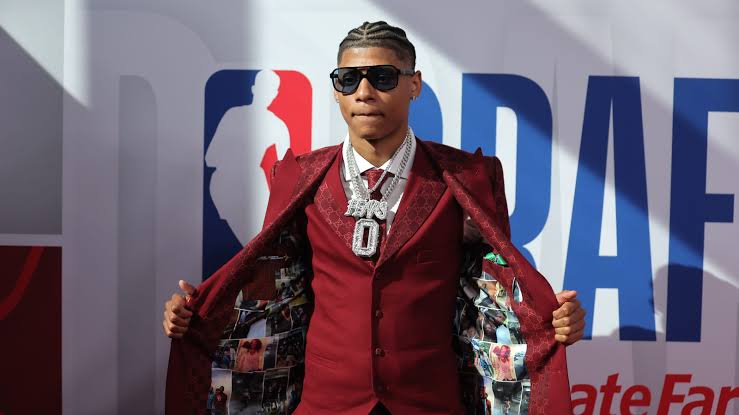
The intersection of draft-night destiny and sartorial expression begins long before a single fabric is ever cut. For Jones, the creative process is an intimate consultation designed to anchor an athlete’s identity into the biggest moment of their career. Our conversation kicked off with the delicate balancing act of channeling a prospect’s personal vision for the global stage.
Brandon “Scoop B” Robinson: The NBA Draft red carpet has officially become a high-fashion runway. When you sit down with a young prospect who is about to have the biggest night of their life, how do you translate their personal story, their background, or their college legacy into a custom suit?
Clarence Jones: Well, what I try to do is, first of all, I always ask them what some of their favorite colors are, you know? Each NBA player has a favorite color that they like. I’ve had some that like red, some want burgundy, some want rarer colors. But what I try to do is get them to understand that we’re going to be on TV in front of millions of people. So let’s kind of think a little bit inside the box, but I’m going to help you take it out of the box. I try to keep them all very conservative, you know, with a little bit of flash of color, just like they want.
For this year’s NBA Draft events, I’m going to use Labaron Philon for his launching—the commissioner’s launching. Well, he wanted something more like that crimson red, that color that Alabama wears. So I made him a crimson red suit. But I gave him a light gray shirt, and I gave him a black tie. His socks are gray, black, and burgundy to match. He’s either going to wear a black pocket square or a silver pocket square to match it. So what I did was, I took the color that he wanted and made a suit, but I added two different variations of other colors where it doesn’t look like it’s overbearing or unappealing to the public, but something that would be very eye-catching.
And I do that with all my NBA guys. I sit down with them, and I go through the different colors that they like, and I give them different ideas. And when I give them the idea, they’re like, “Wow, I like that.” And then they kind of roll with what I suggest.
Brandon “Scoop B” Robinson: Looking back at the 2023 NBA Draft, you designed that incredible Alabama-themed gray and red plaid suit for Brandon Miller, complete with his college achievements stitched right into the jacket lining. What kind of highly customized, personal hidden details can we expect to see from your guys walking across the stage this week?
Clarence Jones: Well, for this week, we have—I have Labaron Philon, though I didn’t make his suit for this actual draft night; I did his suit for the commissioner’s launching. At the draft itself, I have Ebuka Okorie, the point guard from Stanford University. What I did for him was I put pretty much his whole story from the time he started out playing basketball all the way up until his achievements at Stanford this year. So that’s about the main highlight that I’ll have in this year’s draft that will physically be in the green room.
If Jayden Quaintance had gotten a green room invite, you probably would have seen the same thing from him—from the time he was born, where his mother put a shirt on him saying “Draft Pick,” to that effect. Same thing with Joshua Jefferson; same thing with him if he was being invited to the green room. He would have probably seen some of the same things. So what I pretty much did with the guys this year is take them from the moment they were first able to pick up a basketball all the way until they got to this point going into the NBA Draft. So Ebuka Okorie is probably about the only one you could probably see this year wearing something where it completely gives his life story.
Brandon “Scoop B” Robinson: Last year, you absolutely stole the show with Ace Bailey’s bedazzled all-black suit, complete with the stones on the jacket, the custom slanted “A. Bailey #4” on the sleeve, and his family photos stitched inside. What is the emotional weight like for you when you’re executing designs that carry that level of deep, personal family tribute?
Clarence Jones: Well, you know, with me, I don’t really see it until I make it. Usually, the vision comes from the family; they give me the vision. So when they give me the vision, my job is to bring that vision to fruition. And so when Ace Bailey was telling me about how he wanted it to look, he wanted the black and red—which are Rutgers’ colors—and he wanted pictures of his grandmother and his journey inside the suit. It just made a lot of sense.
Once I got all the pictures that they wanted, they asked me what type of pictures that I needed, and I told them what I required to make that vision come true. Once I got that, I was able to lay it out on paper and then turn it into a custom creation for a lining to go inside the suit. It made it easier at that point. And when I saw it, it just made me go, “Wow.”Okay? But my biggest thing is when the world likes it. It’s not so much that I like it. It’s what the world thinks of it, and the world likes it.
Brandon “Scoop B” Robinson: Draft night is notoriously unpredictable. What’s the most chaotic, down-to-the-wire story you have about pulling together an iconic draft day suit on short notice? Like turning around a fit for Jabari Smith Jr. or Ace Bailey in just four days.
Clarence Jones: Ace Bailey. And Ace Bailey because I got a phone call—well, let me go back a little bit with that. I’ve known Ace Bailey for a while; I did Ace Bailey’s prom suit. So, I’ve been doing work for Ace Bailey and his family for quite some time. The problem was the agent—trying to get the agent to get in touch with me or basically get on the same page as me with the suit.
So what ended up happening was Ace’s mother, Miss Ramika McGee, contacted the agent and told him he needs to give the job to me right away. So the agent calls me at midnight on Sunday night, the week of—like, pretty much right before the draft. And I had to go through all the details on a Sunday night at midnight. I had to get my people out of bed, get them all the information I needed. I had to call my lining people over in Canada to get the custom lining done, because it takes about seven days to get that personal lining done to go inside the suit. So I had to pay everybody extra money out of my pocket on short notice.
And to get the suit ready in four days, I was very happy, but what was even more surprising was the draft schedule itself. I was going to ship the suit to New York thinking the draft was on a Thursday, because most of the time the draft is on a Thursday. So I got the suit and everything ready at the cleaners by Monday evening, and I talked to Miss McGee. I said, “Well, the suit will be there tomorrow, you’ll have enough time for it to be there for the draft.”
She said, “No, CJ. The draft is on such-and-such date…”
(Jones paused the interview briefly to take an urgent phone call. Returning to the line, he picks up right where the story left off.)
…So she tells me the draft is actually a day earlier than I thought! I was like, “Bring the suit to the draft?” She said, “Yeah, can you bring the suit?” I was like, “Okay.”
She said, “Well, you know, Ace has gotten a little bigger.” See, I didn’t get to see Ace to get him refitted for the draft. I basically took the measurements that I had from his prom, and I added to them because she said he had picked up 20 pounds. So I basically had it in my mind what I thought the fit should be. And so she was like, “Well, I need you to point me.” So I booked a flight, and I flew to New York.
I got there probably around 11:00 PM or something. I saw Ace around midnight to try the suit on, and the jacket—everything—was a perfect fit. The only thing I had to do was let the waist out. And that was it. Everything else was a perfect fit, just live. I had everything down there, but the waist—even though I had added a little bit to the waist ahead of time, I still needed to add an inch and a half into the waist of his pants. And that’s without even seeing him for a whole year! So that was very crazy for me, to have to rush the suit and then have to bring it to New York on such short notice. All that was out of pocket. But I got him through it. Everything was a success, thank God for that.
Part 2: Midnight Flight, Letting the Waist Out, and Keeping It 100

The glamour of Draft night only exists because of the relentless, unglamorous execution that happens in the shadows. Transitioning from the mechanics of sudden red-carpet adjustments, our conversation shifted deeper into the mental and physical architecture required to tailor the modern athlete. Jones broke down the generational evolution of tunnel style and the foundational principles that have anchored his legendary run.
Brandon “Scoop B” Robinson: You played college ball yourself at LeMoyne-Owen. How does your own background as a hoopster give you a specialized understanding of how a suit needs to drape, move, and fit on an athletic, 6-foot-something frame?
Clarence Jones: Playing basketball… Let me go back. First of all, I played at Martin Luther King High School in Chicago. I played with Marcus Liberty, who was a 6’10” All-American. So I wore suits at that time. I always kind of figured, or knew, how a suit should drape on a person. I’ve been in fashion my whole life.
Brandon “Scoop B” Robinson: NBA style has evolved drastically from the oversized, baggy 2003 Draft era to hyper-tailored looks, and now into more expressive, avant-garde silhouettes. How do you balance staying ahead of the modern trend curve while ensuring a young player still looks timeless on the biggest night of their life?
Clarence Jones: Well, what I do is I watch a lot of fashion shows, but mainly, I watch and talk to the kids. They all give me their take on how they should look. I have some that want the fitted jacket with the wide-leg pants. I still have some that want that European-fit look. So I have to stay on top of all the different styles. I mean, I read a lot of magazines, especially a lot of European magazines, because that’s where everyone pretty much tends to get the trends on how they want to dress.
You know, these NBA guys watch these runway fashion shows like Paris Fashion Week, the Met—some people look at the Met Gala, which I hope to attend at some point in time. So you see a lot of these guys watch these fashion shows, and that’s where a lot of them get their little fashion trends. Instagram, all of social media. I mean, they all come with something because they all bring me pictures. The number one thing I have them all do is bring me pictures of what you want to look like, and I’ll incorporate that into your look, your style, and basically color-coordinate it to your skin tone.
Brandon “Scoop B” Robinson: You’ve been pulling up to the drafts and combines for nearly three decades, and you notoriously run your operation as a one-man show. What is it like to solo-author these iconic moments while competing directly against massive luxury fashion houses and corporate brands?
Clarence Jones: It’s a lot of fun. I mean, I enjoy it because, again, I can go from dressing one to eight or nine guys in a single draft. And so, when you’re able to go out here and compete against that type of market, it makes me feel pretty good because I’ve worked pretty hard for almost three decades to build a rapport and a relationship with people.
I let the work speak for itself. You know, I don’t go to people saying, “Well, hey, this is who I made clothes for.” But if somebody asks, “Hey, who did you make clothes for in the draft?” I could easily go back to last year. I can say, “Well, I did Jeremiah Fears.” And they immediately speak up and say, “Wait, you’re the guy that did that burgundy suit with the Gucci shoes—like the University of Oklahoma colors?” I say, “Yes, that was me.” And they say, “I want you for the draft.”
So I don’t really have to sell myself as much as the players kind of already do it for me. It makes it a lot easier now competing against the bigger companies. But it’s hard, because a lot of big agencies tend to want to work with bigger companies because they feel like they’re going to be able to get the job done. I just hope they give me an opportunity, see what I do, and then we’ll take it from there.
Brandon “Scoop B” Robinson: Your very first NBA client back in the day was Tim Hardaway. Looking at how your business has expanded from those early days to dressing guys like Donovan Mitchell, Jalen Duren, and modern first-round picks, what has been the absolute key to maintaining your longevity in this industry?
Clarence Jones: Tim Hardaway is my best friend. He’s always told me the key to working with NBA guys is being… Well, his words are “being real,” but it’s always about being 100 with them and being honest with them. I love Tim Hardaway. I mean, we grew up together, we played basketball against each other, and I still talk to him to this day. He’s always been a huge friend of mine and has always given me good advice on being in the business. Like, “Hey, if you’re 100 with people, people will be 100 back. If you kind of deceive people, people will understand and see the deceitfulness.”As long as you keep it 100 with people, you’ll continue to get business and your name will continue to grow.
Brandon “Scoop B” Robinson: You’ve spoken before about a pivotal shift in your career when you stopped making the business about volume and money and started making it strictly about relationships. How does that philosophy protect you in an industry where agents, networks, and big spenders are constantly trying to dictate where players put their money?
Clarence Jones: Well, when you keep God first in your life, you can’t lose. I mean, that’s how I built it. I used to basically base my business on money, and every year at the end of the year, I couldn’t tell you where my money was. And I went broke. Then I had a dream, and in my dream, I was crying in my sleep. I felt like God touched me on my shoulder and told me I was doing this the wrong way. He told me if I did business about relationships and not about money, I would never see another broke day.
And ever since then—I was 34 years old at the time—guess what? Ever since I’ve made it about relationships, I haven’t seen another broke day. Everybody I wanted to do business with, God has put those people in my way, because I never asked God to give me any shortcuts. When you want something different, you change your life. So every person I’ve ever wanted to meet, every person I’ve wanted to do business with, God has put me somewhere where I’ve gotten a chance to meet the person and sell myself on what I do in order to get that opportunity. And I thank Him every day, good, bad, or indifferent.
Brandon “Scoop B” Robinson: Last question. When NBA Commissioner Adam Silver calls a player’s name, they walk up the stairs, and the world reacts to the fit you spent weeks obsessing over. What goes through your mind in that exact moment?
Clarence Jones: To be honest with you, I don’t think anything about myself. I’m just happy for the moment for the kid. It’s not even about me. You know, when I make clothes for those guys and they walk across the stage to see the commissioner, it isn’t about me. It was about them. I’m just thankful for the family, the agency, and the young man who gave me that opportunity to bring their dreams of what they want to wear into fruition and reality. I go to bed after that, and I’m happy.
The Post-Game Outro
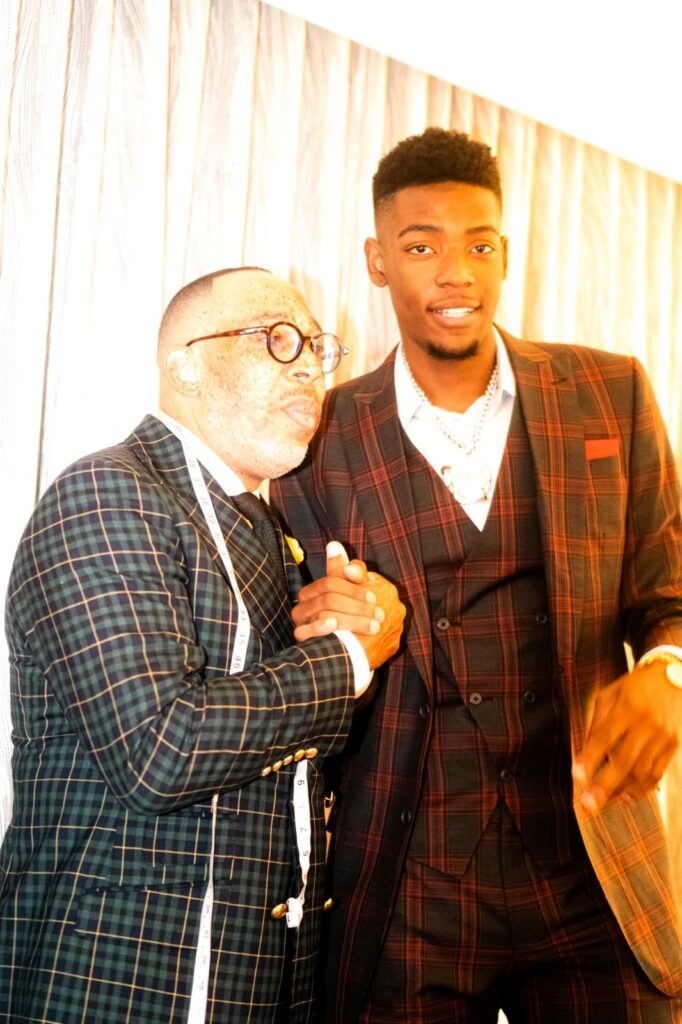
There is a distinct contrast between the multi-million dollar corporate marketing machines that usually dominate the sports-fashion landscape and the quiet, deliberate hustle of Clarence Jones. While luxury design houses chase trends, CJ Custom Clothiers chases legacy—one relationship, one family photo, and one custom lining at a time.
When the lights dim on the red carpet next week and the first-round picks step into their futures, the world will marvel at the pristine tailoring and bold aesthetic choices. But behind the scenes, the true architect will already be looking forward to the next blueprint, completely content knowing he helped turn a young man’s dream into an unforgettable reality.
For guys like Clarence Jones, it was never about the price tag or the volume; it has always been about keeping it 100. And as long as he continues to let the work speak for itself, the basketball world will keep listening.
For more info on the Memphis, Tennessee-based CJ Custom Clothiers visit – cjcustomclothiers.com