
In the media business, there are a lot of platforms that let you take your time. They let you write long, abstract think pieces that sit online for weeks, waiting for a niche audience to stumble across them. But if you want to know what it looks like to survive and dominate in the raw, fast-paced capital of printing press journalism, you have to lock eyes with the New York Post. Founded by Alexander Hamilton in 1801, the Post is the oldest continuously published daily newspaper in America—a legendary, high-octane tabloid layout where headlines are treated like combat, narratives are built on absolute punch, and if your scoop isn’t razor-sharp, the city will move past you before the morning commute.
Stepping in as a contributor for the New York Post meant entering an editorial room that demands immediate, undeniable clarity. New York readers don’t have time for fluff or filler; they want the meat of the story, and they want it right now.
Writing under that iconic banner forced me to elevate my reporting speed to a different wavelength. When you are filing a copy for the Post, you aren’t just an analyst—you are a news breaker. It required me to take my nearly three decades of player-centric rolodex access and synthesize it into high-impact, fleet-footed sports and culture copy. Whether I was dropping a major trade scoop, documenting the intense corporate maneuvering behind front-office decisions, or mapping out how a superstar’s lifestyle footprint reflects the spirit of the city, the Post sharpened my editorial teeth. It taught me how to deliver high-velocity, mass-market value under the tightest deadlines in print history.
The ultimate breakthrough of my tenure with the Post was realizing just how powerfully my sovereign media model mirrors the energy of an independent news machine.
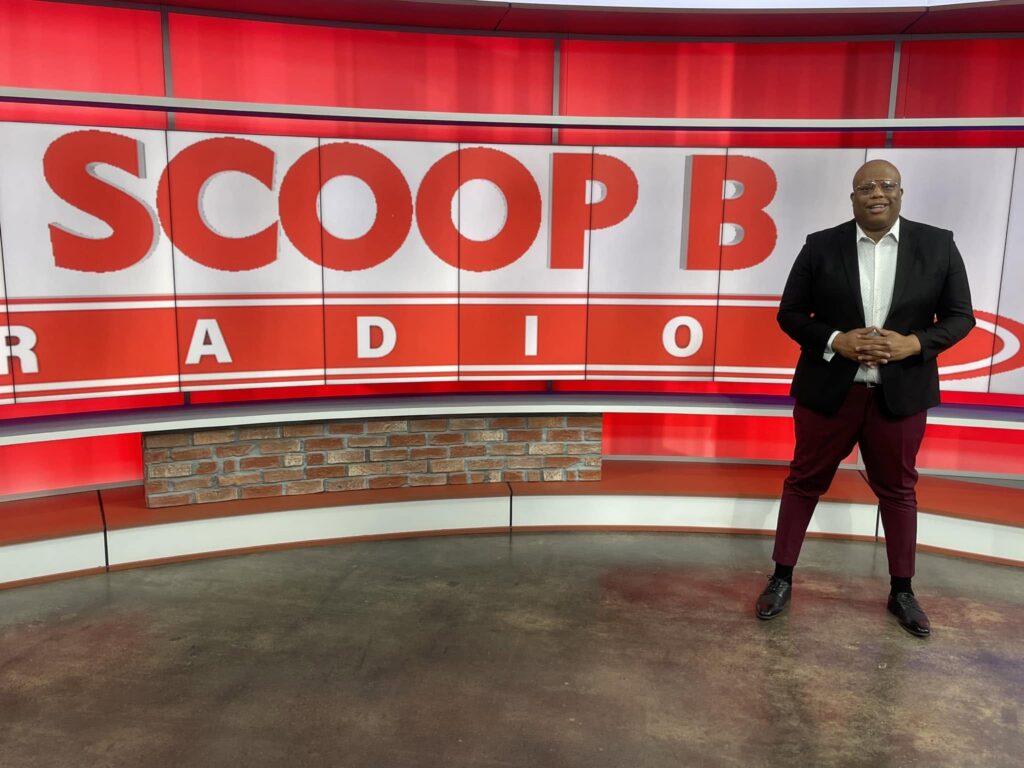
I watched how they package information to capture maximum attention across the metropolitan grid, and it proved that an authoritative voice doesn’t need a soft, watered-down corporate filter to carry weight. The Post thrives on raw edge and uncompromised positioning—the exact same principles I used to anchor Scoop B Enterprises Worldwide. I realized that if my insights could hold up under the brightest metropolitan ink, I could channel that exact same mass-market gravity right back into my own independent empire.
That precise tabloid discipline and fast-turnaround editorial pacing became the foundational steel for how I scale my own platforms today. I took that same sharp, punchy style and poured it straight into ScoopB.com, transforming my independent site into a premium destination that averages anywhere from 10,000 to 100,000 Monthly Unique Visitors during high-velocity free agency and trade deadlines. It is the exact reason why Scoop B Radio has cleared over 10 million streams historically; the interviews don’t just wander—they get straight to the quote that shifts the culture.
When global powerhouses like Adidas, PlayStation, Bovada, and Zenni choose to partner with my ecosystem, they know they aren’t just buying ad space from a passive content creator. They are aligning with a seasoned, New York-proven journalist and network executive who knows how to control the narrative, manipulate the algorithmic feeds, and drive explosive traffic entirely on his own terms. Secure the headline, drop the scoop—and always make sure you own the press that prints the story.
To see how that exact high-end broadcast discipline and sharp, player-centric storytelling looks when it leaves the printing press and hits a cinematic, independent visual format, lock into the series premiere of The Pull Up with Scoop B featuring Kendall Gill. This debut feature bridges my extensive history in major national print and television rooms with deep-dive, sovereign storytelling completely on my own terms, highlighting the exact executive framework I use to drive millions of secondary impressions across the broader sports landscape.