
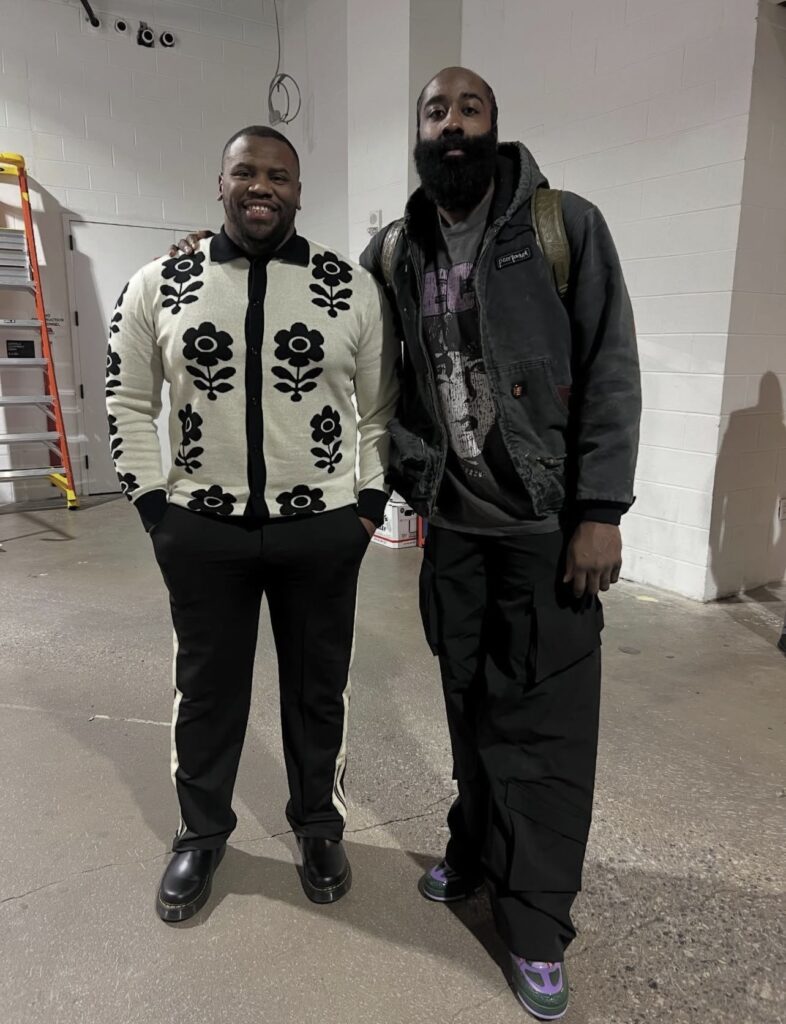
In the high-stakes chess match of the NBA playoffs, the spotlight naturally glares at the superstars executing on the floor. Yet, behind every signature crossover, lethal floater, and late-game takeover is a meticulous architect working tirelessly behind the scenes.
Enter Ellis Gindraw, better known to basketball enthusiasts as Chuck Ellis.
A premier player development specialist and assistant coach at the University of Maryland Eastern Shore (UMES), he began to hone his craft on the gritty blacktops of North Philadelphia and years later has quietly become one of the game’s most trusted minds who has served as a vital support system for elite talent when the postseason pressure reaches its absolute peak.
Throughout this intense NBA playoff run, Ellis has been embedded on the front lines, working side-by-side with former MVP James Harden to navigate the rigorous travel schedules and heavy scouting adjustments that define championship basketball. Now, that journey reaches its ultimate crescendo with a legacy-defining, win-or-go-home Game 7 this evening on the immediate horizon. From securing home-court advantages to grinding out tough road series, Ellis’s approach to training is anything but uniform.
Q&A With Chuck Ellis
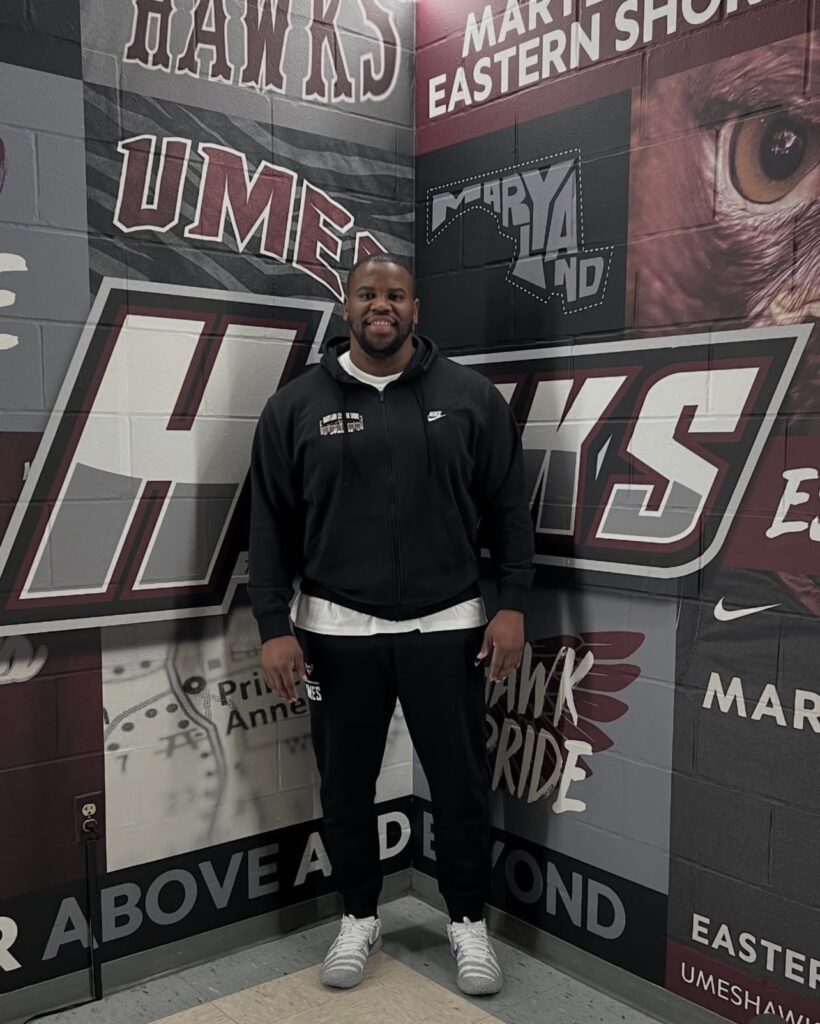
Coach Ellis’ philosophy hinges on a deep understanding of individual player DNA, ensuring that whether he is sharpening a guard’s footwork or refining a wing’s decision-making, the program is completely bespoke. In this exclusive sit-down, Ellis pulls back the curtain on his journey from Philly’s playground legends to the NBA hardwood, detailing what makes Harden a generational trendsetter and why the casual basketball fan still misinterprets greatness.
Brandon “Scoop B” Robinson: What has your schedule been like in the last week working with James?
Chuck Ellis: Well, I’ve been with him since the playoffs started. It’s been good, but it’s been back and forth. We had home-court advantage for the Suns series, and then we were on the road a little more for the Detroit series, so it’s just been moving around a lot.
Brandon “Scoop B” Robinson: How did you guys meet?
Chuck Ellis: Oh, wow. Well, Marcus Morris played in Houston, and James was in Houston at the time. Marcus plays with my guys—I’ve worked with them since they’ve been in the league—so the connection and the introduction went from there.
Brandon “Scoop B” Robinson: When you work with players, do you focus more on ball handling, shooting… What does your program include?
Chuck Ellis: Well, it depends on the player. Every player isn’t the same, so you can’t have the same package for everyone. What I would do with Lou Williams, I wouldn’t do with Marcus Morris. What I would do with Marcus Morris, I wouldn’t do with Wayne Ellington. What I would do with Wayne Ellington, I wouldn’t do with James Harden. Every player is different, so every package is tailored specifically to them as far as the rollout of the work we do.
It also depends on when we’re working. Off-season workouts are different from in-season workouts, and in-season workouts are different from playoff workouts. It’s focused based on the particular client, but it’s also focused on the timing of the work.
Brandon “Scoop B” Robinson: Why does James trust you to work with him?
Chuck Ellis: I think, for one, it’s a comfortability thing. We’ve been working together for some years now, so we’re comfortable with each other. I also feel like he trusts me because the proof has always been there. With the work we put in and the concentration on different details, he knows that I know what I’m talking about and that I know what I’m doing. He trusts me in that aspect.
Brandon “Scoop B” Robinson: You’re from Philly, so this will resonate with you. Rocky had Mickey Goldmill in his corner as a motivator in the Rocky movie series. If you could compare your role with James during the playoffs to a role from a movie, what would it be and why?
Chuck Ellis: Wow. From a movie? Let me think… I don’t know, but it would be from a support standpoint. I’m just here for support. James has a very good, very tight-knit, family-based circle built on trust and loyalty. He doesn’t need much from me from a motivation standpoint because he already has that in his circle. For me, I come at it strictly from a basketball aspect—honing in on the different skills he already possesses and trying to perfect them. Right off the top of my head, I don’t know which exact movie character I’d pick, but it would have to be someone who represents that pure support and motivation.
Brandon “Scoop B” Robinson: You’re also an assistant coach at UMES (University of Maryland Eastern Shore). Congratulations on that. How does your work with NBA players give you credibility on the college circuit?
Chuck Ellis: I think it helps us improve, especially with recruiting. Everything is social media-based nowadays, and all the kids are on there, so the different things I post can help us out. But when it comes to actual coaching, there’s a system in place by our head coach, and it trickles down to the assistant coaches. We follow how the program is run, and it’s a great system.
Having that added piece of working with guys playing at the highest level is huge because the players coming in want to get to that level. I know what NBA teams are looking for, I know how to help them, and I know how workouts look in different leagues. It just has to match up and align with our coaching system and what we already have in place.
Brandon “Scoop B” Robinson: When did you fall in love with the game of basketball?
Chuck Ellis: I fell in love with the game when I was about eight years old. North Philadelphia, Connie Mack. The playground is where I first picked up a ball and started, and that’s when I fell in love with it.
Brandon “Scoop B” Robinson: Tell me more about your background in basketball.
Chuck Ellis: My background in basketball isn’t the typical narrative. I played JV in the 11th grade and never played varsity. My mom was a single mother, so during my senior year, instead of playing varsity, I had to get a job. Later on, I tried out for the team at the community college, and that’s where things pretty much turned around for me as a basketball player.
I finished up at Cheyney University, the first HBCU and a D-II school in Pennsylvania. After finishing up at Cheyney, I started working and being mentored by the late, great John Hardnett in Philadelphia. He had a program called “Pro-Am” where he worked out all the pros and college players in the area, and I just learned everything from him.
A few years after he passed, I picked the mantle up and started my own program. My first client was Dionte Christmas, who played for Temple University, spent two years in the NBA, and played overseas for about 15 years. After that, I just got blessed. I worked with Dionte Christmas, Wayne Ellington, Lou Williams, Cam Payne, and James Harden. I’ve had a plethora of NBA guys and top-level overseas guys that I’ve worked with over the years. I’ve been blessed in retrospect to be able to start my own program, have it be supported, and see it become successful.
Brandon “Scoop B” Robinson: What skill does a Philly ball player possess that they can pass on to someone who’s not from Philly to make them unstoppable?
Chuck Ellis: It’s got to be heart and toughness. I think that’s a skill in its own right because everybody doesn’t possess it. That’s the one thing about Philly: you might not be the best or the most skilled player on the floor, but you’re going to play hard and give it everything you’ve got because every time you step on the floor, your pride is on the line. I would say just being a dog and being gritty is that skill.
Brandon “Scoop B” Robinson: Everybody talks about James’ step-back and his stellar ball-handling skills. What do you think is one of James’ most underrated moves that people don’t give him enough credit for?
Chuck Ellis: His floater. He might have the best floater in the game today, and honestly, one of the best floaters in modern history. When James gets down the lane or gets downhill, you’re really at his mercy because that floater is so patented. If you try to take the floater away, then he becomes a lob threat. You can see that in the bigs he’s played with over his career—a lot of those bigs pretty much got paid because of him getting paint touches. The floater is such a threat that the big man has to step up higher than usual, James is still able to survive at the rim, and those guys capitalize off it.
Brandon “Scoop B” Robinson: A lot of younger players coming into the league now have shared with me that they feel Paul George is the prototype for today’s NBA player. Brandon Miller has said it, and Cole Anthony has said it to me. Do you think 10 years from now, or maybe even less, people will look at James’ game the same way?
Chuck Ellis: Hell yeah, for sure. He changed the game. He changed the game from a footwork aspect. People look at ball handling and stuff like that, but now everybody is doing his footwork, his step-back threes, and his step-aside threes. He changed the game in that aspect, and it’s going to stick. Now you even have bigs doing it—Joel Embiid is doing it. For the next 10 to 15 years, that’s going to be the standard. You can credit James with changing the footwork in the game. When he first started doing it, everybody was like, “Oh, it’s a travel, it’s a walk.” Now the whole league does it. It’s going to be hard to be an effective wing or guard in today’s game without adding that piece to your arsenal.
Brandon “Scoop B” Robinson: I have one last question. Why is James misunderstood?
Chuck Ellis: I don’t think he’s misunderstood. People have opinions and they like what they like, but I just think he has had to play different roles and wear different hats. The casual fans outside don’t understand the nuances that go into how he has had to transcend his game wherever he goes. So that’s probably where the misunderstanding comes from for the normal person. But the real know—the people in the locker room and the people on the inside know.
If you look at it, almost every team he’s played for, he has had to be a different person. On this team, he has to come in and be a playmaker and a point guard, but he is still one of the top five isolation players in the league. When you need him to do that—like the last two games—he can go get gritty, take over the game, and finish for you down the stretch in the clutch. At the same time, he’s a distributor with some of the best court vision this game has ever seen. People talk about his turnovers so much, but the only reason he turns the ball over is because his assists are so high and the ball is constantly in his hands. I don’t think he’s misunderstood at all. The insiders know; it’s just the outside people looking at stats without understanding the game who see it differently.
Wrapping Up With Chuck Ellis
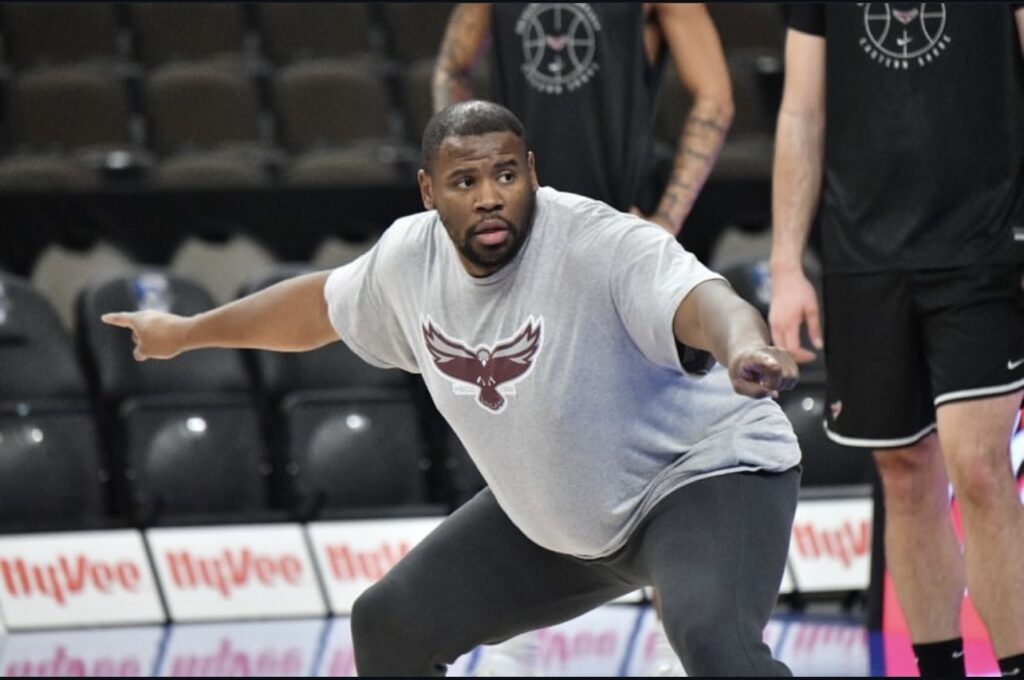
Chuck Ellis’s unique journey is a testament to the fact that there is no singular path to basketball royalty. By channeling the raw grit of Philadelphia’s Connie Mack playgrounds and leaning into the mentorship of local legends like John Hardnett, Ellis converted an unconventional playing career into a masterful blueprint for player development. Today, that blueprint bridges the gap between the collegiate ranks at UMES and the absolute pinnacle of professional basketball. His presence on the recruiting trail serves as a powerful reminder to the next generation that understanding the nuances of the game at an elite level can open doors that standard narratives cannot.
When it comes to his work with James Harden, Ellis emphasizes that true brilliance lies in the details that standard box scores completely overlook. While the general public fixates on the flashy isolation plays or debates the legality of his footwork, the basketball community recognizes Harden as a foundational pioneer who permanently altered how the sport is played. From the lethal, big-man-enriching floater to the step-aside threes now replicated by centers and guards alike, Harden’s stylistic DNA is permanently woven into the modern NBA landscape—a reality Ellis witnesses up close through every grueling playoff series.
With tonight’s highly anticipated Game 7 fast approaching, the ultimate pressure test awaits. In a single-elimination scenario where seasons are decided by the slimmest margins, the meticulous preparation and deep-rooted trust between Ellis and Harden will be put on full display. As teams continue to adapt to Harden’s evolving role as a mastermind distributor who can still flip the switch to dominant scorer in the clutch, Ellis remains steady in his corner, focusing strictly on perfecting the craft. It is a partnership built on execution and an unyielding Philly toughness—proving that when everything is on the line on Sunday, it is the quiet, tailored work in the gym that truly dictates the history of the game.