
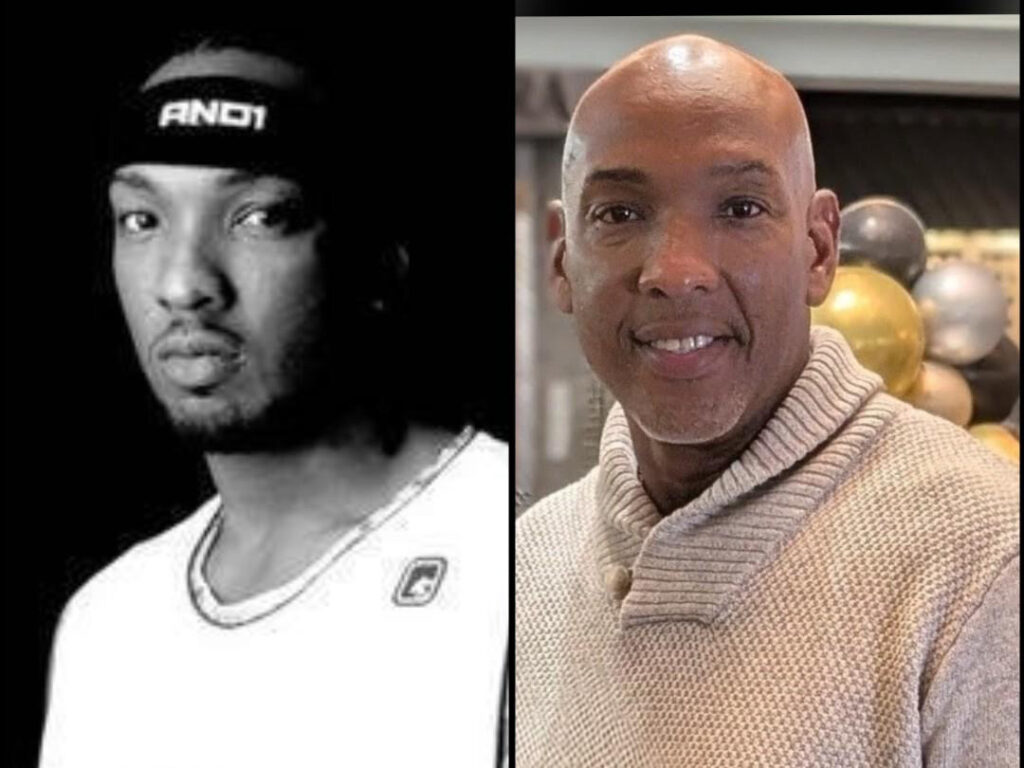
Waliyy Dixon is more than just a streetball legend; he is a foundational architect of a culture that shifted the global sports landscape. Long before social media clips and viral highlights defined the game, Dixon was the gravitational force of the AND1 Mixtape Tour, a man whose aerial acrobatics and Linden-bred toughness commanded respect from Rucker Park to professional arenas worldwide. Known to many as “Main Event,” his impact transcends the legendary 360 dunks and the “Coming Attraction” moniker. He represents a rare breed of athlete who understood early on that the flair of the streets needed to be anchored by the discipline of the craft and the protection of the players who built it.
Today, Dixon’s mission has evolved from dominating the asphalt to building sustainable infrastructure for the next generation. Through his work with the Blacktop Streetball Association and 52 Basketball, he is focused on creating a “safe haven” for talent that often falls through the cracks of the traditional NBA or collegiate systems. In this exclusive conversation, we dive deep into the origins of his dual-region style, the untold sacrifices made during the Ball4Real era and why his ultimate legacy has nothing to do with basketball and everything to do with the man he has become.
Brandon “Scoop B” Robinson: You’ve talked about how your game was a mix of two very different worlds. How did growing up in Linden and spending so much time in Harlem specifically shape the “Main Event” style that the world eventually fell in love with?
Waliyy Dixon: Linden was a place where you learned very quickly what kind of competitor you were. The games were intense and most importantly, there were no fouls. If you stepped on that court, you were expected to bring heart, toughness, and pride. The neighborhood was tight knit, which meant everyone knew everyone. There was no hiding if you were not prepared to compete. That kind of environment forces you to develop resilience and creativity.
At the same time, I spent a lot of time in NYC, specifically Harlem. Harlem had its own rhythm, its own flavor, and its own way of expressing basketball artistry. When you combine the toughness of Linden with the creativity and showmanship of Harlem, something unique happened. That combination shaped my game and ultimately helped create the style people later came to know as “The Coming Attraction,” and then later Main Event.
Brandon “Scoop B” Robinson: Streetball nicknames are usually legendary, but you’ve mentioned you weren’t actually looking for one. How did “Main Event” actually come about, and why did the source of that name mean more to you than the name itself?
Waliyy Dixon: Coming from New Jersey, my focus was never on obtaining a nickname. My mindset was always about winning and dominating the competition in front of me. The goal was to perform at the highest level possible every time I stepped onto the court.
The name “Main Event” came after a 360 dunk at Rucker Park, but what made that moment truly meaningful was who gave it to me. When legends like Duke Tango and Al Cash acknowledged what they saw, that carried real weight. Their recognition meant more than the crowd chanting a name. It meant that the people who understood the culture, the history, and the craft of street basketball recognized the skill and the impact of what they were witnessing. That moment was powerful, not because of the nickname, but because it represented acceptance into a legacy.
Brandon “Scoop B” Robinson: When you look back at that AND1 roster with guys like Half Man, Shane, and Future, did you have any inkling at the time that you were building something that would eventually have a global, culture-shifting impact?
Waliyy Dixon: Not at all. At that time, the focus was simply on the love of the game and the strength of the team we had assembled. When you looked around and saw players like Half Man Half Amazing, Shane the Dribble Machine, Future, and Aircraft on the same roster, you knew you had something special.
That group was extraordinary. Few teams in the history of street basketball could have competed with us. But our mindset was simple, play the game we loved and compete at the highest level possible. The idea that those moments would eventually reach audiences around the world was not something we were thinking about. We were focused on excellence, not global impact. The global impact simply followed excellence.
Brandon “Scoop B” Robinson: You’ve often been seen as the “big brother” or the protector of the group. Looking back at those tour days, how did you handle the responsibility of guiding younger players through a world that didn’t have a blueprint yet?
Waliyy Dixon: My mindset has always been about protecting the players. Those are my brothers and I felt a responsibility to make sure they were prepared for what we were stepping into. We were young, but we eventually understood that we were carrying something bigger than ourselves. I tried to share whatever knowledge I had to help the players navigate life on tour, the business side of things, and the responsibilities that came with representing the culture.
The truth is, there was no blueprint. Social media did not exist. There were no content strategies or subscriber counts to analyze. We were simply living the culture authentically. Ironically, the creators and influencers of today are trying to recreate what we were naturally doing at that time.
Brandon “Scoop B” Robinson: You’ve mentioned that every experience, even the challenging ones, is a lesson. How are you taking the wisdom from the early days of streetball and applying it to how you structure business and partnerships today?
Waliyy Dixon: The most important lesson is to always learn from the past. What we experienced opened doors for the next generation to negotiate better opportunities and more equitable partnerships. Every experience, whether positive or challenging, provides knowledge that can be used moving forward.
We changed basketball culture in a significant way. The creativity, the style, and the connection to the community, all of that influenced the modern game. Now we have the opportunity to return to the space again, but this time with a deeper understanding of how to structure business, ownership, and partnerships. I am grateful that God placed us in a position to do it again, but with greater wisdom.
Brandon “Scoop B” Robinson: There has always been a lot of talk about the transition to Ball4Real. What is the one thing people don’t understand about that move and the sacrifices the players made to keep the culture alive during that tour?
Waliyy Dixon: Contrary to what many people believed, Ball4Real was never about competing with anyone. It was about continuing the culture and creating opportunities for the players. Unfortunately, there were complications behind the scenes involving sponsorship management that disrupted what could have been a tremendous situation.
What most people do not know is that we completed nearly ninety percent of that tour without receiving payment. We made the decision to honor the commitments made to the sponsors because they believed in us and supported the vision. Protecting those relationships was more important than any short term issue. When a brand entrusts its name to you, that is a responsibility. Loyalty, integrity, and professionalism matter. Protecting the brands that support you is essential.
Brandon “Scoop B” Robinson: You often use the game as a metaphor for life when mentoring youth. Why has staying accessible and “showing up” in the community remained such a core part of your mission after all these years?
Waliyy Dixon: Mentorship is about more than basketball. I use the influence that God has given me through the game to teach life lessons. Basketball provides powerful metaphors. For example, a crossover move is essentially a change in direction. Life often requires the same thing. Sometimes you must change direction in order to overcome challenges or reach a better opportunity.
Beyond teaching skills, the most powerful thing you can give young people is your presence. Showing up. Being available. Listening. Our connection with fans has always been strong because we were accessible. People could walk up to us in the community and have real conversations. We never separated ourselves from the people who supported us. That authenticity created lasting loyalty from fans and respect from sponsors.
Brandon “Scoop B” Robinson: Advocacy seems to be a huge part of your DNA. What drives your passion for standing up for the mistreated, and how does that philosophy translate into your work with the Blacktop Streetball Association?
Waliyy Dixon: I believe strongly in standing up for people who are being mistreated. It does not matter what someone’s background is. Every person is a creation of God and deserves dignity and fairness. When people in my community call me, they know that if the information is truthful and someone is being wronged, I will stand beside them. That same philosophy carries into my work with the Blacktop Streetball Association. The goal is to create fairness, opportunity, and structure for players who deserve a platform.
Brandon “Scoop B” Robinson: For the players who don’t follow the traditional NBA or college path, what is the ultimate goal for the Blacktop Streetball Association and 52 Basketball in terms of providing them a legitimate stage?
Waliyy Dixon: Our mission is to create a legitimate league and a safe haven for talented players who may not pursue the traditional NBA path or who may not have had the opportunity to play college basketball. Street basketball has always been rich with talent. What has often been missing is structure and opportunity. Through Blacktop Streetball Association and 52 Basketball, we want to bring the fundamentals back while reconnecting the game to the communities where it was born. The goal is to create opportunities for people who simply need a chance.
Brandon “Scoop B” Robinson: When it’s all said and done, beyond the dunks and the tour highlights, what do you want people to remember most about the legacy of Waliyy Dixon?
Waliyy Dixon: I want them to recognize the man. The man that God created me to be. The man my parents raised me to become. And most importantly, a man who used his life to serve and uplift others. That, more than anything else, is the legacy that matters.
Waliyy Dixon’s journey is a powerful reminder that the most enduring legacies are not built on highlights alone, but on the principles of integrity and service. His transition from the “Main Event” of the basketball court to a champion of social equity and professional structure in streetball shows a man who has mastered the “crossover” in every sense of the word. By prioritizing the well-being of his peers and the authenticity of the culture over short-term gains, Dixon has secured a place in history that no sneaker deal or viral moment could ever eclipse.
As he continues to build out the Blacktop Streetball Association, his focus remains where it has always been: on the people and the communities that birthed the game. He isn’t just looking to recreate the magic of the past; he’s looking to provide a stable, dignified future for those who have the heart to compete but lack the platform to be seen. In the end, Waliyy Dixon’s story isn’t just about how high he could jump, but about how many people he could pull up with him along the way.