
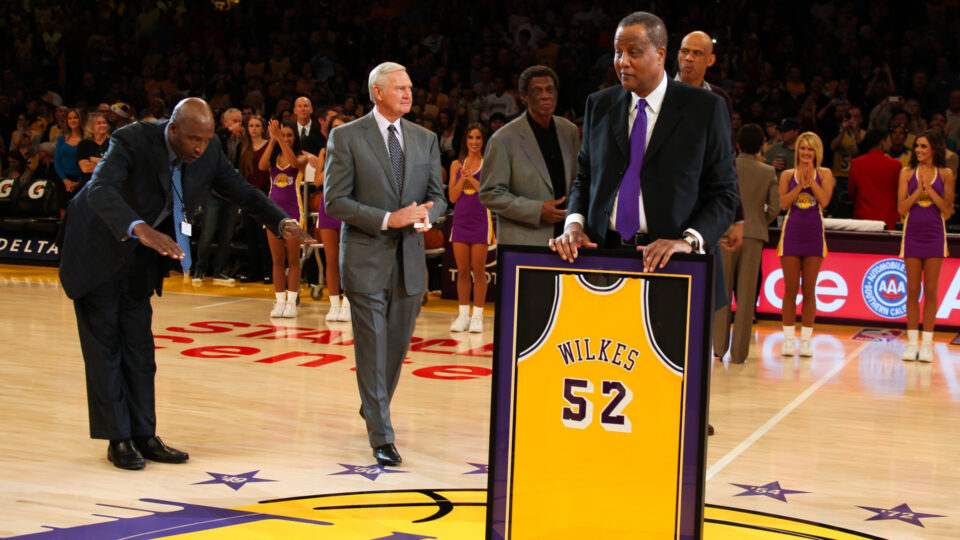
Jamaal “Silk” Wilkes remains one of the most decorated winners in the history of basketball, a man whose smooth-as-silk jumper and defensive tenacity earned him championships at every level of the game.
From the legendary 88-game winning streak at UCLA under John Wooden to the high-octane “Showtime” era of the Los Angeles Lakers, Wilkes was the ultimate “glue guy” who also happened to be a lethal scoring threat.
While history often focuses on the flashy highlights of his Hall of Fame teammates, Wilkes’ contributions were the bedrock upon which dynasties were built. I had the pleasure of catching up with the four-time NBA champion to discuss one of the most famous games in NBA history: Game 6 of the 1980 Finals.
We talked about the internal dynamics of a locker room losing its MVP, the versatile brilliance of a young Magic Johnson, and the evolution of the “Point Center” in today’s game.
Wilkes shared his memories with the same quiet confidence he displayed on the court, offering a rare look behind the curtain of the purple and gold’s most iconic era.
Jamaal Wilkes’ Q&A on Scoop B Radio
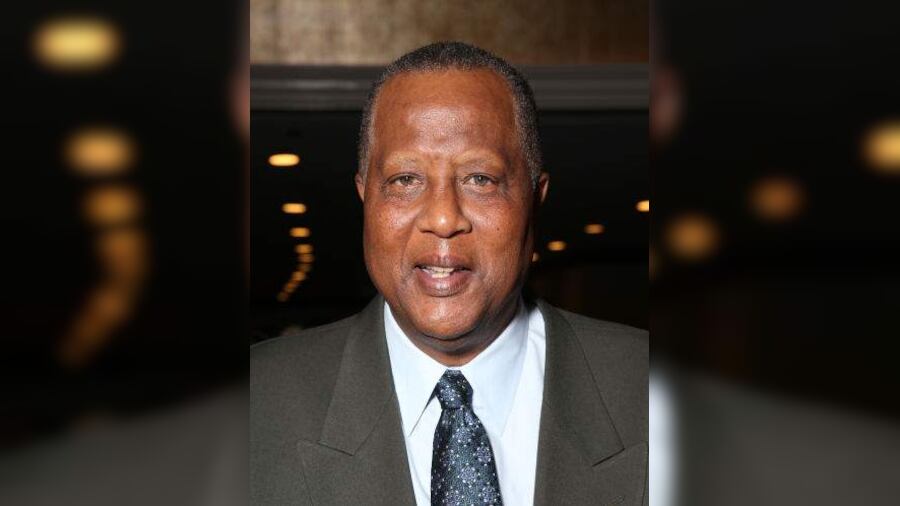
We sat discussed his legendary 37-point performance, his first encounter with the “Logo” Jerry West and whether anyone will ever catch LeBron James at the top of the scoring mountain.
This transcript has been edited and condensed for clarity and space. You can watch the full, unedited Scoop B Radio interview with Jamaal Wilkes by clicking here.
Brandon “Scoop B” Robinson: In Game 6 of the 1980 NBA Finals, you put up a massive 37 points and 10 rebounds to help clinch the title against the 76ers. Do you ever feel like you don’t get your just due for that performance because of Magic’s historic night?
Jamaal Wilkes: You know, I hear that, but then on the other side, I do feel like I get my due—so I’m not always sure what to make of it. Some people say Magic got all the credit. Well, it was pretty incredible what he did, especially for a rookie. But I’ll tell you this: had we lost that game, it would’ve bothered me a lot more! [Laughs]
Brandon “Scoop B” Robinson: When Kareem went down with that ankle injury, Magic famously stepped in at center. What do you remember about the mood in the locker room when that change was made?
Jamaal Wilkes: I don’t think it was as big of a transition for him as people might think. He was a 6’9” or 6’10” point guard. Half the time during his rookie year, he was already playing power forward. So while seeing him officially start at center was a huge storyline, he was down in the paint a lot anyway. We had a lot of confidence in him.
Brandon “Scoop B” Robinson: Looking at today’s NBA, is there anyone who reminds you of that ability to switch from point guard to center so seamlessly?
Jamaal Wilkes: Well, look at Nikola Jokić. He does it all the time; he’s a “Point Center.” There are definitely guys today who can do it. I’d have to put my thinking cap on to name them all, but right now I’m in a celebratory mood! [Laughs]
Brandon “Scoop B” Robinson: You’re a Lakers icon, but how did you and Jerry West first connect?
Jamaal Wilkes: I had already signed with the Lakers when we finally connected. I had flown up to Las Vegas to meet Mr. Cooke, who was going through a divorce at the time. My attorney and Chick Hearn worked out the details, and I met Jerry during that process of getting the deal finalized.
Brandon “Scoop B” Robinson: You often played the power forward position early in your career, but you shot the ball with the touch of a shooting guard. How did that develop?
Jamaal Wilkes: I played power forward for my first two or three years when I was with Golden State. And yeah, I had a pretty good jump shot back then… [Laughing]
Brandon “Scoop B” Robinson: Is there a specific player in the league today that reminds you of your playing style?
Jamaal Wilkes: In today’s game? Oh wow! I’m telling you, I’ve got to put my thinking cap on. I can’t pull these names out of thin air! I don’t think about this every day, so I’m sorry I can’t give you a list, but there are definitely a lot of talented guys out there.
Brandon “Scoop B” Robinson: What was the atmosphere like being a core part of the “Showtime” Lakers?
Jamaal Wilkes: It was Showtime! It was great, it was crazy, and it was a special time. I felt privileged just to be a part of it. I was very fortunate to have won at UCLA and with Golden State, so I was used to winning—but the ingredients we put together for Showtime were really special.
Brandon “Scoop B” Robinson: Finally, LeBron James now holds the all-time scoring record once held by your teammate Kareem Abdul-Jabbar. Do you see anyone ever breaking LeBron’s mark?
Jamaal Wilkes: Not right now, I don’t. But then again, I never thought Kareem’s record would be broken either. I guess records are just made to be broken.
Closing
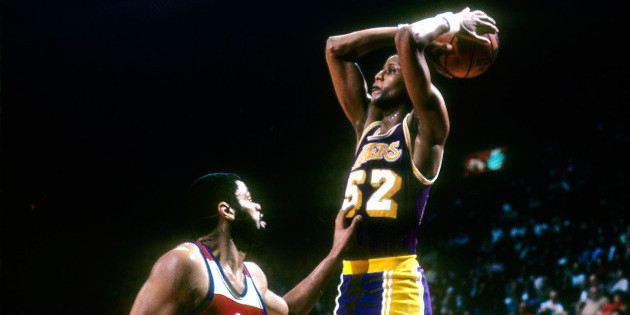
Jamaal Wilkes’ career is a testament to the idea that you don’t have to be the loudest person in the room to be the most impactful.
Whether he was scoring 25 points in a single half of a Finals clincher or lockdown defending the league’s best scorers, “Silk” operated with a level of efficiency that remains the gold standard for championship basketball.
His reflections on Magic Johnson’s rookie heroism and the “Showtime” era remind us that greatness is often a result of versatile players willing to step into whatever role the moment demands.
Wilkes doesn’t dwell on the lack of individual headlines; instead, he takes pride in the rings and the lifelong bonds formed during one of the most vibrant periods in sports history.
As the NBA continues to embrace the “positionless” basketball that Wilkes and Magic pioneered decades ago, his legacy only grows more relevant. He remains, as always, the consummate winner—grateful for the journey and always ready to celebrate the game.