
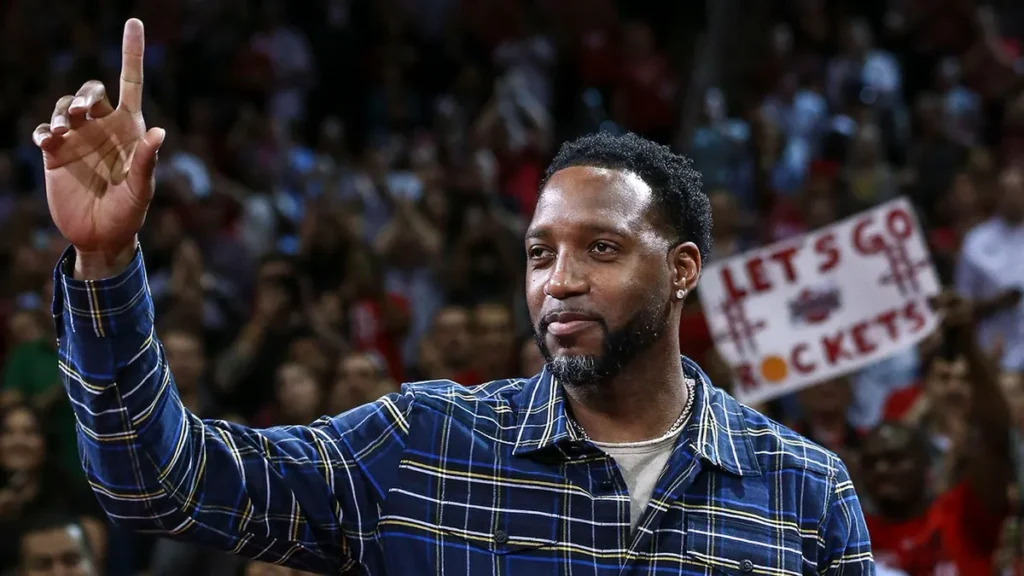
When I sat down with Darrell Armstrong for Scoop B Radio in September 2017, I asked him the million-dollar question for any Orlando Magic fan: If you’re starting a team from scratch, who do you pick—Anfernee “Penny” Hardaway or Tracy McGrady?
Armstrong, the heart and soul of the “Heart & Hustle” era and a man who shared the backcourt with both legends, didn’t hesitate. He took Penny.
Standing here in December 2025, as the Orlando Magic have returned to elite status with a new generation of versatile stars, this debate has shifted from simple nostalgia to a masterclass in team building. Darrell’s choice wasn’t a slight to T-Mac’s scoring—it was an endorsement of Penny’s “talent density” as a floor general.
The “Point-God” vs. The “Scoring-Machine”

In 2017, Darrell broke it down through the lens of a teammate. While he acknowledged that T-Mac was a “scoring machine” who could get a bucket on anyone, he saw Penny as the ultimate facilitator. “Penny made the game so easy for everyone else,” Darrell told me.
At 6’7″, Penny was a precursor to the positionless basketball we see today. He was the “MVP” of the 90s transition game, a player who could dominate a game without ever taking a shot. For Darrell, that versatility was the foundation you build a championship culture around.
2025 Vision: The Blueprint of the Modern Magic
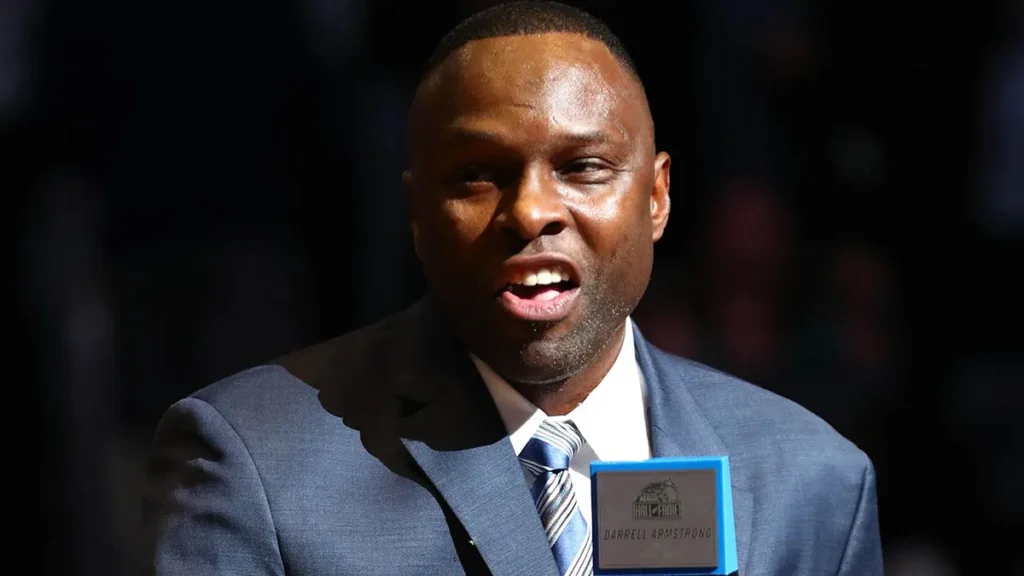
Looking at this through a 2025 lens, Darrell Armstrong’s preference for Penny feels incredibly prophetic. The current NBA landscape is dominated by the very “Point-Forward” archetype Penny pioneered. When we analyze why Darrell picked #1 over #1, it functions like a championship roster hierarchy:
- The MVPs (The Facilitators): Penny’s ability to see the play two steps ahead. In 2025, we see this in players like Paolo Banchero, who uses his size to playmake—a direct descendant of the Penny Hardaway style.
- The Snipers (The Pure Scorers): T-Mac represents the elite individual “Sniper.” While his 32.1 PPG season in Orlando remains the stuff of legend, Darrell’s argument was that a team needs a “Defensive Anchor” at the point who can also distribute, which Penny provided in spades.
- The Defensive Anchors (Length and Versatility): Both players used their length to disrupt opponents, but Penny’s post-up game for a guard was a “defensive nightmare” that forced teams to change their entire scheme.
From “Heart & Hustle” to “Hustle & Flow”
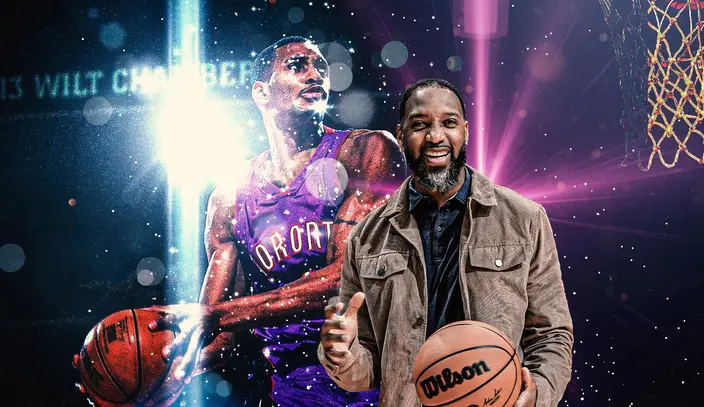
What made my 2017 conversation with Darrell so vital was his unique perspective. He wasn’t just a spectator; he was the engine of the Magic for nearly a decade. He saw Penny lead a team to the Finals alongside Shaq, and he saw T-Mac carry a roster that was often decimated by injuries (most notably Grant Hill).
Darrell told me that while T-Mac was a “Hall of Famer through and through,” Penny’s peak—before the injuries—was “mystical.” In 2025, as Penny continues to lead Memphis as a coach, his basketball IQ remains his greatest asset. He didn’t just play the game; he orchestrated it.
The Final Scoop: A Legacy of Excellence
Revisiting this article is a reminder that the Magic have a history of “Unicorns” long before the term was popular. Darrell Armstrong chose Penny because he wanted the player who made the 12th man better.
In 2025, we don’t have to choose—we can appreciate T-Mac for the scoring god he was and Penny for the visionary who changed the point guard position forever. But if you ask Darrell Armstrong today, the answer remains the same: “Give me #1.”