
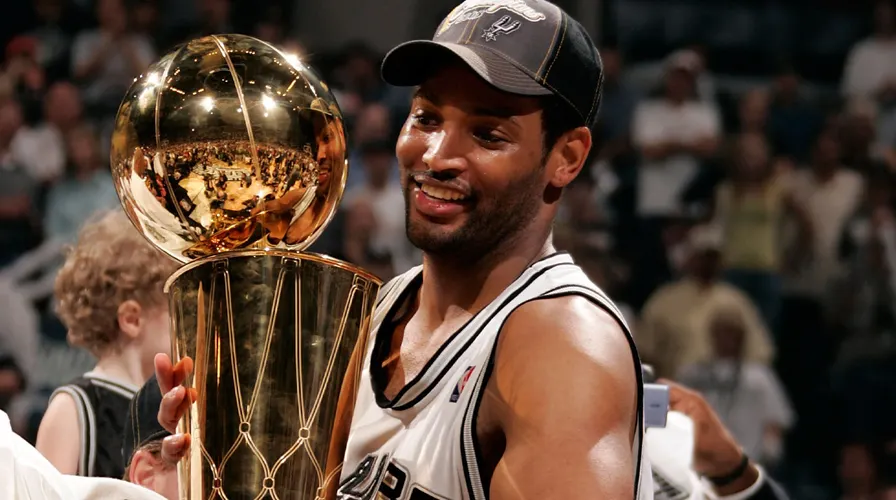
In June 2017, I sat down with a man who has more championship rings than Michael Jordan: Robert “Big Shot Bob” Horry. We jumped into the deepest “what if” in NBA history—the mid-90s collision that never was. Following Kenny “The Jet” Smith’s bold claims, Horry doubled down on Scoop B Radio, providing a technical breakdown of why the Houston Rockets would have halted the Chicago Bulls’ quest for an eight-peat.
Today, in 2025, as we analyze the “positionless” basketball of the modern era, Horry’s 2017 insights highlight exactly why Houston was the ultimate schematic nightmare for Phil Jackson’s dynasty.
The Unsolvable Problem: Hakeem “The Dream”
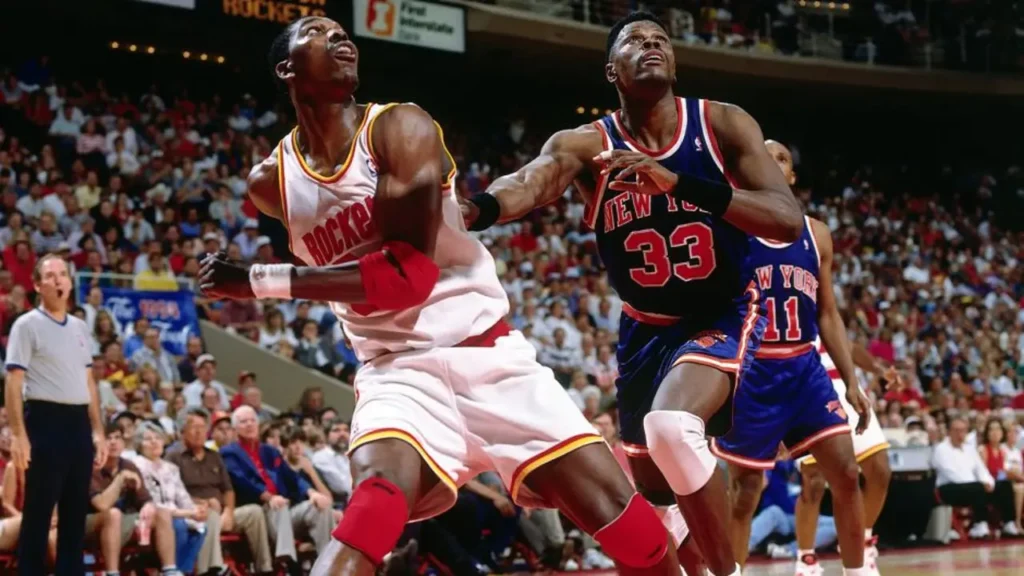
The primary catalyst for Horry’s confidence wasn’t just team spirit; it was the sheer dominance of Hakeem Olajuwon. During our session, Horry pointed out that while the Bulls could neutralize guards and forwards, they had no answer for a generational center.
“I’ve always said this: Chicago had no one that could guard Hakeem,” Horry told me. “They didn’t have anyone that could even slow him down. Phil Jackson used to say Hakeem was the one guy they couldn’t figure out how to stop.”
In 2025, this remains the strongest argument for the Rockets. The Bulls’ “Triangle” defense relied on versatile wing pressure, but they never faced a post player with Hakeem’s footwork and defensive range during their title runs. Horry’s “buttoned-up” assessment reminds us that the Rockets weren’t just a “placeholder” champion; they were a matchup disaster for Chicago.
The “Inside-Out” Revolution
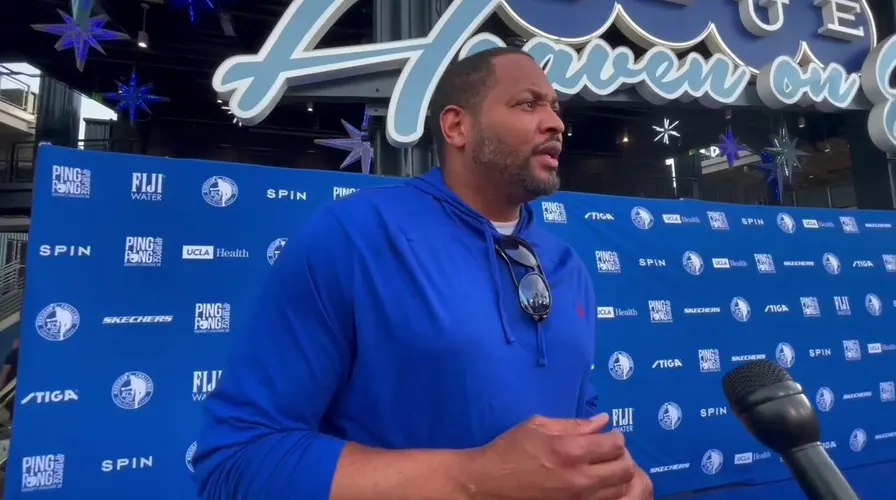
Horry also highlighted how the Rockets’ personnel was years ahead of its time. By surrounding Olajuwon with shooters like himself, Kenny Smith, and Mario Elie, they forced opponents into impossible choices—choices the Bulls’ defensive system wasn’t designed to handle.
“We had so many shooters around him… if you doubled him, he’d find us. If you didn’t, he’d score 40. It was a catch-22 for any defense, even a defense as good as Chicago’s.”
Looking back from today’s perspective, the 1994-95 Rockets were the spiritual ancestors of the modern “four-out, one-in” offense. Horry’s 2017 comments underscore that Houston’s success wasn’t just about Michael Jordan’s absence; it was about a revolutionary style of play that exploited the Bulls’ lack of size in the paint.
The Transitive Property of Dominance
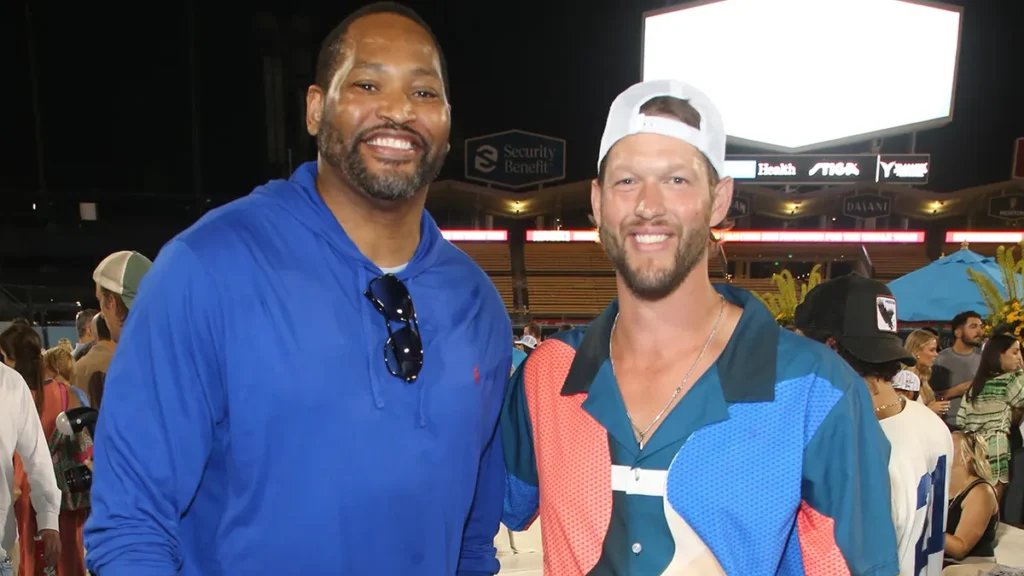
Horry, who won two titles in Houston and three with the Lakers (and two with the Spurs), has a unique vantage point on greatness. He wasn’t swayed by the “aura” of the Bulls because he saw how they struggled with the Rockets in the regular season.
“People forget we had a winning record against them during those years. We didn’t fear them. We felt like we were the better team, and Kenny [Smith] is right—we would have won that series.”
Between 1991 and 1993, the Rockets actually went 5-1 against the Bulls. In 2025, those “regular season receipts” serve as the backbone of the argument that Houston was the only team capable of derailing the Bulls’ train.
2025 Retrospective: The “Big Shot” Perspective
Today, Robert Horry is a staple of NBA media, known for his blunt, analytical takes. His 2017 session on Scoop B Radio remains the definitive “pro-Houston” testimony. He moved the goalposts from “Michael was gone” to “Our center was better than your system.”
As Robert told me:
“It’s about matchups. And we had the matchup advantage.”
Even in a league that now prizes the three-pointer above all else, Horry’s 2017 breakdown reminds us that a dominant big man surrounded by elite shooters is a championship formula in any decade—even one ruled by Michael Jordan.