
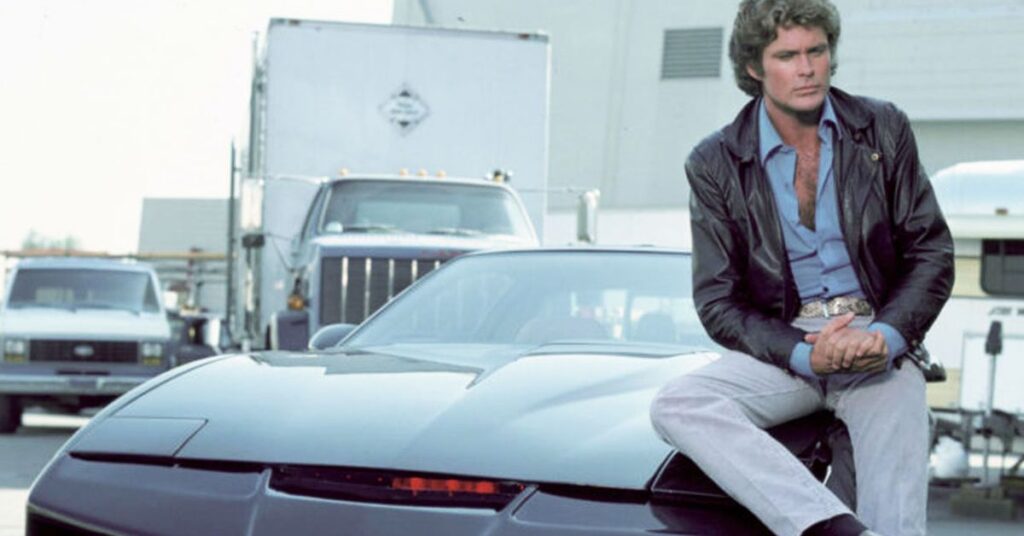
In May 2017, I sat down with a global icon who redefined the action-adventure genre: David Hasselhoff. At the time, “The Hoff” was bridging the gap between his 80s tech-noir roots and his 90s sun-drenched stardom. Today, in 2025—as synth-wave scores dominate modern TV and Baywatch finds a whole new life on streaming—Hasselhoff’s comparison of his two most legendary theme songs remains a masterclass in pop-culture branding.
Reflecting on that conversation today, David didn’t just see these songs as intro music; he saw them as the heartbeat of two distinct American eras.
The Knight Rider Anthem: A Synth-Wave Blueprint
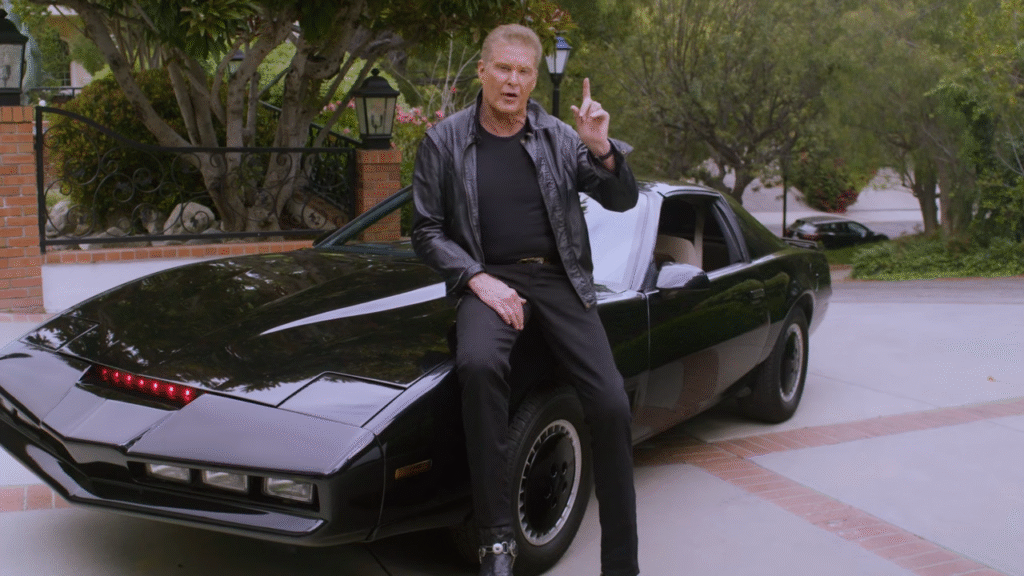
Long before the “Stranger Things” aesthetic took over the world, the Knight Rider theme was the definitive sound of the future. During our Scoop B Radio session, David reflected on how that iconic pulse continues to track him globally.
“To this day believe it or not, that Knight Rider theme and the Knight Rider’s call follow me everywhere I go,” Hasselhoff told me. “You know Busta Rhymes came out with the Knight Rider theme in one of his songs… it was just too good.”
In 2025, that mechanical, driving beat is recognized as a pioneer of the electronic sound. Hasselhoff understood that the song wasn’t just about a talking car; it was about the “Knight Industries” mystique. It’s a “monster hit” that has crossed over from television into hip-hop and beyond, proving that the tech-driven optimism of the 80s still rings true in our digital age.
The Baywatch Hymn: A Global Phenomenon
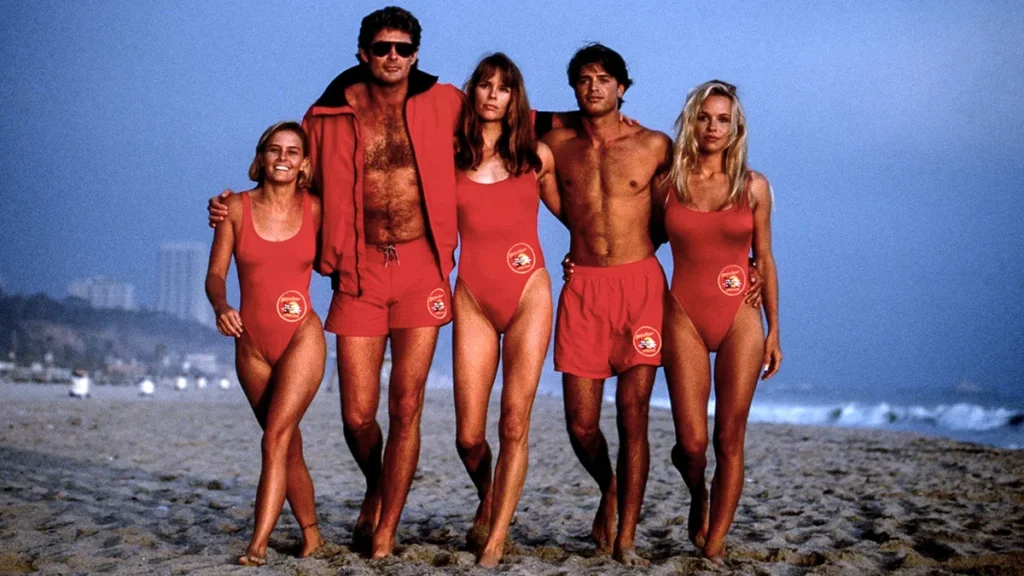
If Knight Rider was the sound of the future, Baywatch was the sound of summer. David shared how the reaction to “I’m Always Here” (the Baywatch theme) is visceral and immediate, transcending language and culture.
“Over the years I’ve played: ‘Some people stand in the darkness’ and the audience goes berserk… The guys actually rip off their t-shirts and sometimes, if I’m lucky, the girls rip off their shirts, as well.”
Looking at the industry in 2025, Baywatch remains the gold standard for global syndication. David’s observation about the “berserk” reaction highlights the song’s status as more than just a theme—it’s a “hymn” of sunshine and rescue. Whether in Germany or Malibu, those opening lyrics serve as a universal signal for a specific kind of heroism.
Hand in Hand: The Duality of The Hoff
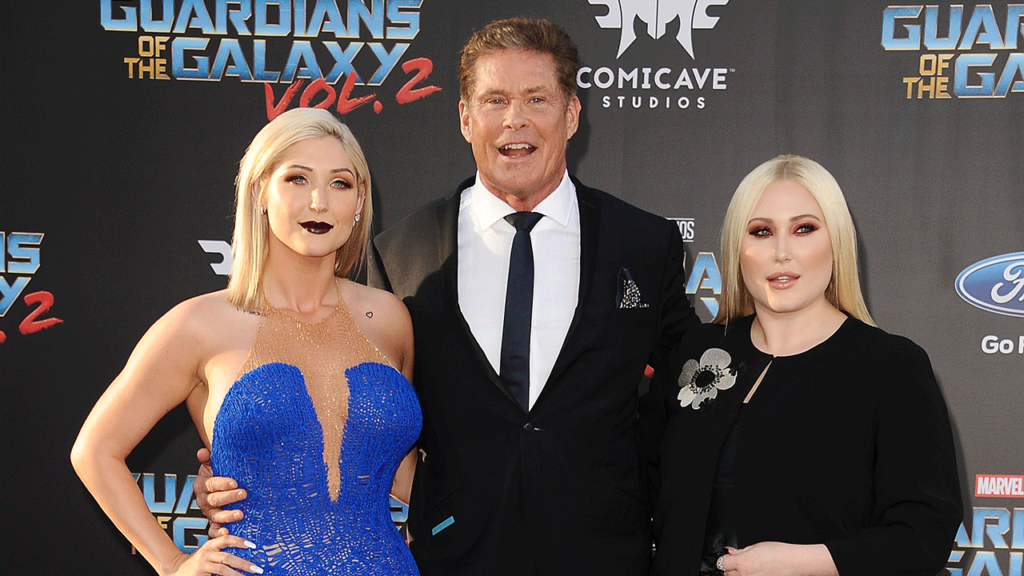
When I asked David to pick a favorite, he stayed true to his legacy, refusing to choose between the leather jacket and the red trunks. He viewed them as two sides of the same coin of his life.
“So I kind of think they’re hand in hand.”
This “buttoned-up” perspective is what makes Hasselhoff an enduring star. He doesn’t distance himself from his past; he embraces the duality. In 2025, as we see a resurgence of “legacy sequels,” The Hoff’s ability to carry both the synth-pulse of KITT and the acoustic-rock of the beach “hand in hand” is a lesson in authentic personal branding.
The Final Legacy of the Theme

David Hasselhoff’s 2017 session on Scoop B Radio reminded us that great television isn’t just seen; it’s heard. He proved that whether he was singing about “looking for freedom” on the Berlin Wall or protecting the shores of California, the music was the bridge to the audience.
As David said to me:
“I don’t really care [if it’s considered cool]… I just do whatever happens. Whatever’s thrown in front of me, because it’s fun! I know how to entertain. And that’s what I do.”