
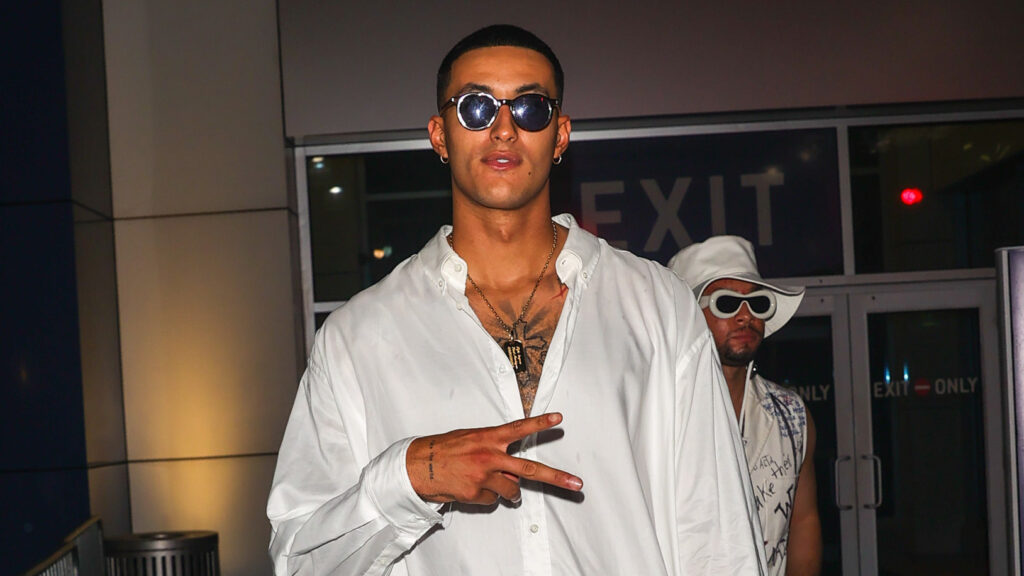
It’s easy to dismiss DJ Khaled as the ultimate hype man—a larger-than-life producer known for his chart-topping anthems, signature catchphrases, and lavish lifestyle. He’s often seen as a purveyor of “major keys” to success in business and music, not necessarily as a political or social commentator.
Yet, a closer look at his statements reveals that the artist has, in fact, weighed in on some of the most pressing issues of our time, including race relations and police brutality, using the language most central to his philosophy: love and unity.
An interview conducted in 2016 on Scoop B Radio, a period marked by heightened national dialogue on systemic injustice and police conduct, offers a significant, often-overlooked, window into Khaled’s perspective. While he doesn’t use explicit sociological or political terminology, his responses are a direct address to the pain and division felt across the country.
On “President Khaled” – A Life Lesson in Love
When asked on Scoop B Radio what his first act would be if he were “President Khaled,” his answer went beyond policy and into moral philosophy. He proposed a “life lesson” campaign centered on a single, powerful idea: love is the key and love is the answer.
“First thing I would do is start a campaign, really, it shouldn’t be called a campaign it should be called a life lesson, it’s to let everybody know, clearly, love is the key and love is the answer. When you put out love, you receive love. Of course you’re going to go through road blocks and trials and tribulations but we have to put more love out there and pray more and unify and come together because love is the key to everything.”
This is not a purely passive statement. It’s an active call for unification and shared humanity—a direct counter to the forces of division. By framing love as the ultimate power, a force so potent that “they don’t want you to love,” Khaled touches on the societal mechanisms that perpetuate hatred and conflict. He suggests that division is manufactured, and the path to overcoming it is a fundamental shift in personal energy and communal action.
Addressing Police Brutality: Blocking Hatred with Joy
The most striking moment comes when he is asked about police brutality. Here, the conversation moves from the abstract concept of love to a visceral reaction to specific, painful events. He confesses that the incidents brought him to tears, describing them as “disgusting” and “not right.”
His proposed solution, while spiritual, is offered as a genuine antidote to the cycle of violence:
“Love, I know it’s hard especially when we see what’s going on because it’s disgusting. It hurts my heart, it brought tears to me the other day, I can’t believe what’s going on but that’s when we got to pray more and come together and hug each other and help each other and bring joy and energy around because, like, smile and love are so powerful it acutally blocks the hatred.”
Khaled’s formula is simple but profound: Hatred plus hatred only equals “two big hatreds.” The only way to disrupt this negative feedback loop is with a completely different frequency—one of love, joy, and prayer. For an artist deeply connected to the struggles and communities most affected by racial injustice, this is a clear, if unconventional, form of advocacy. It champions mental and emotional resilience as a tool for survival and change.
The Major Key to Social Justice

DJ Khaled may not be holding rallies or issuing detailed policy proposals, but his message, delivered clearly on Scoop B Radio, is a form of activism tailored to his brand and reach. By consistently emphasizing love and unity, he is subtly but firmly injecting a message of peace and mutual respect into a highly polarized cultural landscape.
It’s a call to action that resonates with a philosophy of non-violence, urging people to find the strength to “walk away from that situation” of confrontation and instead embrace a higher purpose: the unifying power of love.
While his public image often focuses on personal success, these statements confirm that DJ Khaled has spoken on the painful realities of race and division in America, offering his own “major key” for social progress: “If you haven’t loved before love now because it’s the time.”