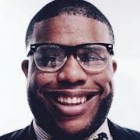
In an instant, Tymiak Hawkins’s life changed. A brainstem stroke left him with only a 25% chance of survival. But for Ty, the odds were just a starting point. As we approach October 29th, World Stroke Day, his journey stands as a powerful testament to the power of resilience.
An athlete from Philadelphia, Ty has leveraged his incredible journey to become an author, content creator, and the founder of his own brand, “2 The T,” dedicated to inspiring others. He’s an advocate, a survivor, and now an author of the book Becoming the Light: Navigating Darkness After a Stroke. I had a chance to sit down with him to discuss his incredible story and what World Stroke Day means to him personally.
“World Stroke Day is really personal for me,” Ty told me. “It’s a reminder of how far I’ve come since my stroke and how much my life has changed.” He sees it as a day to raise awareness about the hidden challenges survivors face every day and a day to instill hope. “For me, it represents hope, advocacy, and the collective effort to ensure that others can recognize the signs of stroke and access the resources they need to recover and thrive.”
The Hoops Journey: From Friends’ Central to FDU

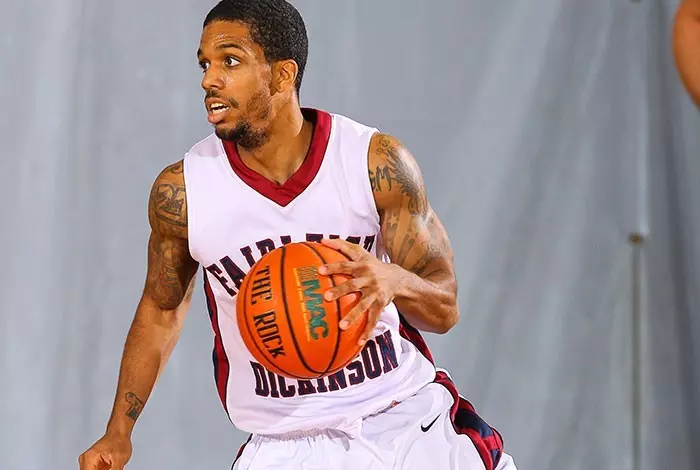
Ty’s identity as a competitor began on the court. He played high school ball at Friends’ Central in Wynnewood, PA, graduating in 2007, before beginning his collegiate career. He played for two seasons at Eastern University (2007–2009). His career was interrupted when he took time off after his grandmother became sick with Hepatitis B and passed away in February 2011. He then attended Wytheville Community College from Fall 2011 to 2013, where he practiced but did not play. He finished his collegiate basketball career at Fairleigh Dickinson University—College at Florham from 2013 to 2015. During his Senior (2014–15) season at FDU, he was named to the All-MAC Winter Honor Roll and saw action in 25 games, with standout performances including 16 points, 7 assists, and 5 rebounds against Wilkes, and 15 points and 5 rebounds against DeSales. This background as a dedicated, competitive athlete made the physical and mental loss following his stroke even more devastating.
The Unseen Threat
When I spoke with Ty, he was quick to point out that stroke symptoms aren’t always as dramatic as they are in movies. He recalled the first signs he experienced: a creeping numbness. “I first noticed numbness in my foot, and then it started creeping up my leg,” he told me. At the time, he brushed it off, but that was a red flag he now warns others to watch for.
The day of the stroke, things got serious. “I suddenly couldn’t keep my balance, and my vision became more and more blurry,” he said. That was the moment he knew something was seriously wrong. His biggest piece of advice? “Don’t wait—get checked.”
“I delayed getting medical help, and it nearly cost me my life,” he said. “If you feel like something’s off, listen to your body and don’t second-guess yourself.”
Ty is also passionate about dispelling the myth that strokes are only for older people. His own younger brother had a hemorrhagic stroke at just four years old. “Stroke isn’t just an ‘old person’s disease’—that’s a myth,” he told me. “It can happen at any age.”
The Fight for Recovery
The recovery process for Ty was a physical and mental war. Physically, he had to relearn basic functions and deal with the relentless fatigue and double vision. The toughest part? He lost control of his facial muscles due to Bell’s Palsy. “I couldn’t stand seeing myself in mirrors or photos,” he said.
But the mental battle was just as intense. As an athlete, his identity was tied to his physical ability. “When I asked my doctor if I’d play basketball again and he said he didn’t think so, I felt deflated—like my powers were taken away like I was in Space Jam.” That moment led to an identity crisis, depression, and the fear that he’d never be the same.
He also opened up about the invisible challenges of recovery that people don’t often talk about. “People often focus on the physical recovery after a stroke, but the emotional and psychological effects can be just as intense,” he explained. He spoke about neurofatigue, a profound exhaustion of the brain, as well as anxiety, depression, and a constant fear that something might go wrong again.
The Moment His Story Went Viral
As Ty navigated the early stages of recovery, he unexpectedly found an audience for his journey. His first viral moment occurred on November 12, 2021. While at Lawrence Rehabilitation Hospital, completing his inpatient therapy, he posted a Reel on Instagram that showed the beginning phases of his recovery and his progress.
“I remember posting the video and putting the phone down and got annoyed it kept vibrating,” he recalled. “I had no idea it was IG notifications for that video as it had 200k views and 20k likes.”
This sudden, overwhelming reaction showed him the power of sharing his vulnerability and the widespread need for stories of hope and recovery.
Finding Purpose Through His Story and Advocacy
Ty’s journey has completely changed his perspective on life. As he told me, “As an athlete, I’ve always pushed myself to compete and achieve, but the experience taught me to slow down and appreciate the small moments.”
Now, his story is his greatest asset. His book is a message of hope and resilience. He wants readers, especially other stroke survivors, to know that “recovery is possible, even when it feels impossible.”
Ty has taken his message of resilience to various audiences, having spoken at institutions and events including Pace University (NY), Kean University (NJ), Essex County College’s 13th State of the Black Writers Symposium, his alma mater Friends’ Central School, and Indiana State University (Women’s Basketball). He has also served as a Keynote speaker at the NJOTA (New Jersey Occupational Therapy Association) Conference at Monmouth University, and has addressed basketball organizations like NJ Give N Go and GRIT Basketball (NJ).
When I asked him what he hopes people take away from his journey, he said it’s about inspiring others to keep pushing forward. “If my story can give someone hope, perspective, or the motivation to keep pushing forward, then I’ve accomplished what I set out to do.”
His ultimate message of hope is a powerful one: “Don’t give up. Recovery, healing, and overcoming challenges isn’t easy, and there will be hard days, but every small step forward matters.”
As he continues to share his story with the world, Tymiak Hawkins is a living testament to the power of resilience. He’s showing everyone that life after a stroke can still be meaningful, joyful, and full of purpose. He’s proof that the light, even after the darkest of times, can be found.